Every other thinker in this series talks about hard power – armies, alliances, force. Joseph Nye asked something different. What about the power that works without coercion? The power that makes others want what you want? In a world watching America’s image fracture in real time, that question has never mattered more.
Picture a scene that repeated itself across the twentieth century. A young person, educated, ambitious, and politically aware, chooses to study at an American university. They watch American films. They listen to American music. They absorb the democratic ideals encoded in American political culture. They return home changed. Not coerced. Not bribed. Not threatened. Simply drawn toward a vision of how society could be organised. That pull, multiplied across millions of people over decades, shaped the world as surely as any aircraft carrier.

Joseph Nye gave this phenomenon a name. He called it soft power. He built a rigorous framework around it. And in doing so, he changed how governments think about the instruments of foreign policy. Today, the United States is simultaneously the most militarily dominant nation in history and a country whose global image has suffered serious damage. China is investing billions in cultural influence. America’s democratic example is under challenge at home and abroad. Nye’s framework sits at the centre of the most important strategic debates of our time.
Among the thinkers in this series, Nye occupies a distinctive position. He is the optimist’s answer to Morgenthau and Mearsheimer. He insists that power is more complex than pure realism allows. Whether that optimism has survived the last two decades is a question the world is still answering.
Questioning the Orthodoxy
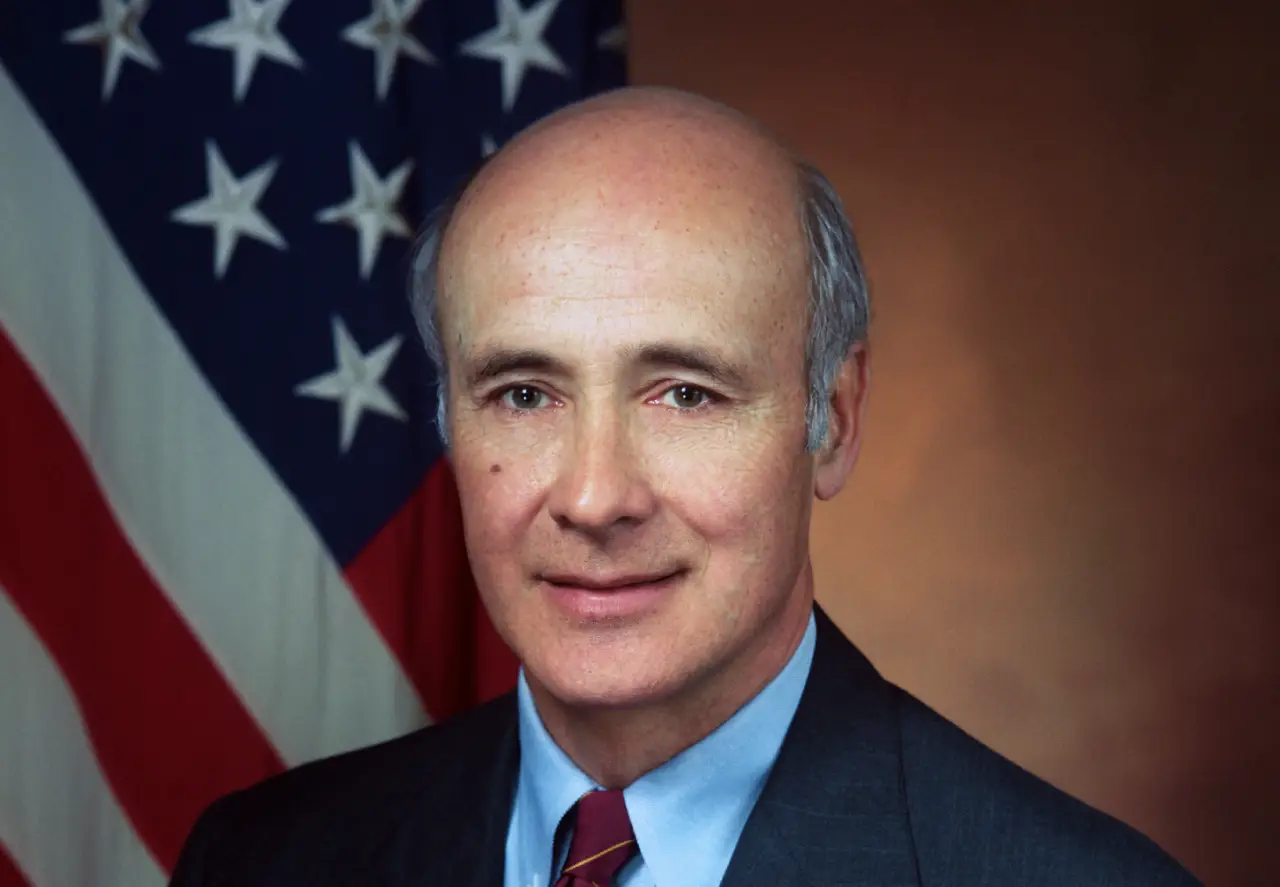
Joseph Nye was born in New Jersey in 1937. He studied at Princeton, won a Rhodes Scholarship to Oxford, and completed his doctorate at Harvard. He spent most of his career there, eventually serving as Dean of the Kennedy School of Government. The Kennedy School under Nye was the institutional home of the American foreign policy establishment’s more thoughtful wing. Serious about power. But unwilling to reduce all of international relations to its crudest expressions.
Nye also served in government. He was Assistant Secretary of Defence under President Clinton and Chair of the National Intelligence Council. He moved between the seminar room and the situation room throughout his career. His work on soft power was not an abstraction. It was built from direct observation of American power operating, and sometimes failing, in the real world.
The Argument Against Pure Realism
Nye’s starting point was a challenge to the realist tradition. Realism treats power as essentially military and economic, the capacity to coerce, deter, reward, and punish. Nye did not deny the importance of this. He argued it was incomplete. States do not achieve their goals through force alone. Attraction matters too.
His 1990 book Bound to Lead introduced soft power. He defined it as the ability to get what you want through attraction rather than coercion or payment. Hard power commands compliance. Soft power shapes preferences. A country with genuine soft power does not need to threaten or bribe as often. Others are already inclined toward cooperation.
Soft power, Nye argued, has three sources. A country’s culture, what others find appealing. It’s political values, when it lives up to them. And its foreign policies, when the world sees them as legitimate. All three are critical. All three are fragile. A country that tortures prisoners or invades on false pretexts destroys something more valuable than a weapons system. It destroys its own power to attract.
The Theory, Plainly Stated
Nye developed his framework across three books: Bound to Lead, Soft Power (2004), and The Future of Power (2011). His core argument is that power operates through networks, institutions, and cultural transmission. Not just through guns and trade surpluses. The information revolution deepened this. It gave non-state actors, civil society groups, and individuals the ability to shape international outcomes. No purely state-centric theory can account for this.
His later concept of smart power brought the argument together. The most effective foreign policy combines hard and soft power. Neither alone is sufficient. Pure military force generates resistance. Pure cultural appeal without hard power backing invites exploitation. The art of statecraft is knowing which instrument to use and when. Above all, it means ensuring that the use of hard power does not destroy the soft power that makes long-term influence possible.
The Questions Now
Nye is still alive and still writing. The question his framework raises most urgently today is one he has addressed with candour. Has the United States spent its soft power? The Iraq War damaged it. Abu Ghraib damaged it. Guantanamo damaged it. The 2008 financial crisis damaged it. The dysfunction of American democratic politics damaged it further. The assault on the Capitol in January 2021 damaged it still more. Each blow struck at the three sources Nye identified: culture, values, and the legitimacy of foreign policy.

Soft power can be rebuilt. Unlike a destroyed weapons system, it is not gone forever. But rebuilding it requires disciplined statecraft and domestic political health. Both are in short supply. Meanwhile, China has studied Nye’s framework seriously. It has invested in state media networks, Confucius Institutes, Belt and Road diplomacy, and social media operations. Whether this has produced genuine soft power is debatable. China’s authoritarianism and its conduct in Hong Kong and Xinjiang undermine the attractiveness that money cannot buy. But Beijing takes the concept seriously enough to spend billions on it. That alone is a tribute to Nye.
In the landscape of this series, Nye is the necessary counterweight. He insists the world is not only what the realists say it is. Power has dimensions; the power counters miss. The ability to inspire, attract, and lead by example is not a luxury. It is a strategic asset. Precisely in hard times, he has argued, it matters most. Whether the world’s most powerful democracy can make that argument credible again is the open question that will define the next generation of international politics.
(This is the fourth piece of the 8-part series, which was developed collaboratively by the Kashmir Life desk in partnership with Claude, Anthropic’s AI, through a process of shared ideation, research, and writing. Read the first piece here, the second here, the third piece here, the fourth piece here, the fifth piece here and the sixth piece here. )