When the optimists said the world was converging, one man said it was fracturing. When the liberals said identity would dissolve into prosperity, he said identity would outlast every ideology ever invented. Samuel Huntington was not predicting the future. He was reading a map that most people refused to look at.
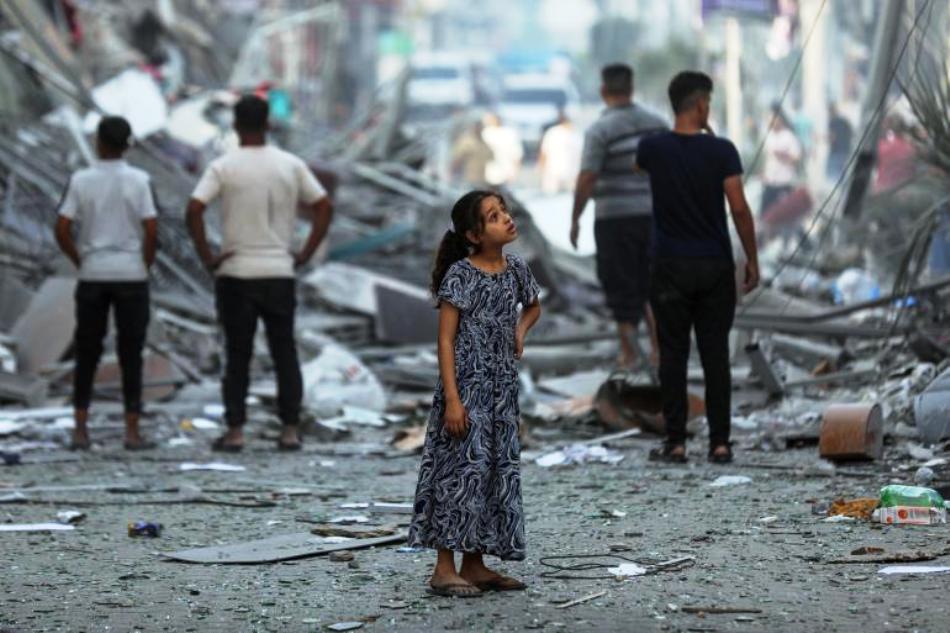
Amal, 7, is contemplating her neighbourhood after neighbouring homes were levelled to the ground.
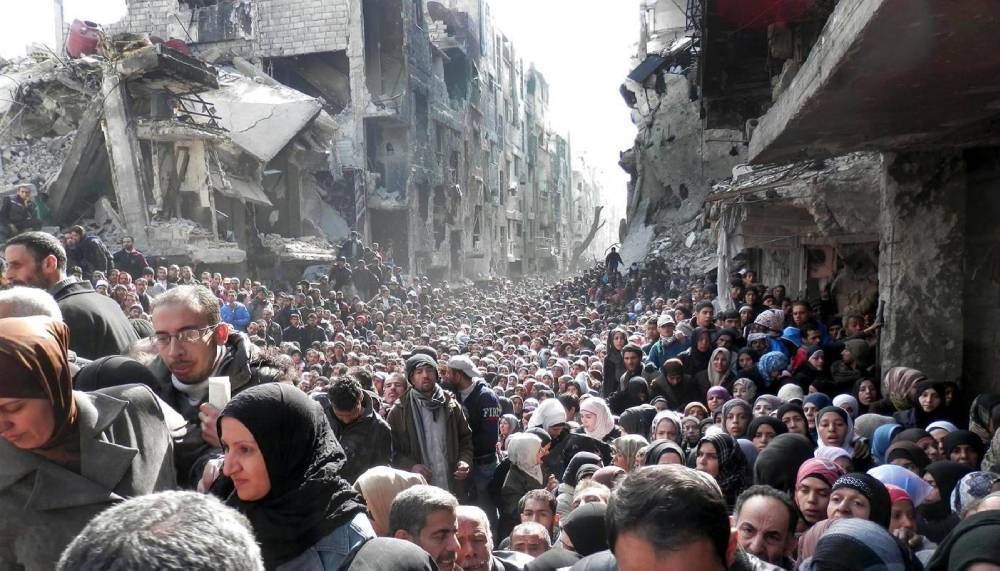
Look at the map of the world today and trace the lines of fire. Israel and Iran are exchanging strikes across a widening theatre. The broader Middle East is convulsed by conflicts that refuse to stay contained within the logic of state interest alone. A Muslim world inflamed not merely by politics but by something that feels, to hundreds of millions of people, like a civilisational affront. A West that frames its interventions in the language of rules and rights, and a non-Western world that hears that language as the accent of power rather than the voice of principle. An economic order wobbling under pressures it was never designed to absorb.

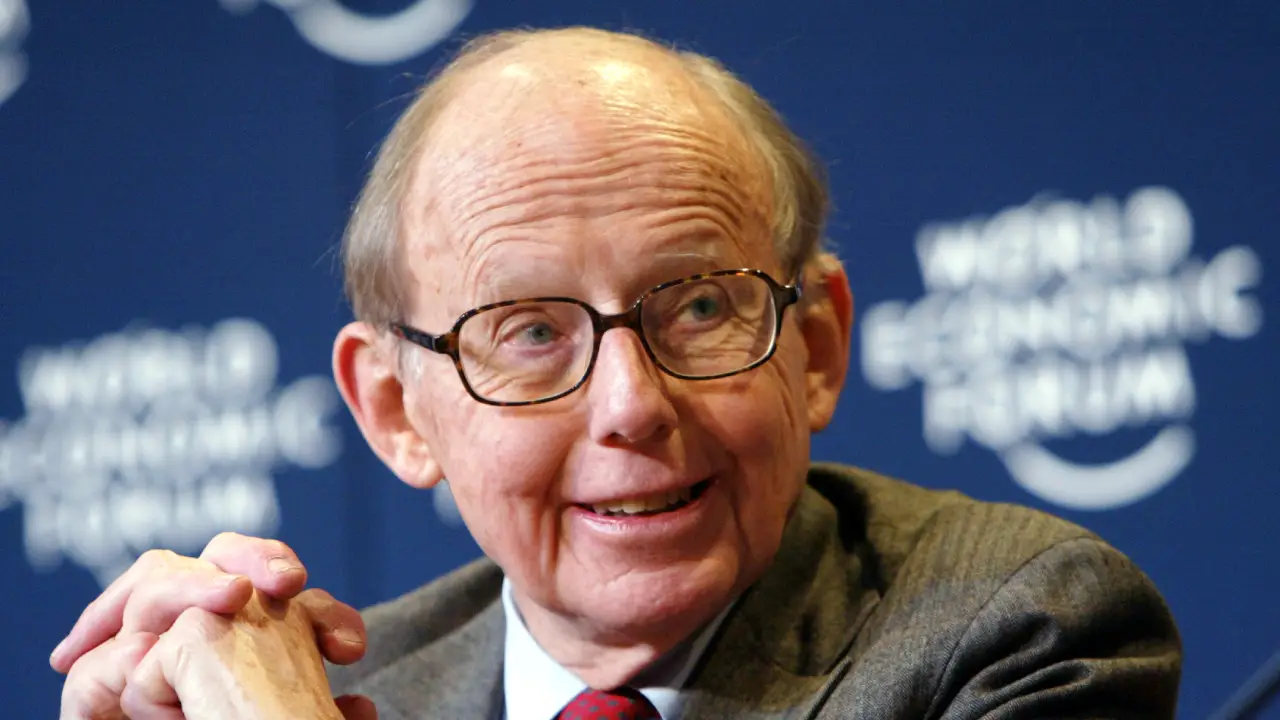
To anyone who has read Samuel Huntington, none of this is surprising. Not because he was a seer, but because he was paying attention to things that others, in their optimism or their ideological comfort, had chosen to look away from. In moments like this one, when events outrun the frameworks politicians and journalists reach for, the serious thinkers resurface. The ones who had the patience and the courage to say, thirty years ago, what nobody wanted to hear.
The quest to understand historical upheaval has always produced such figures, thinkers who stand slightly outside the consensus of their time, who mistrust the comfortable explanations, and who build frameworks durable enough to outlast the moment that produced them. Huntington was emphatically one of these. And the particular framework he built, The Clash of Civilisations, has aged, in the view of many serious analysts, better than almost any other produced in the post-Cold War era. It has also been more consistently misread, more lazily weaponised, and more dishonestly caricatured than almost any other. Understanding what he actually argued, and why, has never been more necessary.
The Man Who Distrusted Easy Answers
Samuel Phillips Huntington was born in New York City in 1927, the son of a hotel trade journalist and a short-story writer. He was, by almost any measure, a prodigy of American academic life. He entered Yale at sixteen, served briefly in the Army, and completed his doctorate at Harvard at the age of twenty-three. He joined the Harvard faculty shortly after and would remain there, with one brief interruption, for essentially the rest of his career, eventually co-founding the John M Olin Institute for Strategic Studies and serving as one of the editors of the journal Foreign Policy.
But Huntington was never merely an academic. He served on the National Security Council under President Carter, advised governments, and moved with ease between the seminar room and the corridors of power. His earlier work, on civil-military relations, on the politics of modernising societies in the developing world, had already made him one of the most consequential political scientists of the twentieth century before he ever wrote a word about civilisations. His 1968 book Political Order in Changing Societies, which argued that stability matters more than democracy in developing states, was controversial at the time and has only grown in intellectual influence since. Huntington had a talent, and something of a vocation, for saying things that made liberal optimists deeply uncomfortable.
He was also critically trained as an empiricist. He distrusted grand abstractions that could not survive contact with historical data. When he built an argument, he built it from the ground up, from patterns in actual conflicts, actual elections, actual state behaviour over decades and centuries. This is what gives the Clash of Civilisations its particular texture. It does not feel like a philosopher’s thought experiment. It feels like a geographer’s field report.
The Argument He Refused to Accept
When Francis Fukuyama published his End of History essay in 1989, declaring that liberal democracy had won the ideological competition of the modern era, Huntington was unpersuaded. The idea that history had resolved itself into a stable liberal consensus struck him as a category error, a confusion of ideology with identity, of surface with depth. Ideology, Huntington believed, was a relatively thin and recent layer sitting atop something far older, far more durable, and far more combustible: civilisational identity, rooted not in political philosophy but in religion, language, shared memory, and centuries of accumulated experience.
Strip away the Cold War’s ideological scaffolding, Huntington argued, and you would not find a world converging on liberal democracy. You would find a world reverting to something much older, a world organised not around competing ideologies but around competing civilisations. The end of the Cold War had not resolved the deep tensions of human history. It had simply removed the ideological overlay that had been obscuring them.
In 1993, he published his challenge in Foreign Affairs under the deliberately provocative title The Clash of Civilisations?, the question mark, as with Fukuyama’s essay, would be largely swallowed by the controversy. The response was immediate and global. It became the most debated article Foreign Affairs had ever published. Governments discussed it. Intellectuals attacked it. Policymakers used it. Three years later, expanded and deepened into a full book, it became one of the defining texts of the post-Cold War era, and one of the most argued-over works of political science written in the last century.
The Theory, Plainly Stated
Huntington’s core argument was straightforward but radical: in the post-Cold War world, the primary source of conflict would not be ideological or economic but cultural. The fundamental divisions of humanity, he contended, are civilisational, and he identified eight major civilisations shaping world affairs: Western, Sinic (Chinese), Japanese, Islamic, Hindu, Orthodox, Latin American, and African.
These civilisations were not merely geographic clusters or cultural curiosities. They were defined by deep commonalities of religion, philosophy, values, and historical experience, the things that survive political revolutions, economic upheavals, and generational change. A Chinese factory worker and a Chinese billionaire, Huntington argued, share something fundamental that neither shares with a Frenchman or a Nigerian. That shared civilisational core is more powerful, more persistent, and ultimately more politically explosive than any ideology manufactured in the modern era.

The fault lines between civilisations, he predicted, would become the battle lines of the future. Conflicts along these seams, between the Islamic world and the West, between China and the United States, between Orthodox Russia and the Western-oriented states on its borders, would define the coming century. He paid particular attention to what he called the bloody borders of Islam: the persistent friction wherever the Islamic world met other civilisations in sustained contact. He was careful to note that this was not a claim about Islam’s inherent nature but about the dynamics of civilisational frontiers under pressure, historically, such frontiers always generate conflict, regardless of which civilisations are in contact.
His second major argument was directed squarely at Western policymakers and intellectuals: the assumption that modernisation equals Westernisation is not just mistaken, it is dangerous. Countries can industrialise, urbanise, raise living standards, and develop technologically without adopting Western values of individualism, secularism, and liberal democracy. In fact, economic development in non-Western societies often strengthens civilisational identity rather than dissolving it. Prosperity gives non-Western civilisations the confidence and the capacity to resist Western cultural pressure rather than assimilate to it. A richer China is not a more Western China. A more educated Muslim world is not a more secular Muslim world. This was, in 1993, a profoundly unfashionable thing to say. Today, it reads as a simple observation.
How did the idea deepen?
The 1996 book developed the original essay in several important directions. Huntington elaborated on the internal politics of civilisations, the competition for leadership within the Islamic world, the relationship between China and overseas Chinese communities who form what he called a ‘cultural diaspora’, and the peculiar position of Japan, which he treated as a civilisation entirely unto itself rather than a variant of the Sinic.
Besides, he developed the concept of torn countries, states like Turkey, Russia, and Mexico that sit uncomfortably across civilisational fault lines, suffering a chronic crisis of identity about which world they truly belong to. This concept has only grown more resonant with time: Turkey’s decades-long oscillation between Europe and the Islamic world is almost a textbook illustration of what Huntington described.

His final major book, Who Are We?, published in 2004, turned the civilisational lens inward. It asked whether the United States itself was undergoing a crisis of national identity, particularly in the face of large-scale immigration from Latin America and what Huntington saw as a weakening of the Anglo-Protestant cultural core that had historically defined American identity. It was his most controversial work, drawing condemnation from the left for its cultural conservatism and unease on the right for its departure from economic optimism about immigration. But it was entirely consistent with his lifelong intellectual conviction: that identity is not chosen or constructed by elites, but inherited, deep, and ignored at serious political cost.
Huntington died in December 2008, on Martha’s Vineyard, at the age of eighty-one. He did not live to see the Arab Spring, the rise of the Islamic State, the collapse of the liberal international consensus, the assertiveness of China under Xi Jinping, or the war in Ukraine redrawn as a civilisational contest between the Orthodox Russian world and a Western-oriented Ukraine. He did not live to see Israeli and Iranian forces exchanging direct strikes, or the Muslim world mobilising across national boundaries in ways that transcend state interest and speak directly to civilisational solidarity.
He did not need to. He had named the structure before the events arrived to confirm it. That is the rarest and most unnerving thing a thinker can do, not predict specific events, but identify the fault lines along which events will break. Look at the map again. The fires are burning almost exactly where Huntington drew the lines. That is not a coincidence. That is a framework that deserves, at this moment above all others, to be understood on its own terms, carefully, seriously, and without the distortions that thirty years of political convenience have layered over it.
(This is the third piece of the 8-part series, which was developed collaboratively by the Kashmir Life desk in partnership with Claude, Anthropic’s AI, through a process of shared ideation, research, and writing. Read the first piece here, the second here.)