SRINAGAR: Iran’s newly installed Supreme Leader Mojtaba Khamenei declared that Tehran would continue fighting and keep the strategic Strait of Hormuz closed as leverage against the United States and Israel, according to a report from Reuters.

In remarks released on Thursday—his first since succeeding his slain father, Ali Khamenei—the Iranian leader signalled defiance as the conflict widened across the region.
“I assure everyone that we will not neglect avenging the blood of your martyrs,” the statement said, according to Reuters, adding that public sentiment in Iran demanded continued resistance. “The popular demand is to continue our effective defence and make the enemy regret it. The lever of blocking the Strait of Hormuz must continue to be used.”
The message was not delivered by Khamenei himself but was instead read by a presenter on Iranian state television. Reuters reported that no images of the new leader have been released since an Israeli strike early in the war killed several members of his family, including his father and wife.
The remarks came hours before Benjamin Netanyahu held his first press conference since the war began. Standing between two Israeli flags and answering questions via video link, Netanyahu issued a veiled warning directed at Iran’s leadership.
“I wouldn’t issue life insurance policies on any of the leaders of the terrorist organization,” Netanyahu said, according to Reuters. “I don’t intend to give an exact message here about what we are planning or what we are going to do.”
The escalating rhetoric follows a widening conflict that has already claimed thousands of lives and shaken global energy markets.
Oil prices jumped roughly 9 per cent to about $100 a barrel after Iran signalled it would keep the vital maritime corridor closed. The narrow waterway along Iran’s southern coast normally carries about one-fifth of the world’s oil shipments, making it one of the most important energy chokepoints globally.
Reuters also reported that Iran had deployed about a dozen naval mines in the strait in recent days, complicating efforts to reopen the route for shipping.
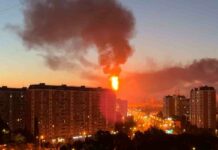
Meanwhile, maritime attacks in the Gulf underscored the growing volatility of the conflict. According to Reuters, two fuel tankers were set ablaze in Iraqi waters near the southern port of Basra after being struck by suspected Iranian explosive-laden boats. Video verified by the news agency showed ships engulfed in massive fireballs lighting up the night sky. At least one crew member was reported killed.
Iran’s Revolutionary Guards claimed responsibility for at least one earlier strike on a Thai bulk carrier that was set on fire. Other vessels were hit by projectiles in Gulf waters near the United Arab Emirates.
The attacks have pushed shipping across the Gulf and the Strait of Hormuz close to a standstill since the United States and Israel began strikes on Iran on February 28.
In Washington, Donald Trump played down the spike in oil prices. Writing on social media, he said higher prices could benefit the United States.
“The United States is the largest oil producer in the world, by far, so when oil prices go up, we make a lot of money,” Trump said.
However, economists warn that sustained high oil prices could fuel global inflation. Scott Bessent told Sky News that the U.S. Navy, possibly with international partners, could eventually escort vessels through the strait once conditions allow.
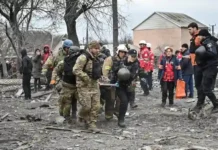
Elsewhere in the region, Israeli airstrikes struck a building in central Beirut, sending thick smoke over the Lebanese capital. Israel also ordered evacuations in parts of southern Lebanon as it intensified its campaign against the Iran-backed group Hezbollah after the group fired its largest volley of rockets into Israel since the conflict began.
According to Reuters, more than 2,000 people have been killed in the war so far, including nearly 700 in Lebanon.
Inside Iran, residents reported a heavy security presence across major cities. “Security forces are everywhere, more than before,” a Tehran schoolteacher identified only as Majan told Reuters by phone. “People are afraid to come out, but supermarkets are open.”
Despite calls from the United States and Israel for Iranians to rise up against their leadership, Reuters reported there has been no sign of organised dissent while the country remains under attack.