The realists argued about military power. The liberals debated cultural values. One man said both were looking at the wrong thing. Immanuel Wallerstein argued that the real structure governing the world was economic. A single global capitalist system, so deeply wired into every society, that politics, culture, and conflict are ultimately expressions of it. In a moment of genuine economic crisis, his is the voice missing from the conversation.

When the global economy shudders, most people reach for political and military frameworks. They turn to Mearsheimer for the power competition. To Huntington for the civilisational friction. To Allison for the dynamics of hegemonic transition. But there is a question sitting underneath all of these. Who benefits from the structure of the global economy? Who pays for it? Is the economic order itself a cause of the instability, not merely its backdrop? These are the questions Immanuel Wallerstein spent fifty years answering.
His answer is called World Systems Theory. It is the most radical framework in this series. It is the one most ignored by mainstream Western foreign policy analysis. And it may be the one that most clearly explains why the Global South has refused to align with Western positions on Ukraine, Gaza, and the rules-based international order. Understanding it is not an academic exercise. It is a necessary lens for anyone trying to make sense of the world today.

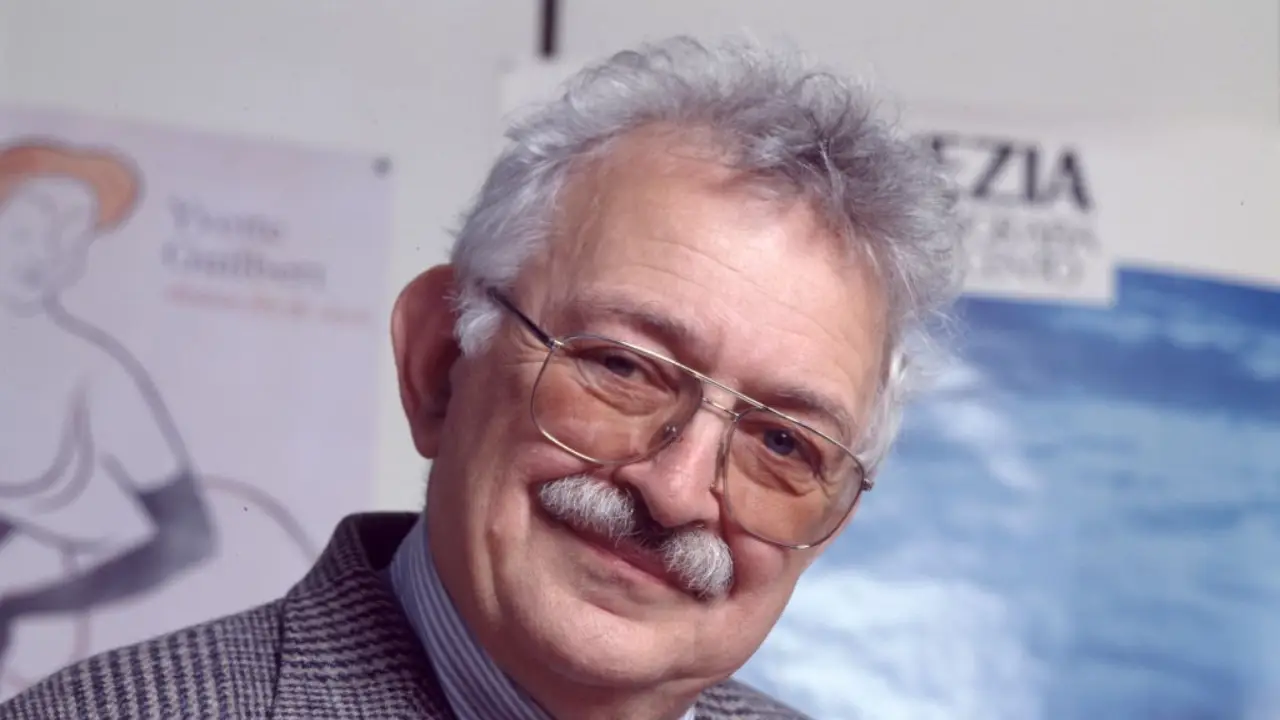
Wallerstein died in 2019. He did not live to see the pandemic shatter global supply chains. He did not see the Ukraine war accelerate the fracturing of the economic order. He did not see the BRICS nations seriously discussing alternatives to dollar-denominated trade. But he had been describing the conditions for exactly this kind of crisis for decades. He saw it coming. The world was not paying attention.
The Man Who Asked Who Pays
Immanuel Wallerstein was born in New York City in 1930. His parents had emigrated from Poland and were politically engaged. He studied at Columbia University and completed his doctorate there in 1959. His early career focused on decolonisation in Africa. What he observed there planted a question that conventional economics could not answer. Newly independent African states were adopting the right policies. They were still staying poor. Why?
That question pulled him toward a much larger historical canvas. He moved to SUNY Binghamton, where he founded the Fernand Braudel Centre. He drew on the French Annales school of history. He absorbed dependency theory from Latin American economists. He engaged with the Marxist analysis of capitalism. From these sources, he built something genuinely new, a framework for understanding the entire modern world as a single integrated economic system.
The Theory, Plainly Stated
Wallerstein’s argument spans four volumes of The Modern World-System, published between 1974 and 2011. Since the sixteenth century, he argued, a single capitalist world-economy has divided the globe into three tiers. The core, historically Western Europe and North America, controls sophisticated, capital-intensive production. It extracts value from the rest of the system through trade, finance, and political arrangements. The periphery provides raw materials, cheap labour, and captive markets. The semi-periphery sits between, exploited by the core while exploiting the periphery.
The critical insight is this. The hierarchy is not the result of better choices by some countries. It is the result of the system itself. The system requires a hierarchy to function. Capitalism does not produce development everywhere over time. It produces development in the core by producing underdevelopment in the periphery. The poverty of the Global South is not a lag waiting to be corrected. It is a structural condition. It is produced and reproduced by the same system that generates wealth in the North.
For Wallerstein, this changes everything. The wars, the interventions, the economic crises, these are not primarily about ideology, culture, or power competition. They are about the contradictions of the capitalist world-system itself. When the system reaches its limits, when extraction from the periphery can no longer compensate for falling returns in the core, when the dominant power begins to decline, that is when systemic crises erupt. That is when the world becomes most dangerous.
Hegemonic Cycles and American Decline
Wallerstein argued that hegemony within the world-system follows a pattern. A state achieves dominance first in production, then in commerce, then in finance. Then it begins to decline. Competitors catch up. The costs of maintaining hegemony exceed its returns. He identified three clear hegemonies in the modern era: the Dutch in the seventeenth century, the British in the nineteenth, and the Americans in the twentieth.
American hegemony, he argued from the 1970s onward, had already peaked. The shift from manufacturing to finance. The growing difficulty of maintaining military dominance across multiple theatres. The erosion of the political consensus behind the post-war order. These were the signs. He was saying this decades before it became fashionable. Hegemonic decline is slow, he acknowledged. It happens over generations. But once the structural conditions that produced the hegemony are exhausted, the decline is irreversible.

The Global South
Wallerstein’s framework offers the clearest explanation for one of the most discussed puzzles of our time. Why has the Global South refused to align with Western positions on Ukraine and Gaza? Western commentators call it confusion. Some blame Russian and Chinese propaganda. Wallerstein would say it is neither. It is memory. Countries in the periphery and semi-periphery have experienced the rules-based international order differently. Not as universal protection. As managed extraction. Rules made by the core. Enforced selectively. Consistently interpreted in the core’s favour.
When India, Brazil, South Africa, or Indonesia declines to sanction Russia or condemn Israel, they are not confused. They are not manipulated. They are making a structural argument. Whose rules are these? Who have they historically served? Whether one agrees with that argument or not, it cannot be understood, let alone answered, without the framework Wallerstein provides.
Wallerstein’s framework is the most challenging in this series. It refuses the terms on which most Western foreign policy debates are conducted. It does not ask whether the liberal international order is being well-managed or poorly managed. It asks whether that order is, at its structural core, the problem rather than the solution. Whether the extraordinary wealth it has generated in some parts of the world has been produced through mechanisms that make the current crisis not an aberration, but an inevitability. That question cannot be left unasked. Not now. Not with the world in the state it is.
(This is the last of the 8-part series, which was developed collaboratively by the Kashmir Life desk in partnership with Claude, Anthropic’s AI, through a process of shared ideation, research, and writing. Read the first piece here, the second here, the third piece here, the fourth piece here, the fifth piece here, the sixth piece here and the seventh piece here. This concludes the eight-part series: Thinkers Who Shaped The World.)