by Owais Amin Khan
The government’s initial Sanchar Saathi mandate triggered sharp criticism over privacy violations, constitutional overreach, and surveillance risks. Its rollback, after public pressure, underscored the need for transparency, consent, and rights-based digital governance.

The Indian government’s recent directive to pre-install the Sanchar Saathi app on all smartphones sold in the country initially sparked significant criticism for its potential constitutional and privacy implications.
Earlier, the government’s insistence on making the app mandatory, non-removable, and active by default was perceived by many as an overreach that could infringe upon fundamental freedoms guaranteed under the Indian Constitution. Critics, ranging from opposition politicians to privacy advocates and digital rights activists, warned that forcibly embedding such a state-backed app, with access to sensitive permissions including call logs, SMS, camera, and device storage, raised serious concerns over pervasive surveillance and loss of individual autonomy.
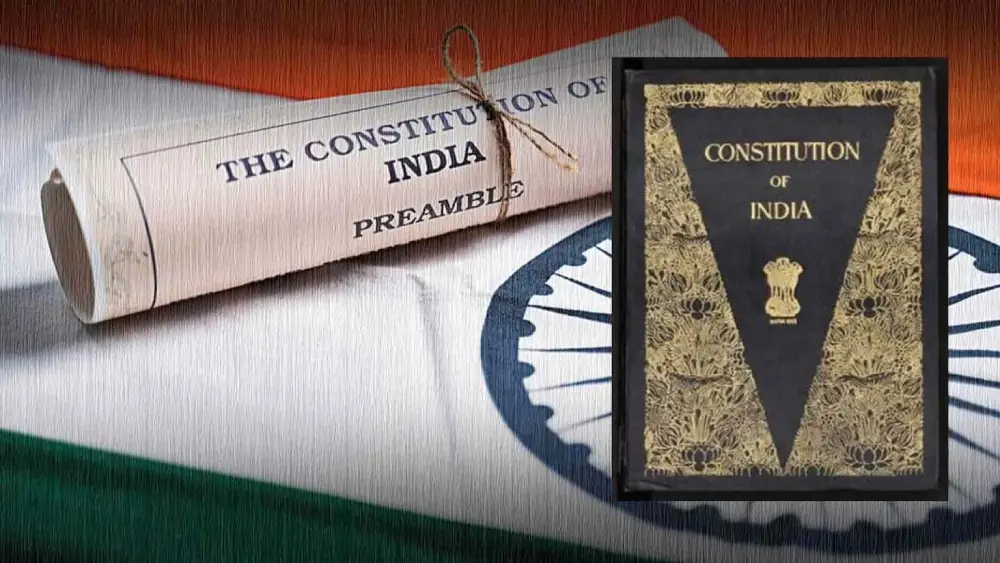
The Supreme Court of India’s landmark 2017 judgment in the Puttaswamy case had firmly established the right to privacy as a fundamental right under Article 21 of the Constitution. The judgment laid down the “proportionality test” that any state intrusion on privacy must meet: it should pursue a legitimate aim, be rationally connected to that aim, be the least intrusive means possible, and strike a balance between the objective and the privacy infringement. The initial Sanchar Saathi mandate, critics argued, failed this test severely by attempting to impose a non-disabled government surveillance tool on every mobile user in the country without parliamentary debate or public consultation.
The Implications
The implications of such a mandate were manifold. With the app’s broad permissions, it could potentially collect and aggregate comprehensive personal communications metadata and device information, raising the spectre of centralised mass surveillance without adequate safeguards. Moreover, the lack of user choice undermined the principle of informed consent and individual control over personal digital devices. This not only posed a threat to privacy but also set a dangerous precedent where the state could mandate any software with deep access, potentially expanding governmental oversight into areas beyond legitimate security concerns.
The potential chilling effect on freedom of expression and dissent was another critical issue flagged by commentators. Smartphones are central to modern communication, and enforced state presence on these devices could dissuade individuals from freely expressing political opinions or engaging in activism out of fear of being monitored. Critics viewed the mandate as a step towards constructing a surveillance infrastructure that contradicted democratic ideals of transparency, accountability, and the right to private communication.
Constitutional and civil liberties critiques apart, there were significant technological and commercial concerns. Mandated app installation required manufacturers to comply within tight deadlines, creating logistical challenges, especially for over-the-air updates to millions of devices already in circulation. Forcing app pre-installation added to the existing burden of “bloatware”, unwanted pre-installed software, further frustrating consumers in a market already saturated with unnecessary apps. This raised pragmatic questions about both user experience and supply chain management.
Initial Ideas
The government’s initial position overlooked these nuanced but critical objections, triggering political backlash and legal scrutiny. Opposition leaders accused the administration of authoritarian tendencies, demanding a rollback and greater parliamentary involvement. Privacy experts called for transparent data governance laws and stronger protections before imposing state surveillance tools.
However, following widespread public outcry and legal pressures, the government modified its stance, clarifying that the Sanchar Saathi app would no longer be mandatory and users would retain the option to uninstall it. Even with this adjustment, the concerns raised during the earlier phase remain deeply instructive. They underscore that any government intervention into personal digital spaces must respect established constitutional safeguards and engage stakeholders comprehensively.
The early criticism served as a vital check on executive overreach, reminding policymakers that safeguarding fundamental rights is non-negotiable, even amid pressing cybersecurity challenges. It highlighted the need for legislative transparency, robust data protection frameworks, and a user-centric approach focused on choice and informed consent rather than compulsion.
Future Outlook
As India moves forward in scaling digital governance tools such as Sanchar Saathi, the lessons from this episode emphasise the delicate balance between security needs and civil liberties. Ensuring that these technologies empower users without eroding democratic freedoms is imperative to avoid creating a digital state of surveillance that stifles innovation, dissent, and public trust.

This ongoing discourse also reinforces the importance of India’s Constitutional principles in guiding technology policy. The trajectory of the Sanchar Saathi app development and the critical responses it triggered remind us that fundamental rights cannot be collateral damage of digital modernisation. The debate positions India at a crossroads: embracing technological solutions to real problems while preserving the privacy and freedom that form the bedrock of its democracy.
Maintaining this balance will require continued vigilance, court oversight, and proactive legislative frameworks that prioritise transparency, accountability, and user empowerment. The Sanchar Saathi case is a cautionary tale illustrating how well-intended digital measures, if implemented without due regard for constitutional guarantees and public engagement, risk undermining the very freedoms they claim to protect.
(The author is a law student at the University of Kashmir. Ideas are personal.)