A retreat to Wales meant to rediscover peace collapses under the weight of digital addiction, as broadcaster Nayeema Ahmad Mahjoor’s entire family fails to disconnect, revealing how technology silently fractures relationships, routines, and emotional bonds
The rain has ceased.
Clouds had broken into wrinkles, letting the sun’s rays reach the valley’s peaks and shards. Still, the chill remained in the air, not the one creeping through bones, but the one infusing them with life.
The majestic landscape of Wales took me thousands of miles away, to the place where my umbilical cord was buried, where the fragrance provides warmth of heart, and where the soul feels at peace.
Yes, the Valley of Kashmir that exists within the body, like bone marrow.
The holiday planned in Wales was different. It was meant to find a few days of peace in the developed world without phones or laptops. Too much screen time was damaging all cells and tissues in the brain. When Google Uncle controls our lives, our thinking capacity has diminished to a point where the advice of our elders sounds like utter stupidity. Now, the developed world is seeking new experiments, like leaving all gadgets locked away and fleeing to a place with no connection to the rest of the world. In reality, feeling powerless was killing us all inside.
For me, it was like an elixir, evoking past visits to Sonmarg or Gulmarg.
Akin to The Vale
It was like the Vale I had lived in for three decades, the same meadows, gushing streams, mighty pines in the upper regions resembling a thatched roof over the meadows. The only feature that set it apart from Kashmir was its road connectivity, electric lighting, gas supply through pipes, and a car outside the cottages, which had been converted into self-service guest houses. The replica of the developed world, which was in search of peace after all this science and technology revolution.
The Tudor cottage we had rented bore the marks of history on every brick and wooden beam. The dim light, shadowy corners, raw wooden furniture, and flickering lamps hanging from the ceiling create a sense of the ancient lives once lived there.

It was a frightening sight, but people like us spent a fortune to visit and stay here for a few days. Not to learn history, but to escape the gadgetry world that has turned us into Zombies without us noticing.
All rooms in the cottage were draped in white Egyptian cotton sheets and duvets, with unpainted tables and chairs, shimmering curtains, and a wide array of food and beverages on the dining table.
Outside, the guest houses resembled a clump of green grass, perhaps giving them the natural appearance they seemed to lack. The paths leading to the cottage were uneven with pebbles and straw. Thank goodness, they had no barbed wire like the ones at guest houses back home.
At the entrance, a bunch of wildflowers was waiting for us.
It was an ancient architecture cloaked in technology.
After parking our cars, we checked into our rooms, which shared a common feature: everything was bathed in white. It gives the impression of a spacious flat; I should have painted my flat white to create a sense of greater space.
Deliberately Offline
We had pledged to switch off phones and laptops, but the subtle influence of screens still casts a shadow, emphasising how technology affects family closeness and moments.
One week of retreat with no contact with the outside world, relatives, or friends. Just family time with my two grown-up, married children and their children. My daughter and daughter-in-law had to cut down their kids’ screen time, which led them to seek solitude in a remote Welsh village. I had to leave everything behind to help manage their grandchildren’s phone use, which was spiralling out of control.
Perhaps I was a troubleshooter for them. Was I?
So, we have retreated into the mountains of Wales, where the lack of screens allows us to genuinely enjoy reading and walking in the wilderness, reminding us of the importance of authentic experiences over digital distractions.
The initial challenge of persuading kids to leave home was achieved.
We have arrived at the woods.
A good night’s sleep was needed tonight to feel fresh in the morning and start early errands in the mountain of jungles.
Everyone around the table, from adults to children, felt a quiet longing for genuine family warmth, which made us realise how screens can hinder real bonds and why reconnecting matters for the sense of belonging.
The main challenge was keeping phones close but unused. I reflected on how profoundly technology influences our family interactions and how hard it is to disconnect.
Digital Deficit
Why am I so restless? My brain kept pounding. I couldn’t find an answer. Looking around at grim and gloomy faces made me jittery. After spending a fortune on the holiday, why aren’t we feeling happy about it? I tried to shuffle the plates around, keep cutlery with each plate and then………..
What am I doing? I wondered, feeling the internal struggle of shared silent tension caused by technology, related to family frustrations and the need for genuine connection.
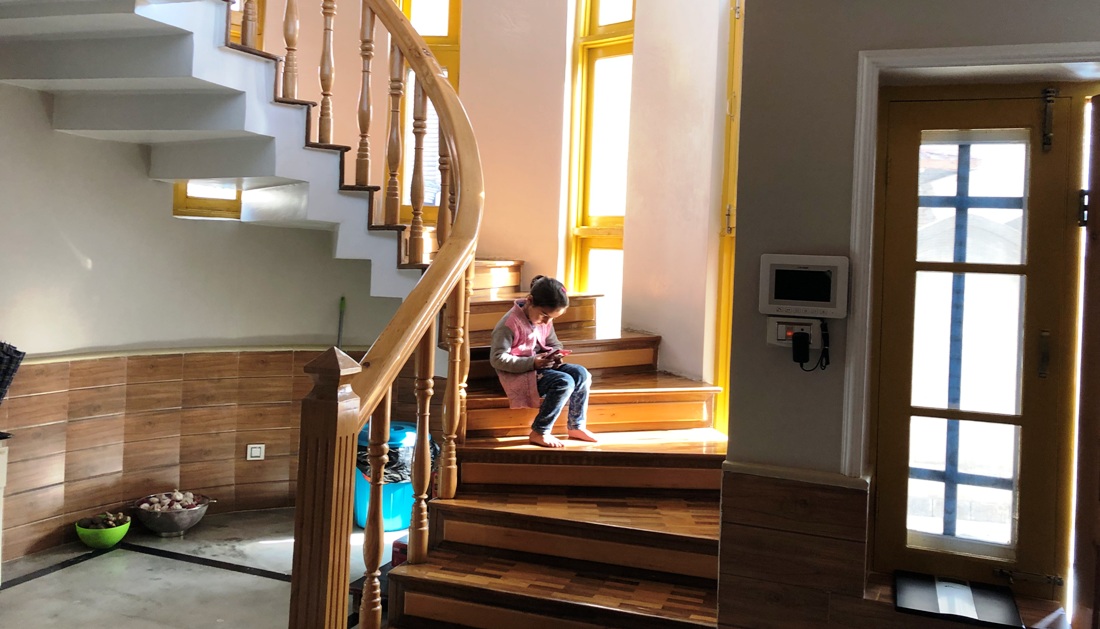
Should I pick up or not? I was wrestling internally, aware that resisting the urge to check my phone might encourage the children to value real moments over digital temptations.
What if my X-ray reports have already reached my doctor, and he wants to discuss them? Or what if the fire alarm had gone off at home in London?
But we have pledged not to even look at phones. Even if we had to call an ambulance, we would only use the guest house’s landline.
My daughter was glancing at me from the corner of her eye. Perhaps thinking that if I broke my promise, she would leap over her phone and start browsing TikTok videos, her favourite.
‘Can you get my glasses from the black bag? It’s in the side drawer near the bed.’ I wanted to distract my daughter so I could have a long look at my phone. The curiosity was killing me. Very reluctantly, she took a few steps towards the bedroom, which was starting behind the spiral staircase.
Breaking A Pledge
The moment she reached the staircase, I took my phone out of my pocket, but couldn’t see clearly because I wasn’t wearing my glasses. I moved towards the window but still couldn’t read the messages on the wallpaper, which my grandson had changed before heading off on this journey. The wallpaper was sky blue, and every app on the screen appeared blurred. My attempt was unsuccessful. Glancing at my messages wouldn’t cause the world to end. I promised myself I would not browse social networking platforms where I have a sizable following.
Soon, my daughter appeared with her glasses, but her gesture suggested she wanted to make a secret deal in exchange for her favour in checking her phone. Should I break the rule? Can a grandmother be spared punishment? I pondered for a moment. As usual, I remained indecisive. My daughter-in-law was behind the table, looking down as if she needed to lift something from the floor. She held a phone in her left hand, trying to hide it from us as she read messages and secretly broke the rule. I knew she wouldn’t be without her phone for long.
I could see a glint in my daughter’s eye. She walked towards my daughter-in-law and pulled her from behind. They were both laughing loudly. Another mascot was caught red-handed.
An Angry Boy
In a split second, my grandchild burst out of the other bedroom, which his parents had taken over for sleeping. He was crying, shouting, and kicking everything in his path. His father was trying to cajole and cuddle him. Nothing was working to calm him. He was throwing tantrums and knocking over things in the room.
As he approached his mother, he began hitting her and using swear words. That was uncharacteristic of him. I attempted to calm him, but it was ineffective.
‘Why is he in such a mood?’ I asked my son.
He gestured for a phone, as usual, wanting it to play Roblox.
‘We promised not to use phones during a week’s holiday. The holiday was arranged after we agreed. Nobody should break the promise.’ My son issued an edict, and we watched him silently. There seemed to be no control or authority in his voice, as if this rule was for all of us except him. His wife left the kid on the floor and walked towards her bedroom as if she had just remembered something important.
My daughter approached me as if I were being watched.
The grandchild was on the floor, crying and shouting. I sat on the floor next to him, and he asked for my phone.
‘We don’t carry phones on holiday. Let us sit and talk about the places we can visit in Wales over the next few days,’ I suggested to him.
‘I don’t care about places. I need a phone for a while, or I will go back home.’ He burst with anger.
‘But you promised us that you would not use the phone if we went on holiday and trekked in the mountains.’ I reminded him.
He gave me a stare and demanded my phone immediately, or he would leave the cottage.
We were in grave danger now. My son looked grim, as if giving up entirely. What if he runs away?
That wouldn’t solve the problem. It will create another issue, and we will be distressed. Is that acceptable? My son has strange thoughts.
The kid started banging on a door. We didn’t want to lose the security deposit we paid to the guest house owner. There is a rule that the landlord must be reimbursed for any damage or loss identified during our stay.
‘Do not bang doors,’ my son shouted at his son, who then threw a tantrum.
Phones Return
My daughter-in-law arrived with her phone and handed it to her son. He got up from the floor and went to the corner, where he started playing a game on the phone. He became calm and sat quietly.
My daughter opened her bag, took out her phone, and watched TikTok Shorts. She felt relaxed.
The daughter-in-law was looking at her son, who had tears dribbling down his cheeks. At least, he had stopped throwing tantrums.

His father had a smile on his face. He slipped his hand into his pocket and took out his phone effortlessly. The granddaughter, who had been sleeping throughout the journey, had her tablet open and was watching Horrid Henry.
I opened my bag, grabbed my phone, and began scrolling through numerous messages that took hours to read.
All of us, sitting in the corners, by the bed edges, in the dining room, on the sofa, or on the staircase, were busy on our phones, just like our routine at home.
Gadgets overshadowed the mountains, meadows, and streams; we had no time to appreciate nature. The money was lost, but everyone appeared calm, phones in hand.
Who should we blame for turning us into couch potatoes?
Are we, as the 21st-century electronic generation, truly lost amid phones, laptops, tablets, ChatGPT, and AI?
Should we accept our defeat in controlling our lives and breaking our homes, families, and communities? There seems to be no chance to get rid of them and have a little family life.
I must confess our family is broken, and so is our life, which has become a giant robot of this century.
(A broadcaster, the author has served as the Editor of BBC News and Current Affairs.)