by Quaseen Jahan
An examination of how social norms shape women’s sense of belonging, highlighting tensions between parental and marital homes and the evolving idea of self-defined identity.
The question of which home a woman truly belongs to has long lingered quietly within the folds of culture, tradition, and lived experience. It is not always asked aloud, yet it is deeply felt, woven into rituals, conversations, and the silent expectations placed upon women across societies. From the moment a girl begins to understand the world around her, she is subtly introduced to a truth that is rarely questioned: that her stay in her parental home is temporary, and her “real home” lies somewhere else, waiting to claim her after marriage. This idea, though normalised, carries within it a quiet displacement.
A woman’s first home, her parental house, is where her identity is born. It is the space where she learns language, values, affection, and belonging. It is where she builds her earliest emotional attachments, where she is someone’s daughter, someone’s pride, someone’s responsibility. And yet, within many households, even while she is deeply loved, she is also reminded, sometimes jokingly, sometimes seriously, that she is “paraya dhan,” a transient presence who will one day leave.
Consider the lived reality of countless women. A daughter grows up in a home where she contributes emotionally and physically, helping her mother, caring for siblings, and becoming an integral part of the household’s rhythm. Yet, when decisions about property, inheritance, or long-term family planning are made, she is often placed on the margins. The unspoken reasoning is simple: she will not stay. Her belonging is conditional, framed by time rather than permanence.
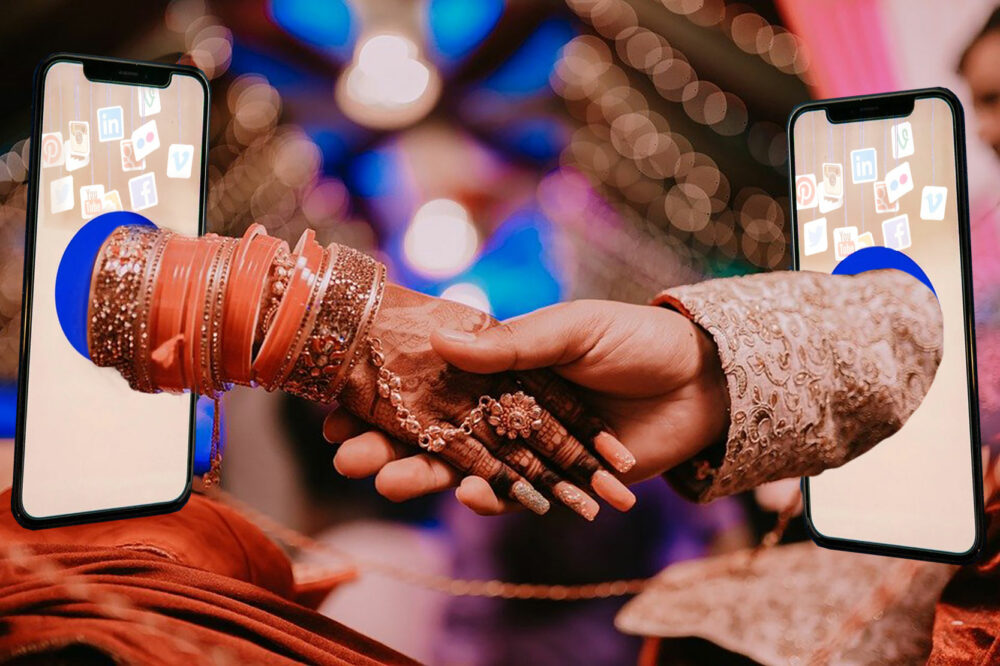
Then comes marriage, a moment celebrated with grandeur, but also marked by a profound emotional rupture. The bidaai, often portrayed as a ritual of love and transition, is also an institutionalised moment of detachment. A woman is expected to leave behind not just a house, but a version of herself. Tears are normalised, even expected, as if grief is an essential component of this transition.
When she enters her marital home, the narrative shifts. Here, she is no longer the daughter who was once nurtured; she becomes the daughter-in-law who must adapt. The expectations are immediate yet unspoken: understand the household dynamics, align with traditions, build relationships, and prove her place. Unlike her parental home, where belonging was given by birth, here, belonging must be earned through effort, patience, and often silent endurance.
Take, for instance, a young woman moving into a joint family system. She may wake up earlier than everyone else, carefully observing routines, and adjusting her behaviour to avoid conflict, constantly negotiating her identity. She may suppress her preferences—how she speaks, dresses, eats, or expresses herself-to fit into an already established structure. Every action becomes a subtle test of acceptance.
Yet, despite her efforts, she may still hear phrases that remind her of her outsider status, “this is how things are done in our house,” or “you will learn with time.” These statements, though seemingly harmless, reinforce the idea that she is still in the process of becoming, never fully arrived.
Meanwhile, her relationship with her parental home begins to shift. Visits become occasional rather than constant. Her room may be repurposed, and her presence gradually reduced to that of a guest. She is welcomed with love, but the underlying dynamic has changed. She no longer belongs in the same way she once did.
This duality creates a quiet but profound paradox: in one home, she is no longer central; in the other, she is not yet fully rooted. She exists in an in-between space—emotionally stretched across two worlds, yet wholly claimed by neither.
This experience is not limited to traditional households. Even in urban, educated settings, where women pursue careers and independence, the question of belonging persists in more subtle forms. A working woman may contribute financially to her marital home, yet still be expected to carry the primary burden of domestic responsibilities. Her success in the professional sphere may be celebrated, but only as long as it does not disrupt her role within the household.
Similarly, a woman who chooses to remain connected to her parental home, emotionally or financially, may face criticism for not fully “detaching.” Society often demands exclusivity in her belonging, as if her identity must be singular rather than expansive.
There are also women who, due to circumstances such as divorce, widowhood, or personal choice, find themselves returning to or remaining in their parental homes. For them, the question of belonging becomes even more complex. They may encounter subtle judgments, questions about their place, or a sense of having deviated from the expected life trajectory.
These lived realities reveal a deeper truth: that a woman’s belonging has historically been defined not by her own sense of identity, but by social structures that prioritise roles over individuality.
However, to reduce this narrative to victimhood alone would be incomplete. Within these constraints, women have continuously negotiated, resisted, and redefined their sense of home.
Consider the woman who transforms her marital home not by erasing herself, but by slowly integrating her identity into it, introducing her traditions, maintaining her voice, and building relationships based on mutual respect rather than silent compliance. Or the woman who maintains strong ties with her parental home, refusing to see it as a closed chapter, and instead treating it as an ongoing source of support and belonging.
Some women choose to create entirely new spaces of belonging—living independently, building homes defined not by tradition but by personal values. For them, home is not inherited or assigned; it is constructed through choice, effort, and self-awareness.
These examples point towards an evolving understanding of belonging—one that is not confined to a single physical space or social role. Increasingly, women are challenging the notion that they must choose between homes. Instead, they are embracing the idea that belonging can be multiple, fluid, and self-defined.
And yet, societal perceptions often lag behind these shifts. The language we use, the rituals we uphold, and the expectations we enforce continue to reflect older frameworks. A married woman visiting her parental home for an extended period may still be questioned. A woman prioritising her career over traditional domestic roles may still be judged. These reactions reveal that the idea of a woman belonging “fully” to one home remains deeply ingrained.
To move beyond this, there must be a fundamental shift in how belonging itself is understood.
Belonging should not be about relocation, but about recognition. It should not require a woman to diminish parts of herself to fit into predefined spaces. Instead, it should allow her to exist fully, without having to constantly negotiate her worth or presence.
Families play a crucial role in this transformation. Parental homes must move beyond the idea of daughters as temporary members, recognising their enduring connection and rightful place. Marital homes, on the other hand, must embrace women not as entrants who must prove themselves, but as individuals who bring their own histories, identities, and strengths.
At a broader level, societal narratives must evolve to reflect these changes. Stories, media, and public discourse must begin to portray women not as individuals who “leave” one home to belong to another, but as individuals who carry their sense of home within them.
Because ultimately, the question: “Which home does a woman belong to?” is perhaps the wrong question altogether.

A woman does not belong to a house. She belongs to spaces where she is respected without conditions, where her voice is heard without resistance, and where her identity is not something she must constantly defend.
She belongs where she is not asked to shrink.
She belongs where her presence is not temporary.
She belongs where she is not made to feel like a visitor in her own life.
And perhaps most importantly, she belongs to herself.
In recognising this, we do not just redefine a woman’s relationship with home—we redefine the very idea of belonging. Because a home, in its truest sense, is not a place that claims you. It is a place that accepts you, wholly and without reservation.
Until that understanding becomes universal, the question will continue to echo. But within every woman who begins to answer it for herself, there lies the beginning of change.
(The author is a Research Scholar at the University of Kashmir, working on Institutional Quality and Development Indicators. Ideas are personal.)