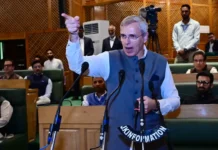
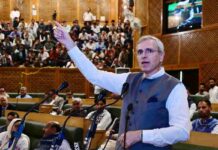
SRINAGAR: The Jammu and Kashmir Legislative Assembly today moved beyond its scheduled legislative business to confront an internal crisis regarding the economic and symbolic status of its members. In a series of interventions that mirrored the region’s broader tensions between elected power and administrative control, many lawmakers, including Javed Hassan Baig, Sajad Lone, Ranbir Singh Pathania, and Balwant Singh Mankotia, addressed the House. While the immediate catalyst was a discussion on salaries and allowances, the arguments quickly shifted to the structural survival of the legislature and the dignity of the individual representative. The narrative was not about wealth, but about a growing wall between the elected and the administrative.
The Economics of Representation
Javed Hassan Baig, the MLA for Baramulla, started the debate by challenging the ad hoc method currently used to manage the financial rights of lawmakers. He argued that the requirement for committees to review salary revisions leads to a cycle of public scrutiny and humiliation. Baig stated that lawmaker compensation should be managed by a permanent bureaucratic framework, effectively removing it from the floor of the House to preserve the institution’s decorum.
Baig’s testimony focused on the socio-economic barriers to entry in contemporary politics. He stated that the rising costs of elections and the spending limits set by the Election Commission make the role of a lawmaker inaccessible to citizens without significant assets. He noted that candidates from farming backgrounds are often forced to mortgage land or take substantial loans to contest elections. Baig warned that a lack of state support would eventually result in an Assembly accessible only to individuals with capital, effectively disenfranchising the working class from legislative representation.
Furthermore, he requested that the term “salary” be replaced with “earned right” or “allowance,” asserting that MLAs are elected representatives rather than state employees. He reported that the public narrative surrounding these funds has resulted in online abuse of his family members, highlighting the personal cost of the current system.
Institutional Autonomy and the Executive Shadow
Sajad Lone, MLA Handwara, shifted the focus toward the distribution of power between the legislature and the executive branch. He questioned why the recommendations of previous committees regarding compensation remained stalled, asking whether the blockage originated in the Cabinet or the bureaucracy. Lone argued that if a bureaucratic body can override a committee of the House, the Assembly loses its institutional purpose and becomes subservient to the administration.
Lone utilised personal history to illustrate the historical role of state support for representatives. He recounted that a Rs 13,000 loan provided by the Assembly to his father in 1974 enabled their family to build a home that has served three generations. He contrasted this with current provisions, stating that modern allowances are insufficient for a lawmaker to even acquire land in the current economic climate. For Lone, the debate served as a test of whether the elected House holds supremacy or remains a secondary entity to the executive.
The Case for a Permanent Framework
Ranbir Singh Pathania, representing Udhampur East, proposed a technical adjustment to the system to remove the element of political theatre. He advocated for a model where lawmakers’ compensation is updated automatically, linked to the Wholesale Price Index (WPI) and Dearness Allowance (DA). By removing the requirement for MLAs to vote on their own pay, Pathania argued that the House could avoid the legal and moral complication of being a judge in its own cause.
Pathania stated that his income as a private citizen was higher than his current legislative salary and that he accepted the role for public service rather than financial gain. He emphasised that the executive branch should not have the authority to block the recommendations of independent House committees, citing the doctrine of separation of powers as the primary guiding principle.
Accountability and Bureaucratic Friction
Balwant Singh Mankotia, MLA Chenani, addressed the issue of fiscal accountability and the daily friction between representatives and government officials. He raised an alarm regarding a discrepancy involving Rs 1,500 crore, demanding a rigorous investigation into the loss of funds during periods of bureaucratic control.
Mankotia also spoke about the atmosphere of apathy within government offices. He alleged that some bureaucrats treat MLAs with a lack of cooperation when approached for constituent services, viewing the representatives as intruders rather than stakeholders. He clarified that, despite public reports and media narratives, no recent increase in MLA salaries has actually been implemented. Mankotia issued a warning to the Cabinet, stating that a lack of bureaucratic respect for the role of MLAs would eventually extend to the ministers themselves.
The Quest for Dignity
The collective testimony of these four lawmakers indicates a legislature deeply concerned with its status and the dignity of its members. Beyond the specific figures of salaries and loans, the speeches reflect a broader concern that the status of the elected representative is being systematically altered.
The House is now seeking a framework that ensures the legislature remains a viable institution for all citizens, regardless of their financial background. Through proposals such as automatic update systems, investigation of financial irregularities, and assertion of legislative authority over the bureaucracy, these lawmakers are attempting to redefine the relationship between the people’s representatives and the state apparatus.
The debate underscores a struggle for legislative supremacy, as lawmakers demand a transition from ad hoc salary reviews to an automatic, inflation-linked framework. By seeking to insulate compensation from bureaucratic interference and public spectacle, the House aims to ensure that representative politics remains accessible to the common citizen.