SRINAGAR: When Jammu and Kashmir sealed their maiden Ranji Trophy title, captain Paras Dogra struggled to articulate the magnitude of the moment. After decades in domestic cricket, after more than 10,000 first-class runs, it was this triumph that left him overwhelmed.
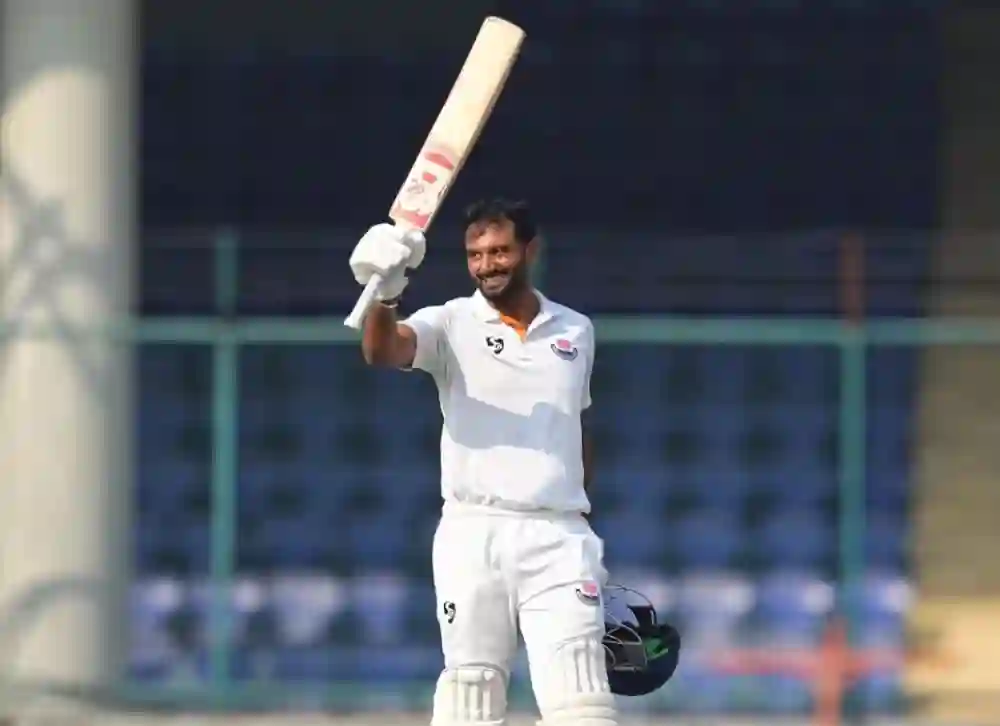
“I can’t explain to be honest, I have no words. At this time, it is the biggest thing in my life. This will be the biggest gratitude I will have in my life before I go away from this world,” Dogra told reporters at Hubbali, , his voice carrying the weight of both achievement and relief.
Born in Palampur, Himachal Pradesh, Dogra built his reputation with Himachal Pradesh cricket team as one of the most dependable top-order batsmen in Indian domestic cricket. Professional to the core, technically compact and mentally resilient, he became synonymous with heavy scoring seasons in the Ranji circuit long before he took charge of the Jammu and Kashmir cricket team.
With 10,517 runs in 152 first-class matches at an average of 48.02, including 34 centuries and a highest score of 253, Dogra’s numbers place him in elite domestic company. Crossing the 10,000-run milestone is not a matter of flair; it is a testament to longevity, discipline and sustained excellence. Add to that 3,751 List A runs at 39.90 and 2,324 T20 runs at a strike rate above 115, and the breadth of his contribution becomes clear.
His standout 2012-13 Ranji season remains part of North Zone folklore. Five centuries in eight matches, three in successive innings, earned him an India A call-up for unofficial Tests against West Indies A. Even years later, in 2015–16, he produced back-to-back double hundreds against Tripura and Services, finishing with 703 runs at 78.11, underscoring an appetite that never dulled.
Though his Indian Premier League stints with Rajasthan Royals, Kings XI Punjab, Kolkata Knight Riders and Gujarat Lions were brief and largely peripheral, his stature in domestic cricket never depended on the IPL spotlight.
When he returned to lead Jammu and Kashmir at a transitional phase, the team possessed promise but lacked hardened direction. Dogra brought structure, fitness standards tightened, preparation sharpened, and mental resilience became non-negotiable.
“To be honest, I have been lucky to be with JKCA, the guys have been phenomenal, they have been excellent, it is not about the eleven, it is about the 14-15 guys, they are tremendous, they have been putting their hands up and they have been keen to win the matches. From the beginning, they were 100 per cent sure that we are going to win this Ranji Trophy,” he was quoted as having told the reporters.
The final against Karnataka reflected that collective belief. After securing a massive 291-run first-innings lead, JK tightened their grip on the fifth day, with Qamran Iqbal’s unbeaten 160 and Sahil Lotra’s century swelling the advantage beyond 600. Dogra’s side did not merely compete; they controlled.
At 41, Dogra’s journey embodies the often-unsung backbone of Indian cricket, the domestic stalwarts who dominate scorecards rather than headlines. His return to JK was more than a professional move; it was a transfer of experience, a recalibration of standards.
For a cricketer who has conquered bowlers across 244 first-class innings, this Ranji triumph stands apart. Not for personal milestones, but for collective history.
In the end, Paras Dogra’s legacy may not be defined by IPL stardom or international caps. It will be defined by runs, thousands of them, and by a spring afternoon when a captain from Himachal Pradesh guided Jammu and Kashmir to the greatest day in their cricketing history.