JAMMU: The Jammu and Kashmir government said it has undertaken significant measures to restore the Wular Lake, a wetland of international importance under the Ramsar Convention. The Wular Conservation and Management Authority (WUCMA) has been executing a comprehensive restoration plan, focusing on dredging, ecotourism development, and livelihood support for local communities.
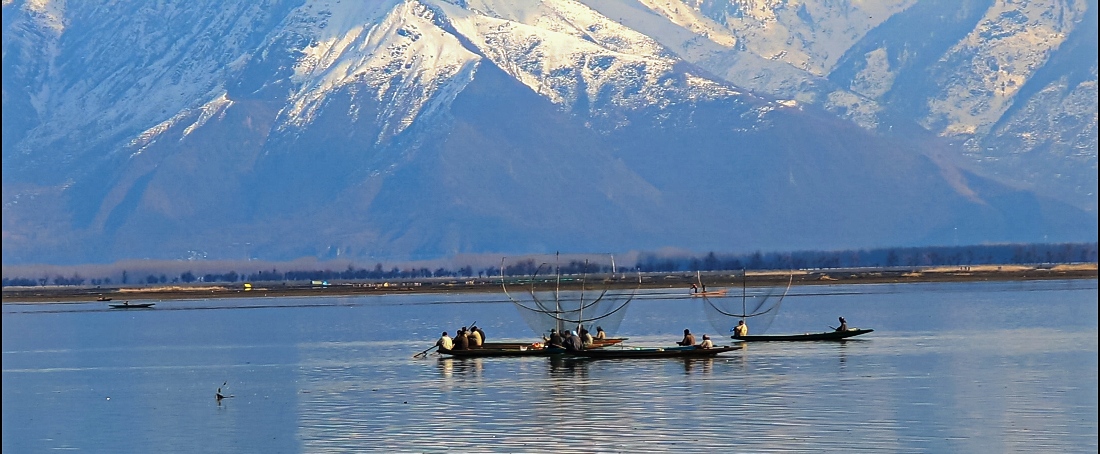
As part of the restoration efforts, WUCMA said it has restored 5.0 square kilometres of critically silted lake area by dredging 78.43 lakh cubic metres of silt, thereby increasing the lake’s water-holding capacity. The boundary demarcation of the lake has been completed with 1,159 geo-referenced concrete pillars using GPS and remote sensing technology, defining a revenue area of 130 square kilometres.
The government is also promoting ecotourism to generate sustainable livelihoods. The first phase of a non-motorable walkway, spanning 2.5 kilometres and featuring cycling tracks, lookout points, and jetties, is under execution at Baniyari and S.K. Payeen for Rs 18.73 crore. The second phase, with an estimated cost of Rs 9.99 crore, is in the pipeline and will be executed in the next financial year. Additionally, a cycling track from Watlab, Adipora, and Ninglee is being developed by R&B Sopore, with execution planned for the coming year. Eco-tourism parks at Baniyari, Garoora, and Ninglee, with a total cost of Rs 12.10 crore, are also set for implementation in the next financial year.
Addressing concerns about ecological impact, the government has assured that all works undertaken follow the Management Action Plan devised by Wetland International South Asia (WISA). Additionally, the National Institute of Hydrology, Roorkee, has conducted hydrological studies to ensure sustainability.
The lake plays a crucial role in Kashmir’s fisheries sector, contributing significantly to fish production and supporting 5,200 registered fishermen. To further aid sustainable fisheries management, WUCMA has collaborated with SKUAST-Kashmir for a scientific study on fish biodiversity and stock assessment. Furthermore, a livelihood study by IIM is identifying additional economic engagement opportunities for local communities.
To maintain ecological balance while fostering socio-economic growth, WUCMA is actively promoting ecotourism as a sustainable livelihood avenue. Villages like Zurimanz and Watlab Ghat are being transformed into hubs for Shikara-boat tourism, boosting the local economy. Environmental awareness initiatives, including birding activities and conservation camps, are being regularly organised to involve the community in Wular Lake’s preservation.
These efforts reflect the government’s commitment to balancing conservation with economic development, ensuring that Wular Lake remains both an ecological treasure and a source of livelihood for thousands.