SRINAGAR: To address the concerns of nomadic herders in Ladakh’s Changthang belt, the Union Territory administration has announced a livestock grazing-friendly solar power pilot project in the Pang area. This initiative aims to integrate renewable energy development with the preservation of traditional grazing grounds, alleviating fears over the potential loss of pastures due to the planned ultra-mega solar project spanning 20,000 acres.
At a high-level meeting chaired by Vikram Singh Malik, Administrative Secretary of the Power Development & New and Renewable Energy Department, officials from the Solar Energy Corporation of India (SECI), Powergrid, and the Defence Institute of High-Altitude Research (DIHAR) formalised the action plan for the pilot project.
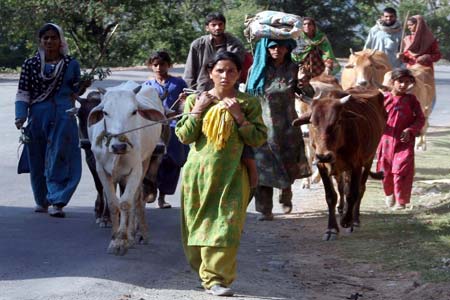
The larger Leh Pang Ultra Mega Solar Project, located in the Changthang belt, is designed to generate 10 gigawatts (GW) of power, making it one of the largest solar initiatives in the world. However, nomadic communities, whose livelihoods depend on livestock grazing, have expressed concerns about losing their grazing grounds.
To address these concerns, SECI was tasked with designing the pilot project so that the height of the solar panels allows livestock to graze freely underneath. Additionally, the Revenue Department was instructed to identify a two-hectare plot for the pilot project in Pang and conduct a joint survey involving all stakeholders within 15 days. SECI has committed to expediting paperwork to begin work in the next working season.
Officials emphasised that the pilot project would serve as a model for balancing large-scale renewable energy development with the preservation of traditional grazing areas. The administration assured local residents that new pastures would also be developed as part of the larger project’s implementation.
The Changthang region’s ultra-mega solar project aims to harness Ladakh’s vast renewable energy potential of up to 35 GW, with 10 GW planned for the initial phase. This ambitious initiative is a key component of India’s push toward achieving 500 GW of renewable energy capacity by 2030.
While local leaders like Chushul Councillor Konchok Stanzin have highlighted the economic opportunities this project could bring, including affordable energy and improved livelihoods, they have also called for addressing the nomadic community’s fears. “This is a dream project, but the grazing pastures must be protected,” Stanzin said.
By integrating grazing-friendly features into the solar project, the administration aims to balance renewable energy goals with the preservation of Ladakh’s unique pastoral traditions. Once operational, the project is expected to contribute significantly to India’s clean energy targets while ensuring sustainable development for the region’s nomadic herders.