With the dawn of the Day of Tarwiyah, the 8th of Dhu Al-Hijjah, when pilgrims travel to Mina to rest overnight, and the arrival of the first waves of worshippers, Mina transforms into one of the world’s most remarkable examples of seasonal organisation. Within days, the valley in the heart of Makkah turns into a fully integrated metropolis, efficiently managed to host millions of pilgrims gathering in a profound display of faith, Asad Mirza reports in the fourth dispatch of his Hajjnama 2026

MINA: Operating as a highly advanced “seasonal smart city,” Mina is defined not only by the vast expanse of white tents blanketing its slopes but also by the staggering scale of the operational apparatus functioning behind the scenes. This logistical framework encompasses power and cooling grids, crowd management protocols, pedestrian mobility mapping, and real-time flow control, seamlessly integrated with security, healthcare, and food services. Together, these elements establish the holy sites as a unique global model for mass-gathering management.
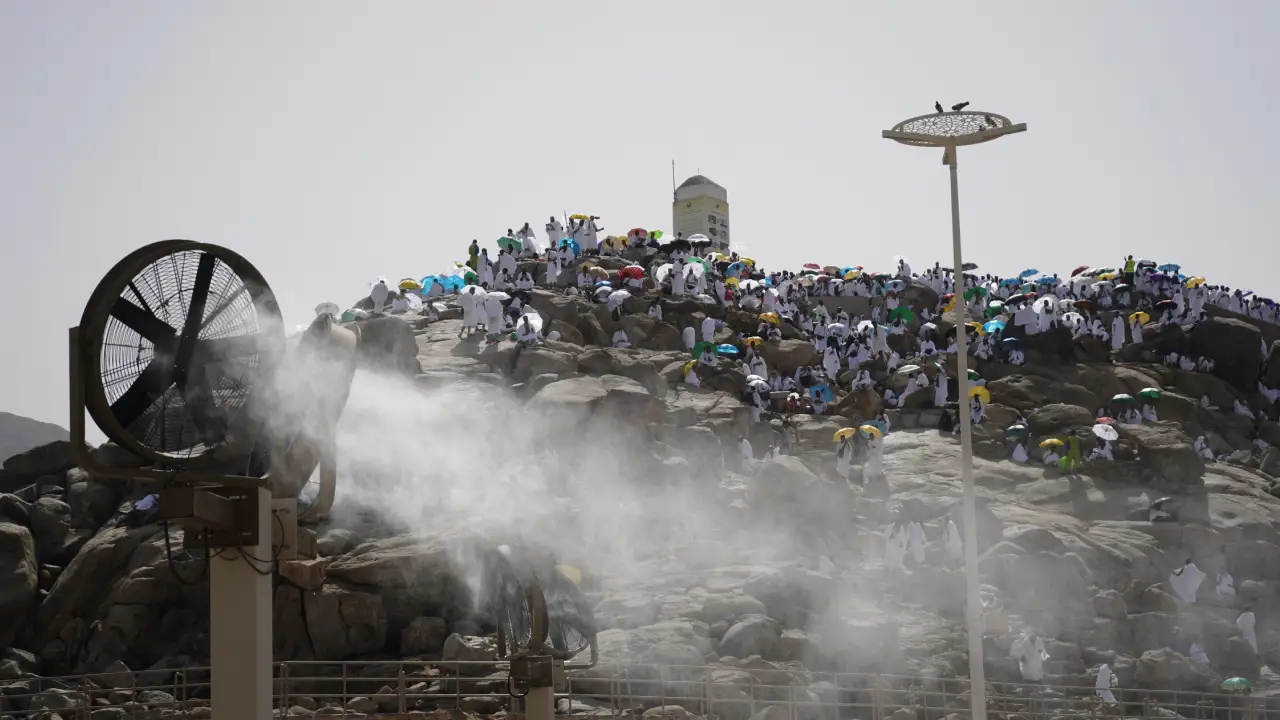
The upgraded tent infrastructure in Mina covers approximately 2.5 million square metres, engineered to rigorous safety and security standards and providing a capacity that exceeds 2.6 million pilgrims.
With each Hajj season, Mina transcends its role as a mere hosting ground; it functions as a dynamic project aimed at continuously elevating the pilgrim experience. This year, Mina witnessed the implementation of major spatial development projects centred on the concept of “urban humanisation.” These initiatives fundamentally enhanced the physical environment by expanding shaded areas and rest zones, upgrading the urban landscape, and designing highly flexible, streamlined pedestrian pathways.
What truly distinguishes Mina is its unique rhythm. It is a city that reaches peak population density for a few days, returns to absolute tranquillity upon the completion of the rituals, and immediately begins preparations for an even more advanced Hajj season the following year.
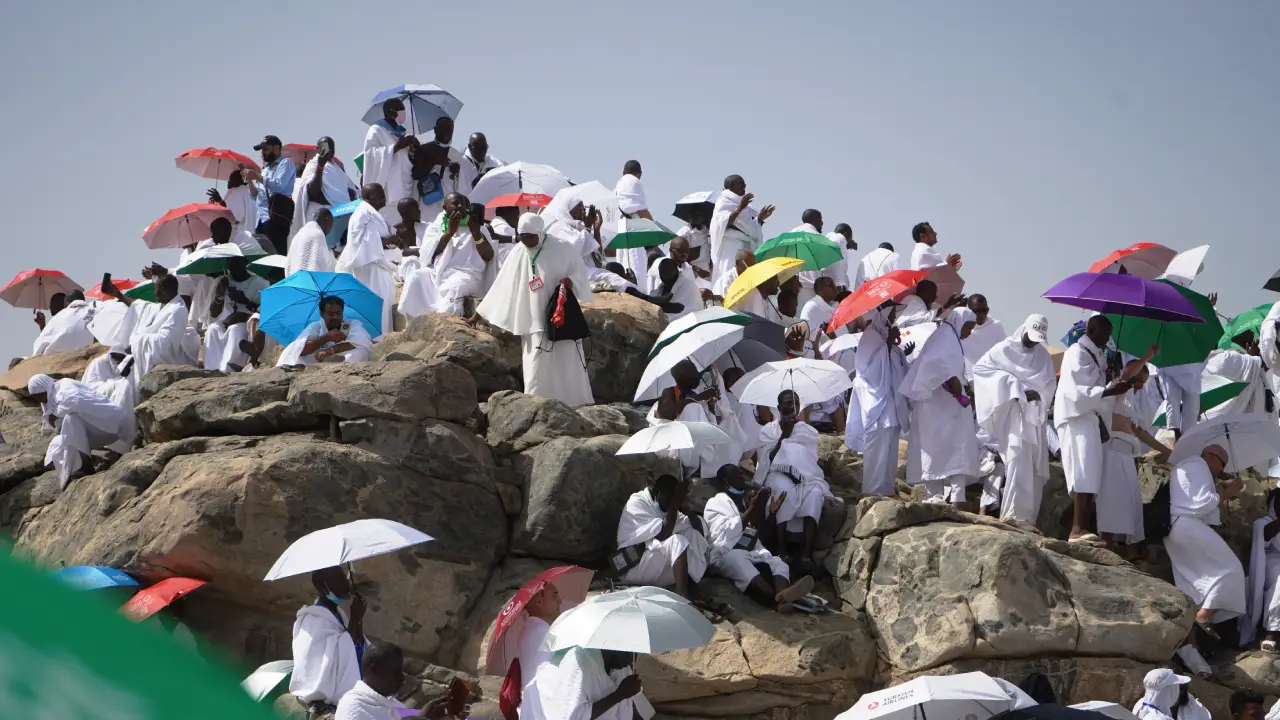
As evening falls, the illuminated pathways fill with throngs of pilgrims moving seamlessly between their tents and the Jamarat, creating a magnificent tableau of humanity united in faith. This profound scene reflects Saudi Arabia’s unwavering commitment to harnessing cutting-edge technology and vast resources to serve pilgrims. Guided by long-term strategic plans, the relevant authorities continuously develop the holy sites to increase operational efficiency, mitigate heat stress, and elevate the overall pilgrim experience, solidifying Saudi Arabia’s position as the undisputed global leader in crowd management.
Day of Tarwiyah
The religious rites performed on the 8th of Dhul Hijjah, known as the Day of Tarwiyah, mark the beginning of the Hajj pilgrimage rituals. Pilgrims enter the state of Ihram and travel from Makkah to Mina, a valley located approximately 7–8 kilometres away.
Key activities for this day include the shortening of Salah, as pilgrims perform the Dhuhr, Asr, Maghrib, and Isha prayers in Mina, shortening the four-unit prayers to two units without combining them, followed by the Fajr prayer the next morning.
At mid-morning on the 8th of Dhul Hijjah, the Prophet went to Mina with his Companions (radiy Allahu ‘anhum). They performed Zuhr, ‘Asr, Maghrib, Isha and Fajr, shortening the four-unit prayers to two. They prayed these at their normal times.
Men recite the Talbiyah aloud from the moment they enter Ihram until the stoning of the Jamrah al-Aqabah on the 10th of Dhul Hijjah.
The day is dedicated to rest, reflection on the Day of Judgment, and preparing spiritually and physically for the Day of Arafat, which is the central pillar of Hajj.
Historically called Tarwiyah (quenching thirst), pilgrims are encouraged to drink ample water and conserve energy, as there was historically no water available at Arafat.
While travelling to Mina and staying there is considered Sunnah (recommended) rather than obligatory, it is a core prophetic practice. If a pilgrim chooses to proceed directly to Arafat on the 8th to avoid crowds or exhaustion, the Hajj remains valid, as the obligation is to stand at Arafat on the 9th.
The Secrets of the Day
As Hajjis spend the day in Mina, they reflect on how it mirrors the waiting on the Day of Judgment, when everyone will stand before Allah for their final account. They use this time to remember Allah, seek His forgiveness, recite the Holy Qur’an, recite the Talbiyah and Takbir in abundance, and express gratitude for His countless blessings. In addition, they reflect on how one prepares for the Hereafter and what one will take with him to the Hereafter.
The 9th of Dhul Hijjah is the most important day of Hajj. It is the greatest and most significant day for every Muslim. Mina is equivalent to the Sunnah prayer, which prepares one for the main Farḍ prayer.