Hajj 2026 has commenced in Makkah and Madinah, bringing into motion one of the world’s largest logistical and spiritual gatherings. Behind the pilgrimage lies an enormous network of preparations. In part 2 of his Hajjnama 2026, Asad Mirza offers an insider’s account of these arrangements.

JEDDAH/MAKKAH: The General Directorate of Civil Defence, Saudi Arabia, has deployed a range of modern technologies to bolster preventive safety measures, most notably a specialised drone designed to detect chemical and radioactive materials, thereby improving field operational efficiency and response times.
Colour-Coded Columns
The General Authority for the Care of the Affairs of the Grand Mosque and the Prophet’s Mosque has launched a colour-coding and geographical tracking system on the ground-floor columns of the Grand Mosque to optimise crowd management and streamline navigation for pilgrims.
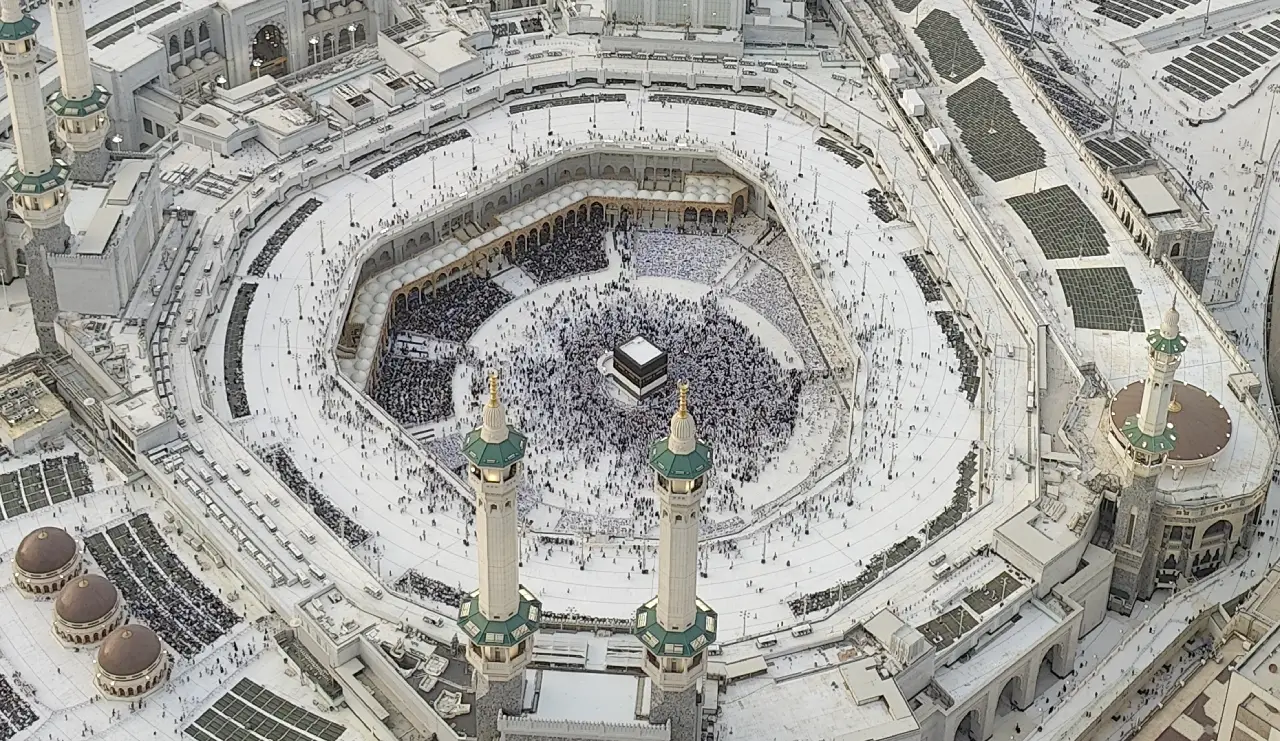
Designed to divide the massive prayer spaces into clear, easily readable zones, the project also adds 84 newly designed directional signs across the Sa’i area. These visual markers are directly synchronised with specific entry gates, main walkways, and key historical landmarks, ensuring that massive seasonal crowds can smoothly navigate the corridors during peak Hajj operational hours.
Digital Map
The General Authority for the Care of the Affairs of the Grand Mosque and the Prophet’s Mosque, Saudi Arabia, has for the first time introduced an interactive digital map to streamline navigation and service access for pilgrims at the Prophet’s Mosque during the 1447 AH Hajj season.
Part of the authority’s ongoing digital transformation initiatives, the interactive platform serves as a pocket guide, enabling visitors to pinpoint essential services, including specific entry gates, restrooms, and Zamzam water distribution points across the main building and surrounding courtyards.
Available directly through the authority’s social media channels, the newly deployed mapping service significantly enhances navigational flow and operational care for the massive seasonal influx of travellers.
Awareness Programme
The Ministry of Islamic Affairs, Dawah and Guidance, Saudi Arabia, has introduced advanced digital platforms to engage pilgrims. Under this initiative, the broadcast features a prominent line-up of scholars discussing key educational and faith-based topics to reinforce the spiritual values of the pilgrimage.
The debut episode, titled Hajj According to the Sunnah, focused extensively on the importance of aligning all actions with Prophetic traditions to ensure ritual validity, highlighted common mistakes made during the pilgrimage, and urged attendees to seek verified rulings exclusively from official scholarly sources.
Health Clusters
The Madinah Health Cluster has deployed fully equipped mobile medical units and dedicated emergency ambulances along the Hijrah Road linking Madinah and Makkah to safeguard pilgrims travelling to the holy sites for the 1447 AH Hajj season.
Staffed by specialised clinical and nursing teams, these units deliver rapid medical examinations, emergency first aid, and critical field interventions in high-density areas. To maintain continuous health monitoring and speed up emergency response times along primary transit networks, the mobile services have been strategically stationed at high-traffic thoroughfares, including the Quba and Sayyid Al-Shuhada mosques.
Makkah Tunnel Network
The extensive tunnel network across Makkah and the holy sites stands as one of Saudi Arabia’s most prominent modern infrastructure projects, traversing the rugged mountains of Makkah and facilitating the seamless movement of vehicles and pedestrians, ensuring smooth and tranquil access to the Grand Mosque and the holy sites in a scene reminiscent of the world’s most advanced metropolitan cities.
The highly integrated network comprises 62 tunnels with a total length exceeding 36,300 linear metres (roughly 36.3 kms), providing the highest standards of safety and operational efficiency. The tunnels are illuminated by more than 9,869 lighting units and equipped with 513 jet fans to maintain optimal air quality.
Emergency response and monitoring capabilities are robustly supported by 326 real-time surveillance cameras, 881 fire hydrants, and 42 backup generators. These are further reinforced by advanced water pumps, automated fire suppression networks, smart sensors, and centralised control systems.
The entire tunnel network operates on an integrated smart technology framework that includes digital operations and real-time monitoring platforms. Artificial intelligence solutions are deployed to enhance traffic analysis and tracking, while strategically placed smart sensors enable rapid and accurate responses to emergencies. These technological integrations significantly improve traffic management efficiency and maximise safety for all tunnel users during peak seasons.
((The writer is a New Delhi-based senior commentator on national, international, defence and strategic affairs, environmental issues, an interfaith practitioner, and a media consultant.)