by Muhammad Nadeem
SRINAGAR: Ten years after Masaan won accolades for its raw depiction of grief and caste dynamics in India, Neeraj Ghaywan returned to the global spotlight with Homebound, a moving drama based on Kashmir’s Basharat Peer’s New York Times article Taking Amrit Home. The film premiered in the prestigious “Un Certain Regard” section of the Cannes Film Festival and received a nine-minute standing ovation, leaving many in the audience visibly moved.

Basharat Peer is a prominent Kashmiri journalist, author, and screenwriter who has made significant contributions to literature and storytelling through his incisive explorations of Kashmir’s socio-political landscape. His acclaimed memoir, Curfewed Night (2010), won the Crossword Book Award for Non-Fiction.
Speaking to Kashmir Life, Basharat Peer recalled the moment that set Homebound in motion. While scrolling through Twitter, he had come across a hazy photograph: two young men on a highway, one cradling the other like a mother. The image, taken in Madhya Pradesh during India’s first lockdown, struck him deeply. It captured, he felt, something essential about human dignity and solidarity, haunting and beautiful at once.
At the time, Peer was based in London, working as the international opinion editor at the New York Times, but had returned to Delhi after the office shut down. He initially considered assigning the story to another reporter, but the image lingered. Unable to let it go, he decided to investigate it himself, to meet the men and understand their lives.
He traced the two men to their village, Devari, located about thirty minutes from Ayodhya in Uttar Pradesh. It was the summer of 2020, during the peak of the first wave of the pandemic, before vaccines had been introduced.
“They offered me chai,” he told Kashmir Life. “I was visiting a poor family. I could not sit there covered in plastic. They knew nothing of the New York Times or the world I came from. I was just another human being with them.”
Set during India’s nationwide COVID-19 lockdown, Homebound traces the arduous journey of two friends, Mohammed Shoaib Ali, a Muslim, and Chandan Kumar, a Dalit, as they walk hundreds of miles from Gujarat back to their home state in Uttar Pradesh. The narrative follows their shared aspiration of joining the police force, a dream threatened by the socio-economic realities exacerbated during the pandemic.
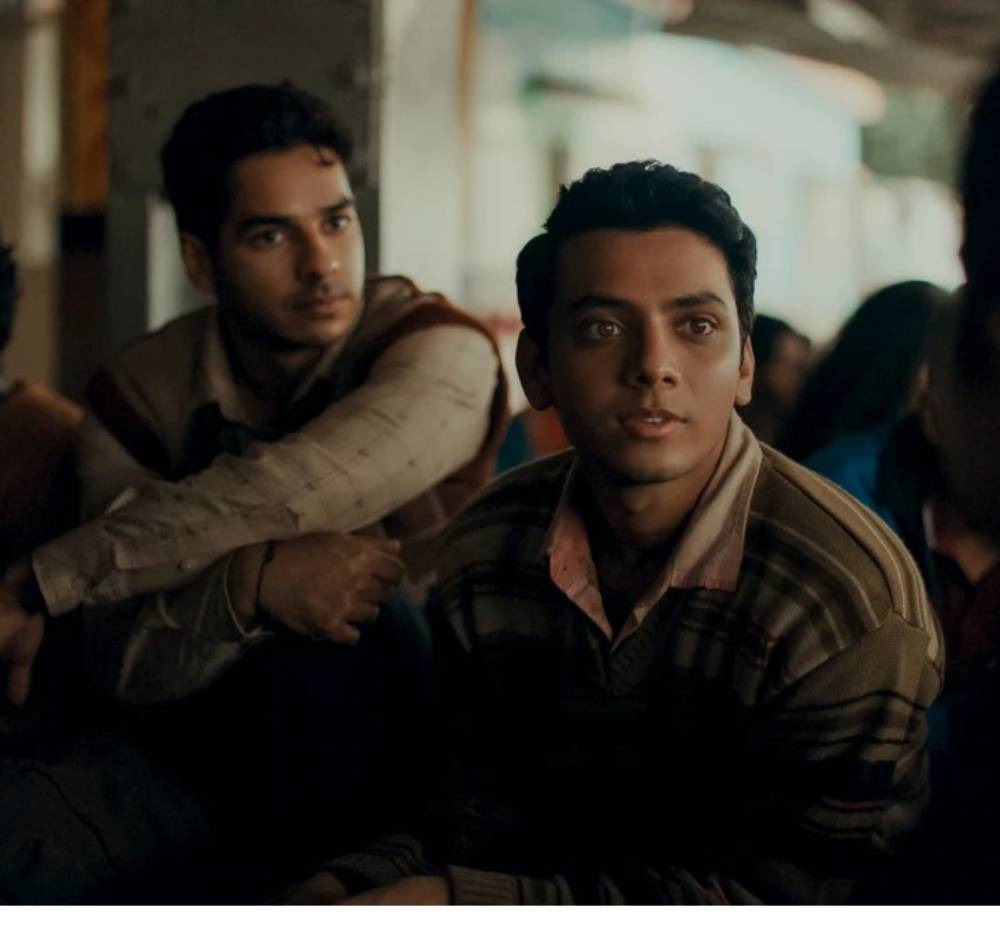
“Friendship at the heart of the story between a Muslim and a Dalit man embodied something profound. They had not set out to represent any ideological coalition; theirs was simply a human bond, formed in their village. In today’s world, everything is reduced to categories and identities, but people remain far more complex,” Peer said.
Peer never imagined the article would be adapted for screen. “I was just writing a story,” he said. “Not a screenplay.” Though he offered informal input on character backgrounds, he made it clear the interpretation belonged to Ghaywan. “It was his prerogative. I was not writing the script or directing the film.”
Ghaywan discovered Peer’s article during the lockdown through Somen Mishra, head of creative development at Dharma Productions. What captivated him was the emotional core of the story: a childhood friendship tested by caste, religion, and circumstance.
Transforming journalism into cinema, Ghaywan built the characters’ backstories while preserving the real-life events of the exodus. He drew from his own life, including his Dalit identity and childhood friendship with a Muslim boy in Hyderabad. These personal connections infused the film with authenticity and emotional depth.
The film’s leads, Ishaan Khatter and Vishal Jethwa play Shoaib and Chandan. Janhvi Kapoor appears in a pivotal role as Sudha Bharati, a fellow Dalit and Ambedkarite who befriends the boys during their travels. Despite her limited screen time, Kapoor’s portrayal leaves a lasting impression.
Homebound marks the first time Martin Scorsese has lent his name as executive producer to a contemporary Indian film. Introduced to the project by French producer Mélita Toscan du Plantier, Scorsese was struck by its emotional resonance and agreed to mentor the team through several editing rounds.
Joining Scorsese in backing the film were Karan Johar, Adar Poonawalla, Apoorva Mehta, and Somen Mishra, with Marijke de Souza and Toscan du Plantier as co-producers. Ghaywan’s preference for inclusivity extended behind the camera as well, with a crew comprising at least 50 per cent women and members from marginalised communities.
At Cannes, Ghaywan received a warm embrace from Johar and his young cast after the screening. Indian director Mira Nair and Pakistani filmmaker Saim Sadiq were among those who attended the premiere in solidarity. The applause was not merely for the film’s craft but for its courageous storytelling

Homebound explores the barriers faced by India’s marginalised, including the indignities of caste-based discrimination and the precarious existence of daily wage earners during the pandemic. Ghaywan’s direction captures these experiences with clarity and warmth that elevate the film beyond political rhetoric.
The cinematography by Pratik Shah is especially notable. A haunting overhead shot of migrant workers walking under dim streetlamps evokes the invisibility of their plight. These images, more than dialogue, encapsulate the film’s essence.
The script avoids overt moralising, letting the characters’ lived realities speak for themselves. Chandan hesitates to reveal his surname, fearing caste-based rejection, while Shoaib dreams of wearing the police uniform, believing it will erase all divisions. Their journey, filled with small victories and greater frustrations, is emblematic of the Indian youth’s aspirations and challenges.
Critics lauded Vishal Jethwa’s portrayal of Chandan, a character who remains hopeful despite systemic setbacks. Khatter’s Shoaib is equally compelling, a resilient figure navigating a society that repeatedly questions his patriotism.
Though Kapoor’s Sudha has limited scenes, she brings moral clarity to the narrative. Her character, rooted in Ambedkarite ideology, offers solidarity and strength to the protagonists.
Homebound resonates as both a personal story and a national reckoning. It does not offer easy answers but compels viewers to reflect on systemic inequalities and their human cost. By anchoring the film in the interior lives of its characters, Ghaywan has created a work that feels immediate and essential.
As the credits rolled at the Debussy Theatre, tears and applause followed. For Ghaywan, it was more than a cinematic triumph, it was a moment of validation, a return home.
Reflecting on the film’s impact, Basharat Peer shared his response after watching it, “I watched the film recently, and it is a truly thoughtful adaptation of my story. It is incredibly difficult to adapt something sensitively, to capture the soul of a story, its tone, and what is said and implied between the lines. Homebound does all of that. I was moved to watch it and found myself in tears while seeing it.”