SRINAGAR: A serious medical diagnosis can change everyday life overnight. While treatment naturally becomes the immediate priority, many families also begin thinking about how they will manage their finances over the weeks and months ahead. A health insurance policy generally helps with eligible hospitalisation expenses, depending on its terms and conditions. However, some costs linked to recovery may continue long after a hospital stay. This is why critical illness insurance is often considered alongside regular health cover.
Why Are Hospital Bills Only Part of The Financial Picture?
Leaving the hospital does not always mean the financial pressure has ended. Recovery may involve follow-up consultations, rehabilitation, home nursing, medical equipment, or travel for specialised treatment. At the same time, taking extended leave from work can affect your regular income while household expenses continue as usual.
These ongoing costs are different from hospital bills and can place additional pressure on your finances, depending on your circumstances.
How Does Critical Illness Cover Work Differently from Health Insurance?
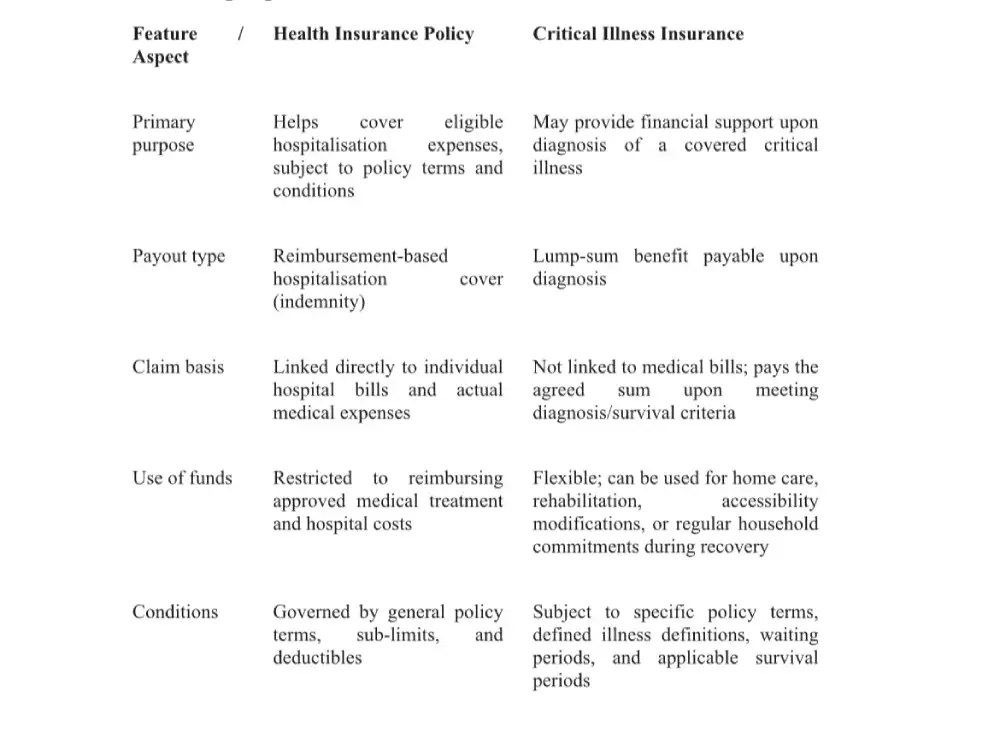
Although both policies support healthcare expenses, they serve different purposes:
How Can This Help During Recovery?
A serious illness can affect more than medical expenses. Treatment may continue over several months, and during that time, day-to-day financial commitments remain unchanged. Loan repayments, rent, utility bills, school fees, and household expenses still need to be met, even if your regular income is affected.
Unlike a reimbursement-based health insurance health insurance policy, critical illness insurance may provide a lump sum benefit, subject to the policy terms. This amount can offer greater flexibility in meeting expenses that are not directly linked to hospital bills.
What Should You Check Before Choosing a Policy?
It is easy to compare premiums and ignore everything else. The real differences often sit inside the policy wording. One policy may cover a different list of illnesses than another, while waiting periods, survival periods, and exclusions can also vary. Spending a few extra minutes on these details before buying a policy is usually more useful than trying to understand them after a diagnosis. If you have any questions, the insurer can explain how the policy works.
Conclusion
Financial planning is about more than setting money aside for expected expenses. Unexpected situations deserve the same attention. Critical Illness Insurance Critical Illness Insurance has a different purpose from regular health insurance, so it is worth considering how each one fits into your overall financial planning. As with any policy, compare the available options and refer to the policy wording to understand the applicable features, terms, conditions, and exclusions.