by Syed Shadab Ali Gillani
SRINAGAR: “My father wanted me to become a doctor,” said Chief Minister Omar Abdullah, “but I didn’t have the courage. I couldn’t handle cadavers.”
The comment, made at the Annual Day function of SKIMS Medical College & Hospital, Bemina, drew laughter from a hall filled with students, doctors, faculty members, and parents. The anecdote served as an entry into a serious address about the responsibility carried by medical professionals in Kashmir and the trust placed in them by the people.
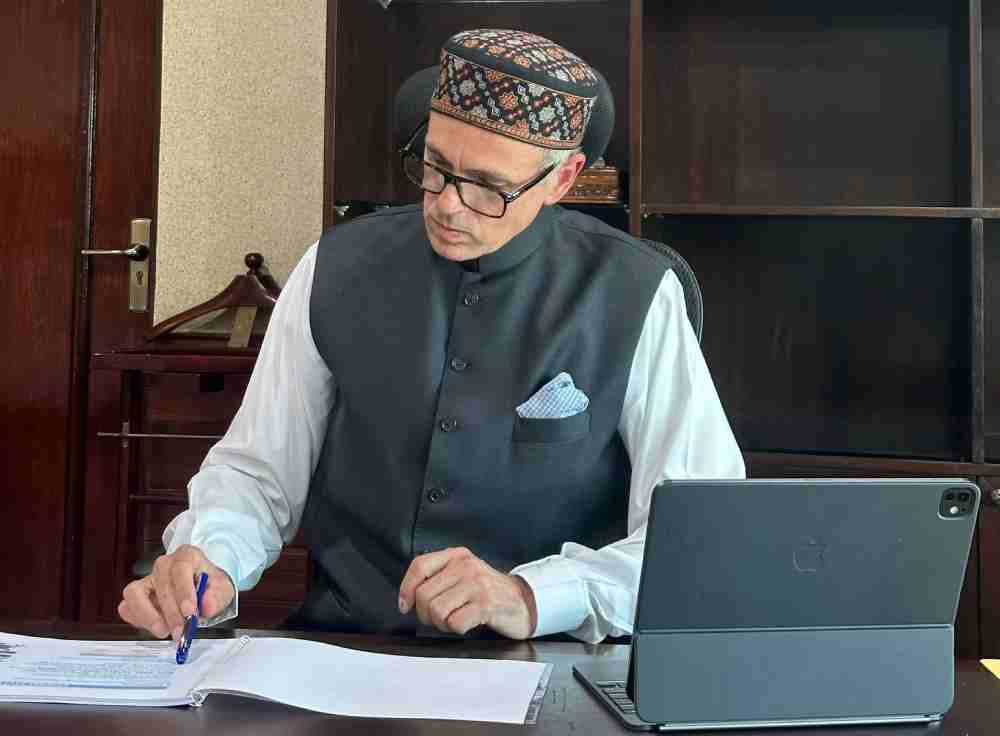
“I couldn’t do it. But those who do, especially in Kashmir, carry a responsibility that goes beyond diagnosis and prescriptions,” he said. “Patients here place their utmost trust in their doctors, almost as much as they place in Allah. That trust must be upheld with integrity.”
Though the event marked the distribution of certificates and ceremonial congratulations, Abdullah’s speech went beyond routine praise, focusing instead on the larger duties associated with the white coat in Kashmir.
The event also saw the presence of Minister for Health and Medical Education Sakina Itoo, Advisor to the Chief Minister Nasir Aslam Wani, Secretary H&ME Dr Syed Abid Rashid Shah, Director SKIMS Soura Prof. Mohammad Ashraf Ganai, and Principal SKIMS Bemina Dr Fazlul Qadir Parray.
Personal Detour, Public Address
Turning to Health Minister Sakina Itoo, Abdullah teased: “Sakina, if you had become a doctor, you would not have reached the Mazar-e-Shauhda on a scooter.”
“Allah did not make me a doctor,” he said. “But He gave me a role where I can serve doctors and help improve the system they work in.”
“I couldn’t do it. But those who do especially in Kashmir carry a responsibility that goes beyond diagnosis and prescriptions.”
Between Science and Simulation
Abdullah touched on developments in medical technology, including the growing presence of artificial intelligence and robotics. He referred to platforms like ChatGPT, sharing an anecdote about someone seeking medical advice through AI.
“Someone asked ChatGPT for advice about a relative’s condition, and it replied: ‘You are an excellent son. Your father should be proud.’”
He said AI can mimic advice and emotion but cannot replace the human relationship between a doctor and a patient.
“Doctors today are not just competing with each other. They’re also competing with machines.”
The Rural Health Gap
The Chief Minister also focused on rural health infrastructure. He said that improving city hospitals would not be enough if rural populations continued to be referred to tertiary centres for minor procedures or routine deliveries.
“If our villages lack staff and basic capacity, then our best hospitals in the cities will never be enough,” he said.
Abdullah criticised the reluctance of some doctors to work in rural areas, citing the case of a government medical appointee who requested a transfer from Bandipora, citing the distance from Ganderbal.
“In Delhi, it takes doctors longer to travel to their hospitals. Here, someone complains about being posted an hour away.”
He said doctors accepting government positions must be ready to serve where needed, not just where preferred.
Institutional Coordination
In a lighter moment, Abdullah referenced the dynamic between SKIMS Soura and SKIMS Medical College Bemina, saying their relationship should be collaborative rather than competitive.
“This should not be a saas-bahu relationship,” he said, noting that any tension that affects functioning would be looked into by the government.
He acknowledged the rising popularity of Principal Dr Fazlul Qadir Parray, remarking that it was uncommon for institutional heads to be appreciated widely in just four months.
“Usually, the graph declines. Here, it’s going up,” he said, suggesting that the college was moving in the right direction under its current leadership.
Looking Ahead
On the occasion, the Chief Minister presented certificates to the graduates of the 2019 MBBS batch and felicitated the families of deceased faculty members, recognising their service.
He told the graduating students that earning their degree was only the first step and that true responsibility begins in service, especially in public healthcare.
“There is no compulsion to work in the government. You can work in private hospitals or go abroad. But if you accept a government position, then you must serve where the government sends you.”
He reminded students that their education was built on parental sacrifice and public funding, both of which demand professional commitment in return.
Omar Abdullah reiterated that health and medical education would remain a key priority for his administration. He assured students, faculty, and administrators of continued investment in infrastructure, staffing, and training.
“You will get our full support, but we expect commitment in return—from city hospitals to rural PHCs.”
He concluded by assuring parents that their children’s futures were in focus, saying the government would now take on the responsibility of creating meaningful platforms for them to contribute to the health system of Jammu and Kashmir.