JAMMU: In a detailed response tabled in the Legislative Assembly today, the Government of Jammu and Kashmir laid bare the full arc of its engagement with one of the region’s longest-standing humanitarian legacies — the rehabilitation of families displaced by the Partition of 1947 and subsequent Indo-Pak conflicts. The written reply, furnished in response to a question by BJP legislator Rajiv Jasrotia, documents decades of policy measures, land allocations, financial assistance, and legal recognition granted to refugees from Pakistan-occupied Jammu and Kashmir (PoJK) and particularly from the Chhamb and Deva Batala sectors.
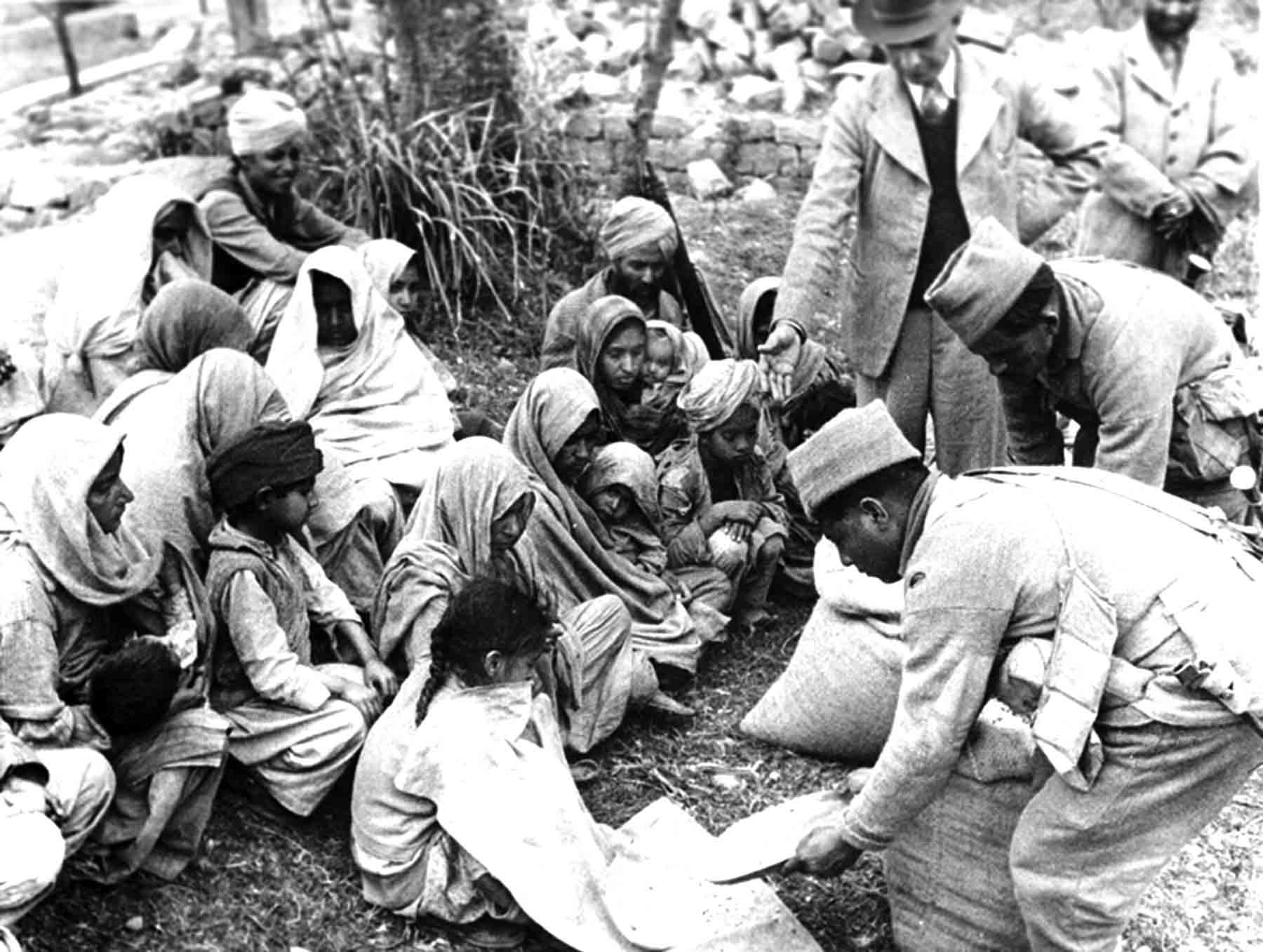
The narrative of displacement begins in the immediate aftermath of Partition, when an estimated 31,619 families crossed over from PoJK to the Indian side. Of these, 26,319 chose to settle within Jammu and Kashmir, while approximately 5,300 families migrated to other parts of the country. Some of those who had initially moved outside the state returned in later years and were accommodated again within Jammu and Kashmir.
The state administration moved quickly to register these families through a Joint Rehabilitation Board. An initial cash relief package was announced, with each urban family receiving Rs 3,500 and rural families granted Rs 1,000. Alongside this, displaced persons were provided land and housing in various districts, including Jammu, Udhampur, Nowshera, and Srinagar. These were sourced from a mix of evacuee properties and state land, and over time more than ten lakh kanals were allotted.
As part of long-term stabilisation, ownership rights were conferred on the displaced families through official government orders issued in 1954 and again in 1965. These acts not only regularised their holdings but also extended legal recognition and security to thousands who had lived for years in precarious conditions.
The second wave of displacement came with the Indo-Pak wars of 1965 and 1971. The Chhamb and Deva Batala sectors along the Line of Control witnessed intense military engagements, prompting the evacuation of 13,510 families from 47 border villages. These displaced persons were settled in 156 clusters spread across the districts of Jammu, Samba, and Kathua. In response to their plight, the government enacted a series of relief initiatives. In the year 2000, financial assistance of Rs 25,000 per family was approved for those living in camps and Rs 50,000 for those residing outside.
Urban colonies developed for the displaced population, especially in Jammu city, were gradually incorporated under municipal development and regularisation schemes. Many of these settlements, which had started as makeshift arrangements, have since evolved into established residential neighbourhoods with improved civic infrastructure.
A significant policy milestone came in 2015 with the announcement of the Prime Minister’s Development Package (PMDP). Under this scheme, one-time financial assistance of Rs 5.5 lakh per family was sanctioned for each of the 26,319 displaced families within the Union Territory. The total outlay for this component stood at Rs 1,452 crore, of which Rs 1,440 crore had been disbursed by February 2024. Importantly, families that had migrated to other Indian states after Partition — and were initially left out of earlier rehabilitation schemes — were brought under the PMDP framework following directions from the Ministry of Home Affairs in 2016. Their inclusion was made subject to verification of eligibility by the respective state governments.
The rehabilitation framework extended beyond cash and land. Displaced persons were given access to educational scholarships, housing schemes, and even reservations in government employment. The government has said that these measures were designed to enable long-term socio-economic integration of the affected families and to help rebuild lives fractured by conflict and displacement.
In 2024, the Government has laid out detailed conditions under which displaced persons (DPs) from Pakistan-occupied Jammu and Kashmir (PoJK) and West Pakistan can be granted proprietary rights over the Evacuee Property land allotted to them after displacement during the Partition and subsequent wars. The rules apply to various categories of DPs including those of 1947, 1965, and 1971, many of whom have lived on such land for generations.
According to official orders and provisions under the Jammu and Kashmir Agrarian Reforms Act, 1976, occupancy tenancy rights were granted to DPs who have either received such rights formally or have maintained uninterrupted recorded personal cultivation of the land since its allotment under Cabinet Order No. 578-C of 1954. Similar provisions were made for West Pakistan Displaced Persons (WPDPs), who were allowed to retain possession under Paragraph 15 of Government Order No. Reh-371 dated September 9, 1971.
Crucially, the government recognises ownership claims of individuals who acquired land through legally registered sale or mortgage deeds from the original DPs of 1947, provided these transactions were between valid recipients of tenancy rights under the Agrarian Reforms Act and the present occupants. These transfers must also be supported by a consistent record of personal cultivation.
However, the process of conferring proprietary rights is subject to a strict framework. Applicants must demonstrate lawful possession and cultivation and submit affidavits confirming that applications are made either by the original DP or all legal heirs as per applicable inheritance laws. Any forged documentation or concealment of facts disqualifies the claimant.
The land ceiling provisions under both the 1954 Cabinet Order and the 1976 Agrarian Reforms Act continue to govern these transactions. Notably, while evacuee and state land held by the family at the time of allotment is factored into this ceiling, property acquired later by way of purchase, gift, or inheritance is not considered for the 1954 ceiling, though it is for the 1976 Act.
Families must also account for any evacuee or state land that was later acquired by the government against compensation while computing the total landholding. Municipal land allotted within city limits is excluded from proprietary transfers, and illegal encroachments are explicitly barred from any claim of ownership.
Further restrictions prohibit the use of power of attorney for land transfers and forbid the conversion of agricultural land to other uses, except residential or allied agricultural activities. Only legal transfers through sale deeds of tenancy rights, as per Section 3-A of the 1976 Act, are recognised.
Applications for such transfers must be submitted to the local Tehsildar along with proper documentary proof. These elaborate terms reflect the government’s attempt to balance historical justice for displaced families with land ceiling norms and legal sanctity over evacuee property.
The administration said it continues to monitor these initiatives through the Department of Disaster Management, Relief, Rehabilitation & Reconstruction, which regularly organises camps to reach out to families who may have been overlooked.
Yet, despite the extensive list of interventions, questions of justice and closure remain. Legislator Rajiv Jasrotia, whose query prompted the detailed reply, observed that the issue goes beyond compensation. “This is not just about compensation,” he said. “It is about the rightful restoration of dignity, identity, and a sense of belonging to people who have suffered the trauma of displacement through no fault of their own.”
The government’s reply, while exhaustive in its statistics and record of programmes, also functions as a sobering reminder of the long shadow cast by conflict. For the thousands of families from PoJK and the war-torn plains of Chhamb, the struggle to rebuild continues — a testament to their resilience and a continuing responsibility for the state.