SRINAGAR: The lithium mining project in Jammu and Kashmir stands as a glaring example of the failures of the current administration, Congress leader Jairam Ramesh said in a statement after the government cancelled the mining project contract for the second time.
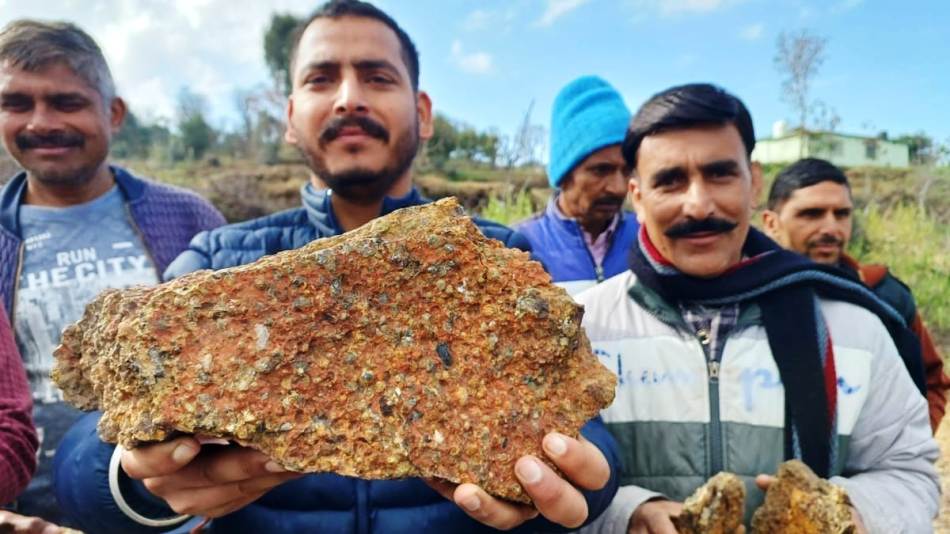
The discovery of nearly six million tons of lithium in the Salal-Haimana area of Reasi District in Jammu and Kashmir had generated considerable excitement, highlighting the potential of this rare and critical mineral. However, a year later, the government has had to scrap two rounds of auctions for mining rights in the area due to insufficient interest from investors, he said.
Lithium, a key mineral for the 21st century, plays a crucial role in the global energy transition. There has been a worldwide rush among investors to secure reliable access to lithium mining rights.
“It is not financial disinterest that is precluding investors from interest in the lithium reserves in Reasi – it is the failing security situation in the region,” Jairam said in a statemnet. “Twelve soldiers in Jammu and Kashmir have been martyred in terrorist attacks in July alone, and Reasi itself saw a dastardly attack on a civilian bus on June 9th, 2024.”
India’s Lithium Ambitions Hit Snag as Jammu Kashmir Auction Annulled Again
Jairam said the Finance Minister’s recent decision to reduce import duty on lithium to zero in the Union Budget appears to be an acknowledgement of the significant challenges facing domestic lithium mining. “This decision, which would make it harder for newer, domestic mines to compete, appears to be an acknowledgement that we are many years away from seeing any commercialization of this project,” he said. “This reduction in import duty will likely make it harder for new domestic mines to compete, suggesting that commercializing the lithium project in Reasi is still many years away.”
The government recently scrapped the auction of three critical mineral blocks, including the lithium mine in Jammu and Kashmir. According to a notice by the Mines Ministry, the auction was annulled because the required number of bids, as per mineral auction rules, had not been received. This decision underscores the persistent challenges facing the project and the region.
The Mines Ministry had initially put seven critical mineral blocks on sale in the third round of auction on March 14. These blocks, which had received less than three bids in the first tranche, were re-notified under this round. The blocks pertain to critical minerals such as Glauconite, Graphite, Nickel, PGE, Potash, Lithium, and Titanium, spread across Bihar, Jharkhand, Tamil Nadu, Uttar Pradesh, and the Union Territory of Jammu and Kashmir.
Earlier, the government had also cancelled the auction of 14 blocks of critical minerals launched in the second tranche, following a similar lukewarm response. In the first tranche, the auction for 13 of the 20 blocks put on sale was cancelled for the same reason.
Despite these setbacks, the Centre launched the fourth round of auctions of critical and strategic mineral blocks last month, offering 21 mines across several states, including Arunachal Pradesh, Chhattisgarh, Jharkhand, Karnataka, Rajasthan, Maharashtra, and Uttar Pradesh. Out of these 21 blocks, 11 are new, spanning Arunachal Pradesh, Chhattisgarh, Jharkhand, Karnataka, Rajasthan, and Uttar Pradesh. These blocks contain a variety of minerals, including Graphite, Glauconite, Phosphorite, Potash, Nickel, PGE, Phosphate, and Rare Earth Elements (REE).