SRINAGAR: India is making significant strides in developing its carbon market, which is expected to play a critical role in achieving the country’s climate goals. As part of its commitment to the Paris Agreement and Nationally Determined Contributions (NDCs), India aims to reduce the emissions intensity of its GDP by 45 per cent by 2030 compared to 2005 levels. The Indian Carbon Market (ICM), established under the Energy Conservation Amendment Act of 2022, is central to this effort.
The ICM provides a mechanism for carbon credit trading, allowing companies to reduce their greenhouse gas (GHG) emissions and either earn or purchase carbon credits as part of their compliance with emission intensity reduction norms. The market is built on two core mechanisms: the compliance mechanism, in which obligated entities must meet prescribed GHG emission intensity reduction targets and are rewarded with carbon credits, and the offset mechanism, which allows non-obligated entities to earn credits by reducing, removing, or avoiding emissions through approved projects.
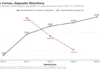
India’s carbon market aligns with its broader decarbonisation strategy, as the country continues to decouple economic growth from GHG emissions. According to the latest data in India’s Third National Communication to the UNFCCC, the emission intensity of India’s GDP has been consistently declining, from a 12 per cent reduction in 2010 to a 33 per cent reduction by 2019, compared to 2005 levels. The establishment of the carbon credit trading system is expected to accelerate this progress, helping India meet its ambitious climate goals.
As part of this initiative, the government has devised a transition plan to shift energy-intensive industries from the existing Perform, Achieve, and Trade (PAT) scheme to the new Carbon Credit Trading Scheme (CCTS). The PAT scheme, introduced in 2012, targeted specific energy-intensive sectors, setting energy consumption reduction targets. Under CCTS, nine sectors—Aluminium, Cement, Steel, Paper, Chlor-Alkali, Fertiliser, Refinery, Petrochemical, and Textile—are now designated for inclusion, ensuring that these key industries remain integral to the carbon market’s expansion and play a large role in India’s emission reduction efforts.
The government’s approach to building a robust ICM is underpinned by a comprehensive Monitoring, Reporting, and Verification (MRV) framework, which is crucial for ensuring transparency and accountability. The MRV system tracks emissions reductions and verifies the issuance of carbon credits. Developed by the Bureau of Energy Efficiency (BEE), the MRV framework has been designed through an extensive consultative process involving various stakeholders. This process ensures that all carbon credits issued reflect actual reductions in emissions, thus maintaining the credibility of the scheme.
The process of accrediting Carbon Verification Agencies (ACVs), who are responsible for verifying emissions data and carbon credit issuance, is a key component of the MRV framework. The BEE has developed detailed procedures and eligibility criteria for these agencies, following consultations with stakeholders to ensure they meet the required standards. The final MRV guidelines were published in July 2024, marking a crucial step in the development of a credible and effective carbon market in India.
India’s carbon market, through its carbon credit trading system, aims not only to meet emission reduction targets but also to foster sustainable, low-carbon economic growth. By integrating energy-intensive sectors, improving transparency, and ensuring proper verification of emission reductions, the Indian Carbon Market is positioning itself as a vital tool in the country’s strategy to meet its climate commitments. With its innovative approach and forward-thinking framework, India’s carbon market is poised to emerge as a global example of how nations can leverage market-based mechanisms to achieve their environmental goals.