SRINAGAR: The reported damage to a US F-35 stealth fighter during a combat mission over Iran marks a potentially watershed moment in modern warfare, challenging long-held assumptions about the invulnerability of fifth-generation aircraft and the extent of US air superiority in the ongoing conflict.

According to CNN, a US F-35 was forced to make an emergency landing at a military base in the Middle East after being struck by what is believed to be Iranian fire. The aircraft landed safely, and the pilot is in stable condition, according to a US Central Command spokesperson. Tim Hawkins confirmed, adding that the incident is under investigation.
A similar account by Al Jazeera noted that the aircraft had been flying a combat mission over Iran when it was forced to land, with Tehran claiming responsibility for targeting the jet—though Washington has not fully confirmed the cause.
Military analysts say the incident is significant not because an aircraft was damaged, but because of what was hit.
The F-35 Lightning II is widely regarded as the backbone of US and allied air power and among the most advanced combat aircraft ever built. Designed with stealth technology, it is engineered to evade radar detection and operate deep within heavily defended airspace—conditions under which conventional aircraft would face a high risk.
As highlighted in reporting by the Economic Times, even limited damage to an F-35 is strategically important because it challenges the perception that such aircraft can operate “with near impunity” in contested environments.
According to India Today, there have been no confirmed instances in the F-35’s operational history of it being struck by enemy fire before this incident, making it a potential first in combat conditions.
The development raises critical questions about the effectiveness of stealth technology itself. While stealth reduces radar visibility, it does not make aircraft invisible.
An analysis cited by NDTV explains that modern air defence systems can detect aircraft through alternative means, such as infrared tracking, which locks onto heat signatures generated by jet engines. This suggests that even advanced platforms like the F-35 may be vulnerable under certain operational conditions.
The incident is particularly striking given recent US claims. Senior officials, including Defence Secretary Pete Hegseth, had stated that Iran’s air defence systems had been “flattened.” Yet the reported strike indicates that Iranian capabilities may still be functional—and possibly adaptive.
Experts say the episode could force a reassessment of US and Israeli air operations over Iran. The ability—or perceived ability—of Iranian defences to track and hit a stealth aircraft suggests that the US may not have achieved full air dominance, but only “localised air superiority” in parts of Iranian airspace.
The broader implications extend beyond the current conflict. The F-35 programme, costing hundreds of billions of dollars and deployed by multiple allied nations, is central to Western military doctrine. Any demonstrated vulnerability could have ripple effects on global defence planning and procurement.
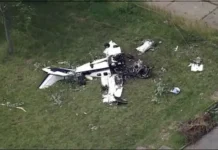
The incident comes amid a series of US aircraft losses since the conflict began in late February. According to CNN, previous losses included three F-15 fighter jets shot down in a friendly-fire incident and a KC-135 refuelling aircraft crash in Iraq that killed all six crew members.
However, none of those incidents involved confirmed enemy engagement with a frontline stealth platform—making the F-35 episode distinct.
While investigations are ongoing and details remain limited, analysts broadly agree that the development is disproportionate to the damage itself.
If confirmed as a successful strike by Iranian defences, it would mark a rare breach of one of the most sophisticated aerial systems in operation today—potentially reshaping assumptions about stealth warfare and the balance of power in contested skies.
At least 16 US military aircraft have been lost since the onset of the conflict with Iran, including 10 MQ-9 Reaper drones brought down by hostile fire, while several others have sustained damage in strikes and operational incidents, according to officials cited by Bloomberg.
The most serious losses, however, have stemmed from accidents. These include three F-15 fighter jets downed by friendly fire in Kuwait and a KC-135 refuelling tanker destroyed during a mid-air operation, killing all six crew members on board. A further five KC-135 aircraft were reportedly damaged in an Iranian missile strike on a base in Saudi Arabia.
So far, Iranian air defences have only successfully targeted uncrewed systems in flight, with at least nine Reaper drones shot down. Another drone was struck on the ground at an airfield in Jordan by a ballistic missile, while two more were lost in separate accidents. Designed for high-risk missions, these drones are considered expendable due to their relatively lower cost and absence of onboard pilots.
Analysts suggest the scale and intensity of US air operations may be contributing to the losses. The volume of sorties flown in the early phase of the conflict is reported to have exceeded those conducted at the outset of the Gulf War. “The difference might be a much greater rate of effort,” said Peter Layton, as quoted by Bloomberg.
Despite initial attempts to degrade Iran’s air defence network, full air superiority remains elusive. A US F-35 fighter jet was recently forced to make an emergency landing at a regional base after being struck by what is believed to be Iranian fire; the pilot survived, according to a CNN report citing a CENTCOM official. US military officials now acknowledge that only “localised air superiority” has been achieved in parts of Iranian airspace, underscoring continuing operational challenges. Active air defence systems are also complicating efforts to secure strategic corridors such as the Strait of Hormuz.
Experts note that such incidents are not unusual in high-tempo combat environments. “Periodic accidents like the tragic mid-air collision involving KC-135s are an unfortunate likelihood in large, high-pressure operations,” said Justin Bronk.
As the conflict enters its third week, Iran has sustained a steady tempo of regional strikes, including attacks on energy infrastructure in Qatar and Saudi Arabia, in retaliation for earlier strikes on its South Pars gas field.