SRINAGAR: In a dramatic escalation of hostilities between Iran and Israel, a missile launched from Iranian territory struck the prestigious Weizmann Institute of Science in Rehovot late Saturday night, causing extensive damage to at least one laboratory building and igniting a fire on the campus. Israeli officials confirmed the strike early Sunday morning, calling it a serious blow to a cornerstone of Israel’s scientific and security establishment.

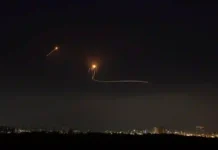
The attack came as part of a broader retaliatory barrage of over 150 missiles and drones launched by Iran, following Israeli airstrikes earlier in the week on multiple Iranian military and nuclear facilities. While Israeli defence systems managed to intercept the majority of the incoming projectiles, several managed to evade interception, including the one that hit the Weizmann Institute.
According to initial reports from Israeli emergency services, the missile caused a significant blaze within the Weizmann campus, which houses some of Israel’s most sensitive research laboratories. Images reviewed by The New York Times confirmed that at least one building was ablaze following the strike. Firefighters managed to contain the flames before they could spread to adjacent facilities, though the extent of internal damage is still being assessed.
Founded in 1934 by Chaim Weizmann—who later became Israel’s first President—the Weizmann Institute has long been considered one of the premier scientific research institutions in the world. With a legacy of innovation in chemistry, physics, artificial intelligence, and space research, the institute is closely linked to Israel’s defence research ecosystem. Its collaboration with Elbit Systems, a leading Israeli defence contractor, on programmes such as the ULTRASAT space telescope and bio-inspired materials for security applications has drawn attention from both academic and strategic observers.
Although the Israeli Defence Forces (IDF) have not confirmed whether the institute was directly targeted or struck by miscalculation, the symbolic nature of the hit has alarmed Israeli officials and the broader academic community. The Weizmann Institute had never before sustained direct damage in a military conflict.
Emergency teams remained at the site through the early hours of Sunday, with Hebrew-language media suggesting that rescue crews were checking whether anyone might still be trapped in the damaged facility. As of Sunday morning, there were no confirmed casualties from the strike on the institute.
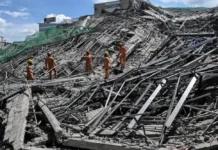
Elsewhere, the Iranian barrage caused heavy destruction. In Bat Yam, near Tel Aviv, at least six people were reported killed after a residential tower collapsed under missile impact. Dozens remain missing. In northern Israel’s Tamra, a missile strike on a family home claimed the lives of four members of the same household.
The overnight missile onslaught marks one of the most intense Iranian strikes on Israeli soil to date. It followed a series of Israeli air operations that reportedly hit more than 100 targets inside Iran, including locations tied to uranium enrichment and ballistic missile development.
In response to the attack, Israel has kept its airspace closed and issued evacuation advisories for civilians living near weapons production zones across central Israel, suggesting the possibility of further Iranian retaliation or follow-on strikes.
The Weizmann Institute’s destruction is being viewed not only as a physical loss but also a psychological one. The institution, which employs nearly 3,800 researchers, students, and staff, has been associated with six Nobel laureates and three Turing Award winners, and built one of the world’s first electronic computers, WEIZAC, in the 1950s. Its reputation for cutting-edge scientific research has been integral to Israel’s status as a global leader in defence technology.
As tensions continue to rise, the strike on the Weizmann Institute is likely to be remembered as a moment when a symbolic red line was crossed—when war reached the laboratories that have long powered Israel’s technological edge.