SRINAGAR: Israel and the Iran-backed Hezbollah movement agreed to a ceasefire in Lebanon on Friday following a sharp escalation in cross-border fighting that had threatened to derail a wider U.S.-Iran agreement aimed at ending months of regional conflict and reopening negotiations over Tehran’s nuclear programme.
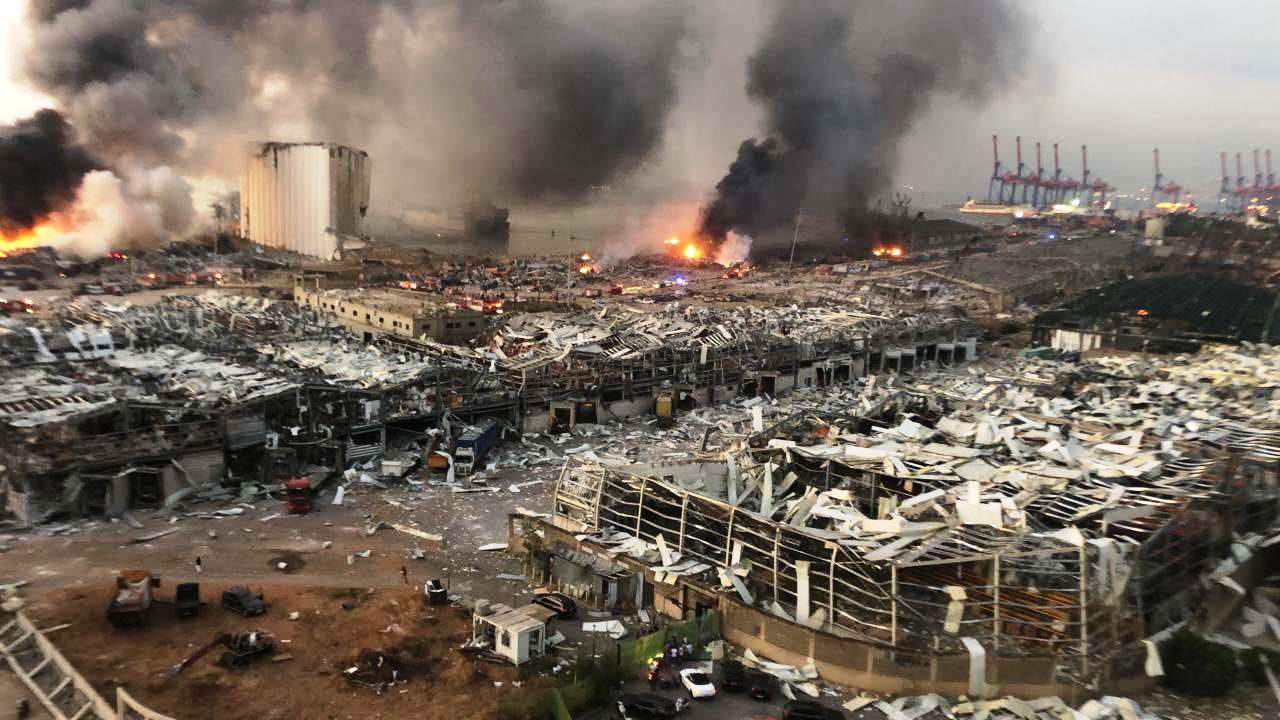
According to reports from Reuters and The Associated Press, the truce was brokered through mediation involving the United States, Qatar and Iran after heavy fighting in southern Lebanon left at least 47 people dead in Lebanon and four Israeli soldiers killed.
The ceasefire came amid growing international concern that continued hostilities along the Israeli-Lebanese border could undermine an interim agreement reached earlier this week between Washington and Tehran to halt the broader war that began on February 28.
While neither Israel nor Hezbollah immediately issued a joint confirmation of the agreement, officials from both sides indicated that hostilities would cease under the arrangement.
A senior U.S. official told Reuters that the ceasefire took effect around 4 p.m. local time following negotiations involving American, Qatari and Iranian intermediaries. Two Hezbollah-linked sources and a senior Israeli official also confirmed the truce to Reuters.
“If Hezbollah does not attack us, then for us it is not a time of war,” the Israeli official was quoted as saying, while adding that Israeli forces would remain deployed in parts of southern Lebanon along the northern border.
Fighting Continues
Despite reports of a ceasefire, artillery fire and explosions were reported along the border hours after officials disclosed the agreement.
The Israeli military said four soldiers, including a lieutenant colonel, were killed in an attack on a tank near the southern Lebanese city of Nabatiyeh. Another five soldiers were wounded in a drone strike.
In response, Israeli forces launched multiple strikes against what the military described as Hezbollah infrastructure in Nabatiyeh and other locations. Additional attacks were reported in Lebanon’s eastern Bekaa Valley.
Israeli Prime Minister Benjamin Netanyahu said Israel had struck approximately 150 Hezbollah targets and warned that any attacks on Israeli troops would carry a “very heavy price.”
Hezbollah, meanwhile, acknowledged targeting Israeli military positions and said its operations were carried out in response to what it described as Israeli violations of previous ceasefire understandings.
The group said Israeli forces had attempted to advance toward the strategic Ali al-Taher hill overlooking Nabatiyeh, prompting retaliatory action.
Lebanon’s Health Ministry reported that at least 18 people were killed and 33 wounded in Israeli airstrikes across 11 southern towns on Friday alone.
Switzerland Talks Delayed
The renewed violence also forced the postponement of planned U.S.-Iran negotiations in Switzerland that were expected to focus on transforming the interim agreement into a permanent settlement.
Iranian officials declined to travel to Switzerland, insisting that fighting in Lebanon must stop before further talks could proceed. U.S. Vice President JD Vance also postponed a planned visit.
Iran’s Foreign Ministry said consultations were continuing through mediators and indicated that the Switzerland meeting could be rescheduled in the coming days.
The talks are considered critical because they are expected to address the future of Iran’s nuclear programme, the central issue behind the conflict that drew in Israel, the United States and Iran earlier this year.
Hormuz Reopens
The interim agreement has already produced significant economic consequences.
The Strait of Hormuz, through which nearly one-fifth of global oil and liquefied natural gas supplies pass, has reopened after Iran effectively closed the strategic waterway during the conflict.
Oil prices have eased in recent days as shipping resumed through the strait, reducing fears of prolonged disruptions to global energy markets.
The agreement also includes provisions for sanctions relief, the unfreezing of Iranian assets and the establishment of a proposed $300 billion reconstruction fund, according to details reported by Reuters.
Iran has also resumed unrestricted oil exports under temporary U.S. waivers linked to the deal.
Major Issues Unresolved
Despite the ceasefire and interim accord, significant differences remain between the parties.
Israel has maintained that it is not formally party to the U.S.-Iran agreement and has repeatedly stated that its military presence in southern Lebanon will continue until security threats are eliminated.
Netanyahu has insisted that Israeli troops will remain in parts of southern Lebanon, while Hezbollah has demanded a full Israeli withdrawal as a condition for permanently ending hostilities.
The interim agreement grants negotiators 60 days to reach a comprehensive settlement covering Iran’s nuclear programme, regional security arrangements and sanctions relief. The deadline may be extended if negotiations show progress.
The nuclear discussions are expected to be particularly complex. Diplomats note that the 2015 Iran nuclear agreement took more than 18 months to negotiate before it was eventually abandoned during U.S. President Donald Trump’s first administration.
Regional Tensions
The war, which began with U.S. and Israeli strikes against Iran on February 28, has caused widespread destruction across the region. Reuters reported that at least 7,000 people have been killed, most of them in Iran and Lebanon.
Lebanese President Joseph Aoun condemned the latest Israeli strikes but expressed hope that diplomatic efforts would ultimately produce a comprehensive ceasefire.
For now, the fragile truce along the Israeli-Lebanese border is being viewed as a crucial test of whether the broader diplomatic initiative can survive continued tensions and pave the way for a more durable settlement across the Middle East.