SRINAGAR: In a significant leap forward for cancer diagnostics, the research team at the Multidisciplinary Centre for Advanced Research and Studies (MCARS) at Jamia Millia Islamia (JMI) has introduced the world’s first Artificial Intelligence (AI) driven Oral Cancer Database. This pioneering achievement is poised to greatly improve the accuracy and efficiency of diagnosing oral submucous fibrosis (OSMF) and oral squamous cell carcinoma (OSCC), two common forms of oral cancer.
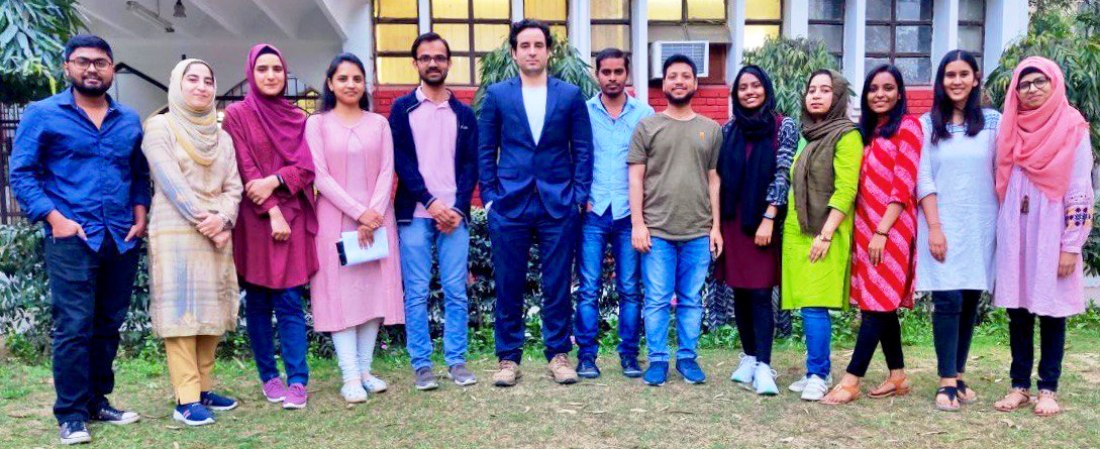
The groundbreaking project was led by PhD student Miss Nisha Chaudhary, under the expert supervision of Dr Tanveer Ahmad. Their study, soon to be published in Scientific Data, a part of the prestigious Nature Publishing Group, represents a major advancement in the fields of AI and digital pathology.
At the heart of this innovation is the ORCHID (Oral Cancer Histology Image Database) dataset, meticulously compiled from over 300,000 high-resolution tissue images, with more than one million images screened. The dataset was created using samples gathered from respected medical institutions across India, including the Ranchi Institute of Medical Sciences, Jharkhand, the All India Institute of Medical Sciences (AIIMS), the Maulana Azad Institute of Dental Sciences, New Delhi, and Banaras Hindu University, Uttar Pradesh. Each of these institutions contributed under the guidance of leading experts, including Dr Arpita Rai, Dr Deepika Mishra, Dr Augustine, and Dr Akhilesh Kumar.
This AI tool is designed to accurately detect and monitor the progression of oral cancer through digital images, providing a vital resource for timely diagnosis, particularly in regions with limited pathology services. The ORCHID dataset has already attracted global attention, with researchers around the world eager to access this cutting-edge resource and the programming codes that power the AI diagnostic tool.
“Our dataset is a significant step towards making early diagnosis of oral cancer faster, more accurate, and accessible to everyone, especially in regions with limited pathology resources,” said Miss Nisha Chaudhary. Dr Tanveer Ahmad, the senior author of the study, emphasised the importance of this development, noting the unprecedented international interest in their work. “This is the first such extensive database in the world, and the response has been overwhelming. Researchers across the globe are requesting access to our database and AI tool to further their own studies in digital pathology.”
Dr Akhilanand Chaurasia, MDS Oral Medicine and Radiology, KGMU, and another senior author of the study, highlighted the transformative impact of this achievement. “AI and digital pathology have already transformed the world of oral cancer diagnosis, and the database our team has created will have a transformative impact on patients across the globe. We are proud that India is the first country in the world to have created such a comprehensive database, which includes high-resolution images, ensuring that the AI training and diagnostic tool is of the highest accuracy.”
The study, titled High-resolution AI image dataset for diagnosing oral submucous fibrosis and squamous cell carcinoma, represents a major milestone in the integration of AI into routine clinical diagnostics, particularly in resource-limited settings where timely diagnosis is critical.
Professor Mohammad Husain, Director of MCARS at JMI, congratulated all the authors of the study and expressed pride in their accomplishments. “This AI database will be useful for researchers across the globe, and we are proud that our researchers at MCARS, JMI have been the first to develop such a database and AI-based diagnostic tool.”
With the successful development of this AI-driven oral cancer database, JMI has set a new standard in cancer diagnostics, opening up new avenues for research and innovation in the ongoing fight against oral cancer. The ORCHID dataset not only marks a monumental achievement for India but also serves as a beacon of hope for advancing cancer diagnostics worldwide.