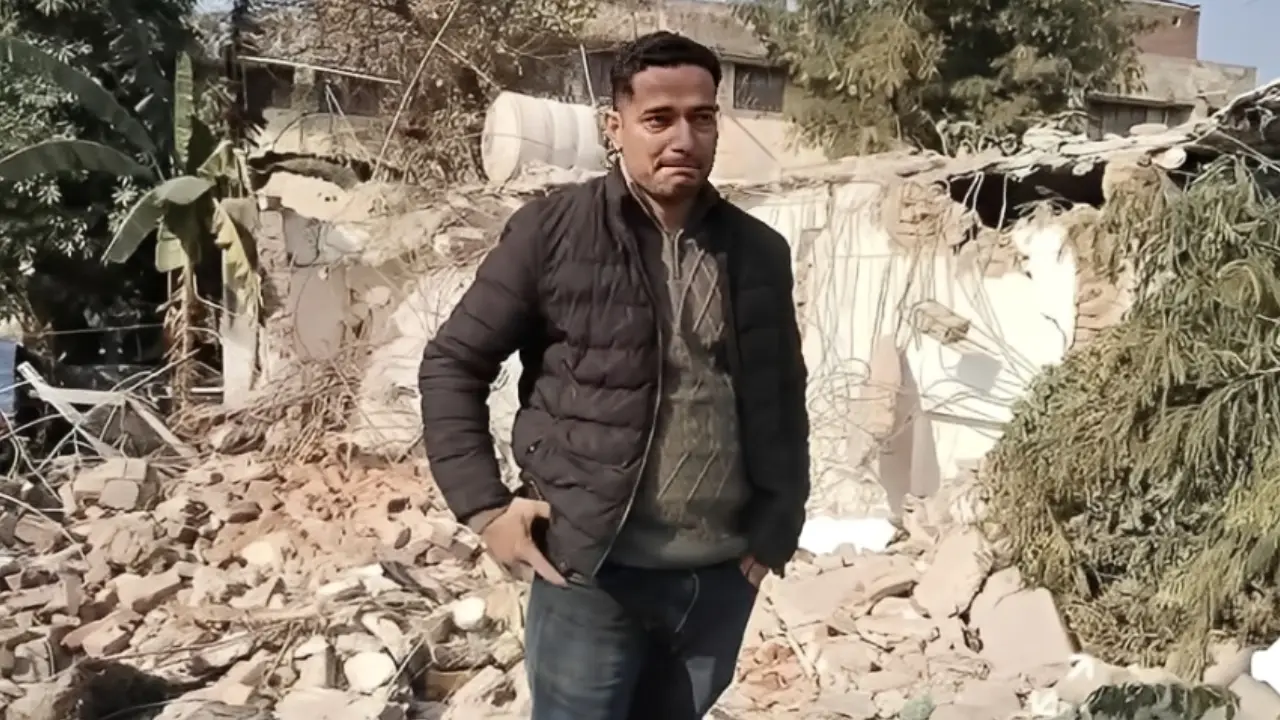
SRINAGAR: A demolition drive in Jammu has snowballed into a major political controversy after the Jammu Development Authority (JDA) levelled the home of 72-year-old Ghulam Qadir Daing, father of local journalist Arfaz Ahmad Daing, triggering sharp reactions across Jammu and Kashmir. The incident, which unfolded in Nawal, Transport Nagar on Thursday, has drawn political leaders, civil society groups and hundreds of residents to the site.
At the same time, however, a rare gesture of communal harmony has emerged from the tragedy.
The JDA has stated that the house stood on encroached land and that notices were served before the demolition. However, the Daing family maintains they had lived on the three-marla plot for nearly four decades and had never been served any notice. The journalist, whose separate house in Bathindi was demolished last year, claims that he has been targeted for his reportage, including on cross-border narcotics trafficking.
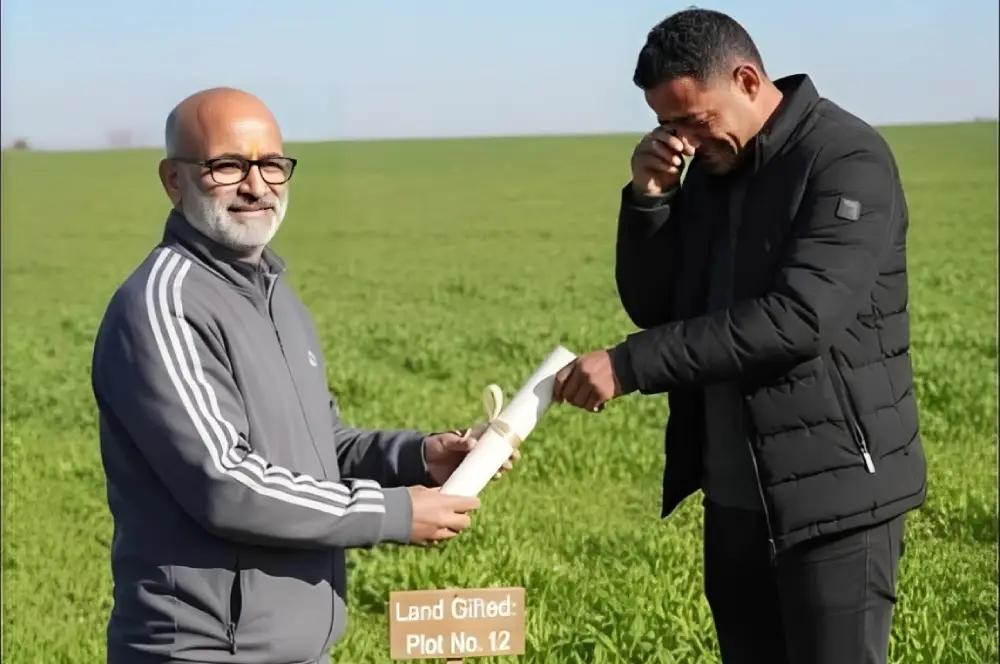
On Friday, emotions ran high as Daing’s Hindu neighbour, Kuldeep Kumar, walked into the rubble with a gift deed in hand. In the presence of his daughter, Tanya, he announced that he would donate five marlas of his own land to the family so they could rebuild their home. The gesture was widely praised online and hailed by political leaders as a reminder of communal amity.
Sharma, an ex-serviceman who lives in the Jewel area of Jammu, on Friday announced that he was transferring his five marla (about 1,362 sq ft) plot in Amgrodha to journalist Arfaz Ahmed Daing, whose house was recently demolished.
Sharma and his daughter Tanya, visited the Daing family, handing over the land papers and legal documents. With both families in tears, Sharma said the gesture was meant to reaffirm Hindu-Muslim unity in a region often strained by communal tensions.
“We saw the news on TV and social media. When we learnt that a journalist’s family had been rendered homeless, we decided to offer them land so they could rebuild. This is about humanity, not religion,” Sharma told reporters as he sat on the rubble of the collapsed house. He said Daing’s original home stood on three marlas, “but we chose to give five marlas so the family can rebuild with comfort and dignity”. Calling the demolition a “conspiracy”, Sharma urged political leaders to end divisive politics. “If this continues, we will hold back our votes,” he said.
The demolition has since ignited a fierce political exchange. People’s Democratic Party chief Mehbooba Mufti said the Union Territory was bearing the “brutal consequences” of the National Conference government’s refusal to support the party’s “anti-bulldozer” bill in the Assembly. Senior Congress leader Raman Bhalla, who also visited the site, described the JDA action as “an atrocity” and called for accountability. A PDP delegation led by Varinder Singh Sonu termed the move “selective”, questioning why only small landholders seemed to be facing action.
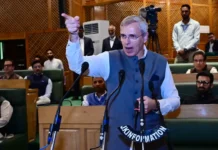
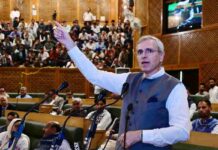
Chief Minister Omar Abdullah, whose government has been on the defensive over a series of demolitions in recent months, accused officials posted by Raj Bhavan of using bulldozers independently, without the elected government’s approval. “Such actions are a conspiracy to malign the government. No one supports encroachment, but there cannot be a pick-and-choose approach,” the Chief Minister said. He has asked the JDA to publish a full list of encroachments on its land, saying he wants to know why “this one individual” was singled out and whether his religion was a factor.
Residents of Transport Nagar, many of whom gathered around the demolished structure, echoed the demand. They said powerful land grabbers across Jammu remained untouched, even as police and bulldozers descended on a three-marla house occupied by a family with no history of conflict.
Neighbours also recounted the Daing family’s difficult past and how they fled Doda’s Bhalesa in the early 1990s when militants began abducting young men.
The JDA has defended its action, saying the demolition was part of an ongoing anti-encroachment campaign. The Jammu and Kashmir government recently told the Assembly that over 16,000 kanals of JDA land are under encroachment across the city. According to the authority, a second notice had been issued to the Daings on November 18.
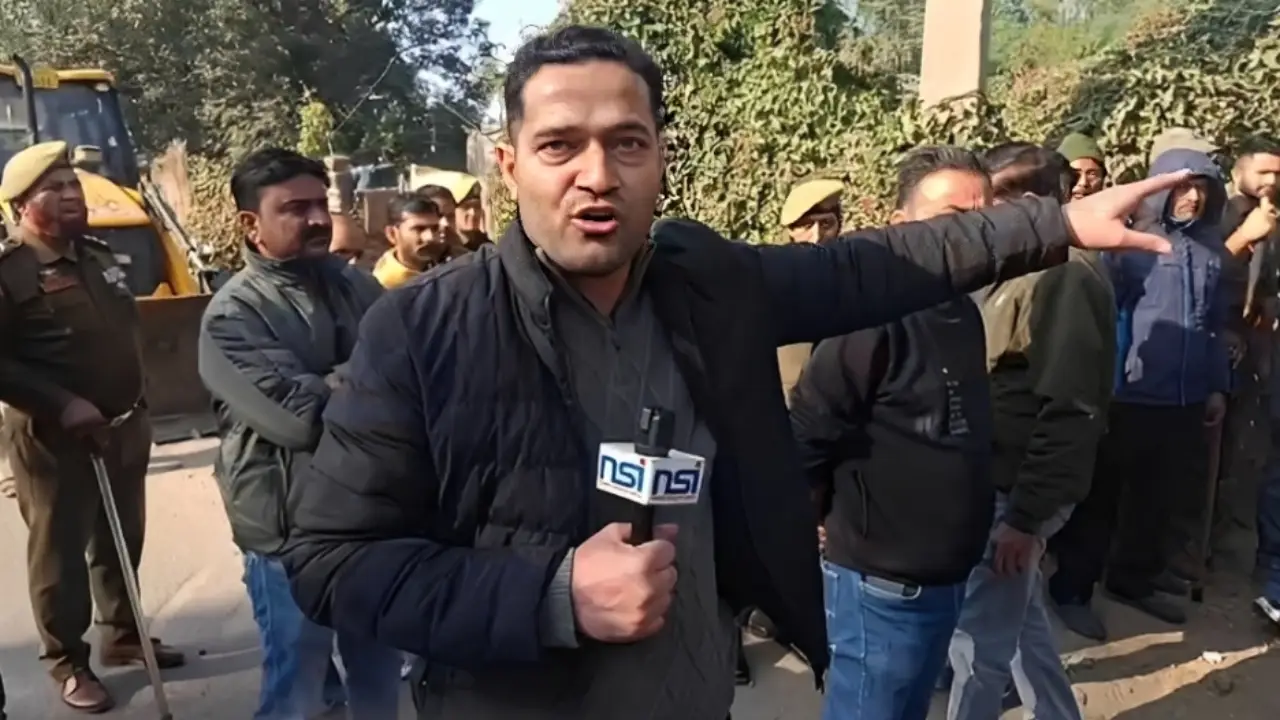
Yet the scale of security deployment, nearly 700 to 800 personnel, according to the journalist, and the targeting of only one structure, have fuelled further suspicions. Daing told reporters that he was prevented from filming during the demolition and was roughed up when he objected. “If you show the truth, this is what happens,” he said.
Daing, who runs the digital news channel News Sehar India, acknowledged that the house stood on JDA land but said it had been registered in the name of his father, Ghulam Qadir, who built the single-storey structure nearly 40 years ago. He alleged that although the Jammu and Kashmir High Court had ordered the JDA to clear encroachments in parts of Jammu, no action was taken against “influential encroachers”.
“We did receive a demolition notice, but it came in my name even though I didn’t own the house,” Daing said. “They were clearly after me because of my journalism. The legal process was discarded entirely. What has happened is unconstitutional. I am confident the courts will give me justice, but that could take years. Where do I keep my family until then?”
He said the administration sent bulldozers along with 700–800 police and security personnel to demolish his home, calling it proof of an ulterior motive. “I was not even allowed to make a phone call. I was bruised. I told them: if you want to demolish it, do it, but at least let me do my job as a journalist.”
A video from the site shows scores of policemen overseeing the demolition and stopping him from filming a live commentary as the house was reduced to rubble.
“They want to teach a lesson to journalists and social activists who work honestly,” Daing said. “If you are a sycophant, you are safe. If you show the truth, this is what happens.”
He added that this was the second time his home had been razed. “Earlier, my house in Bathindi was demolished. I gathered myself and moved to my parents’ home. Now this house too is gone. It stood here for more than 40 years. Is mine the only illegal house in all of Jammu?”
As political tempers rise and parties trade allegations, the only certainty is that a demolition meant to clear a patch of land has instead opened up a larger debate about fairness, state power and the future of Jammu’s fragile communal balance. For now, the Daing family says it finds strength in the public support around it and in the unexpected solidarity of a neighbour who stepped forward when the bulldozers rolled in.
Distressing visuals of Daing and his family pleading with officials as bulldozers razed the structure went viral, prompting former BJP state chief Ravinder Raina to visit the site. He told reporters that the demolition orders, according to him, had not come from the Lieutenant Governor’s office. “Our Prime Minister believes in giving houses to the poor, not demolishing them. We will ensure all help,” he said.