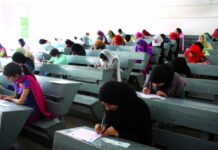
SRINAGAR: Jammu and Kashmir has reported a significant increase in the number of out-of-school adolescent girls over the past five years, emerging as one of the sharper upward trends in the country. According to figures submitted to the Rajya Sabha, the Union Territory identified 16,537 out-of-school children in 2021–22, including 9,045 girls, a number that rose sharply to 38,994 children in 2025–26, of whom 16,900 were girls. The data was presented by the Ministry of Women and Child Development in response to a question from Rajya Sabha MP Renuka Chowdhury.
The five-year pattern shows that Jammu and Kashmir’s numbers fluctuated but surged again in 2023–24, when 25,393 out-of-school children were identified, including 13,508 girls. Although the figure dropped drastically in 2024–25, when the Union Territory reported only 610 out-of-school children, the Centre noted that Jammu and Kashmir had not uploaded adequate data on the PRABANDH portal for that year, leading to an incomplete picture. The provisional 2025–26 statistics again showed a major rise, suggesting that the UT’s field surveys or reporting systems may have been strengthened during the period.
According to the Ministry, States and Union Territories have identified a consistent set of reasons for adolescent girls dropping out of school. These include migration, economic distress, household responsibilities, and the need for older children to work. The Ministry also noted that the dropout problem is often amplified in regions with difficult terrain, conflict-driven disruptions, or socio-economic vulnerabilities, all of which affect Jammu and Kashmir.
At the national level, the scale of the challenge remains substantial. India identified over 27.7 lakh out-of-school children in 2021–22, including 12.6 lakh girls, a number that has declined steadily over subsequent years. For 2025–26, provisional data indicates 8.49 lakh out-of-school children, with 3.78 lakh girls, reflecting both a drop in absolute numbers and improved reintegration efforts across several States.
To address the problem nationwide, the Government emphasised its flagship Samagra Shiksha initiative, which integrates school education from pre-primary to Class XII. The scheme includes the opening of new schools, strengthening of existing infrastructure, expansion of residential schooling through Kasturba Gandhi Balika Vidyalayas, and free uniforms, textbooks, and transport allowances. Special training centres, seasonal hostels, escort facilities, and age-appropriate bridge courses have been introduced to bring out-of-school adolescents back into the formal system.
The Centre has also launched digital monitoring mechanisms such as Vidya Samiksha Kendra and the APAAR ID system to track enrolment, attendance, and dropout trends more accurately. For adolescent girls aged 16–19 from disadvantaged backgrounds, financial assistance of up to Rs 2,000 per year is available to help them complete their education through open schooling platforms such as NIOS.
The Ministry informed Parliament that a third-party evaluation of Samagra Shiksha conducted by NITI Aayog this year found that the scheme remains critical to India’s education goals under the National Education Policy 2020. The assessment recommended stronger financial efficiency, improved teacher training, more inclusive classroom environments, and better last-mile delivery, especially in States and Union Territories where dropout levels remain high.
As Jammu and Kashmir continues to report erratic yet rising numbers of out-of-school adolescent girls, the Ministry has urged States and Union Territories to intensify their enrolment drives and strengthen community-led efforts through Panchayats and School Management Committees to ensure that more girls return to school and stay there.