SRINAGAR: The conflict in West Asia intensified sharply on Friday, with Iran launching attacks on energy infrastructure in the Gulf and Israel carrying out a series of high-profile strikes targeting Iran’s military leadership, even as differences between Washington and Tel Aviv over war objectives came into view.
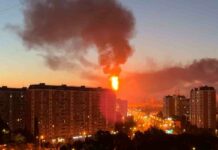
According to Reuters, Iran carried out drone strikes on an oil refinery in Kuwait, triggering fires at parts of the facility, while Gulf countries including Saudi Arabia intercepted multiple aerial threats. The attacks mark a widening of the conflict footprint, with energy installations increasingly coming under fire.
Iranian state media confirmed that Ali Mohammad Naini, spokesperson of the Islamic Revolutionary Guard Corps (IRGC), was killed in strikes attributed to the United States and Israel. His death comes amid a sustained campaign targeting Iran’s top military and political leadership.
Reports by Al Jazeera indicate that the killing is part of a broader series of assassinations that have significantly weakened Iran’s establishment within weeks. Among those killed earlier were Ali Larijani, secretary of Iran’s Supreme National Security Council, along with his son and aides, and Gholamreza Soleimani, head of the Basij paramilitary forces.
Iran’s Intelligence Minister Esmail Khatib was also reported dead in recent strikes. The Israeli military further claimed it had killed Esmail Ahmadi, a senior Basij intelligence official, though Iranian authorities have not confirmed this.
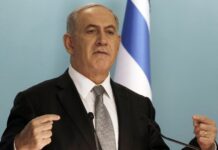
Differences between the United States and Israel surfaced publicly after an Israeli strike on Iran’s South Pars gas field. As reported by The Hindu, US President Donald Trump criticised Israeli Prime Minister Benjamin Netanyahu, urging him not to repeat such attacks on major energy infrastructure.
According to The Guardian, Netanyahu stated that Israel acted independently and denied drawing the US into the conflict. Trump, in a social media post, said he “knew nothing” about the strike, even as Israeli officials told Reuters it had been coordinated with Washington.
US officials acknowledged diverging objectives: Washington’s campaign is focused on dismantling Iran’s missile and naval capabilities, while Israel is pursuing regime-level destabilisation of the Islamic Republic established in 1979.
A joint statement issued on March 19 by major economies, including the UK, France, Germany, Italy, Canada and Japan, condemned Iran’s closure of the Strait of Hormuz and attacks on commercial shipping and energy infrastructure.
The statement called on Iran to “cease immediately” its military actions and comply with UN Security Council resolutions, warning that disruptions to energy routes threaten global economic stability. It also welcomed coordinated action by the International Energy Agency to release strategic oil reserves and pledged support to boost global petroleum output.
In Washington, the Pentagon has requested over $200 billion in additional funding from Congress to sustain military operations, Reuters reported. The move has drawn bipartisan criticism given already high defence allocations.
US Secretary of War Pete Hegseth defended the request, stating, “It takes money to kill bad guys.” Officials estimate the first six days of the conflict cost over $11 billion, with daily expenditures now between $1 billion and $2 billion.
The US has also approved billions in additional arms sales to regional allies and is considering deploying more troops to secure key shipping routes, including the Strait of Hormuz and Iran’s Kharg Island export hub.
Amid the escalating conflict, Switzerland announced it would not approve arms export licences to the United States for the duration of the war, citing its neutrality laws.
The Swiss government said exports of war materiel to countries involved in the conflict cannot be authorised, and confirmed that no new licences have been issued since the war began. It has also restricted US military overflights linked to operations against Iran.
The conflict has sent global energy markets into volatility, with Brent crude prices briefly rising above $110 per barrel. Strikes on Qatar’s liquefied natural gas infrastructure have reduced export capacity by an estimated 17 per cent, with repairs expected to take years.
Economists warn of cascading effects on global food security due to disrupted fertiliser supplies, much of which transits through the Strait of Hormuz. According to international agencies, prolonged disruption could impact crop yields and drive up food prices, particularly in vulnerable economies.
The war, now nearing its third week, has resulted in significant casualties across the region. Iranian strikes have extended to Kuwait, Saudi Arabia and Bahrain, while Israeli attacks continue in Tehran and other locations.
Diplomatic efforts remain limited, with calls for de-escalation from European and international bodies yet to yield a breakthrough. Analysts warn that continued targeting of energy infrastructure risks further escalation with global economic consequences.
The situation remains fluid, with military operations, diplomatic positioning, and economic impacts unfolding simultaneously across multiple fronts.