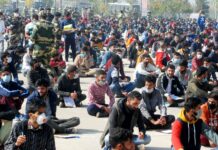
Aspirants face mounting uncertainty as Jammu and Kashmir’s age-relaxation decision stalls, leaving the JKCCE examination clouded by administrative delay and confusion
The Jammu and Kashmir Combined Competitive Examinations, modelled on the UPSC, stand only a day away, yet the process lies ensnared in a bureaucratic paralysis that has shaken the confidence of thousands of young aspirants. At the heart of the crisis is the unresolved question of age relaxation for the open merit category, an issue that has travelled from one office to another without a decisive administrative conclusion. What should have been a routine procedural matter has spiralled into a crisis of governance.
For years, candidates in Jammu and Kashmir depended on age relaxations that extended the upper limit to 37 years. The shift to a fixed limit of 32 years without additional relaxation abruptly disqualified many, even as more than 30,000 applicants under the age threshold completed the formalities and prepared for the examination. From June onwards, aspirants repeatedly sought clarity, receiving verbal assurances from officials that the matter would be settled soon. By November, candidates were told the issue would reach the cabinet within forty-eight hours. That assurance has yet to translate into a formal government order.
The Chief Minister has approved the relaxation, and sources indicate that the Lieutenant Governor has also concurred. Yet the file has boomeranged back to the General Administration Department over a remark questioning who would bear the logistical costs already incurred for the examination. This single observation, appended at the final stage, has stalled the implementation of a decision affecting the futures of thousands. The Public Service Commission, left in limbo, withheld admit cards for two days in anticipation of a clear directive but eventually issued them without guidance from the administration.
This delay has produced distress of a kind that no competitive exam candidate should endure. Those who were rendered ineligible await an order that may restore their chance to compete, while those who have already applied do not know whether the examination will proceed. Students preparing in Delhi or living in one region with centres in another now hesitate to travel, caught between the prospect of a scheduled test and a possible postponement.
Political leaders across parties have urged a swift resolution, recognising the scale of anxiety among the youth. Yet appeals cannot substitute for administrative clarity. This drift must end. Competitive examinations demand certainty, and the government owes young citizens a firm, unambiguous decision. Each passing day deepens their confusion and chips away at their trust. Jammu and Kashmir’s aspirants deserve better than a governance cycle where files move, but decisions do not.