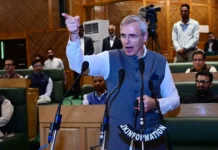
Omar Abdullah’s revival of the Durbar Move marks more than administrative nostalgia; it is a symbolic assertion to reunite Jammu and Kashmir politically, economically, and emotionally after years of division and digital governance, writes Humaira Nabi
When the Omar Abdullah government resumed the Durbar Move last week, almost five years after it was abolished, it did far more than restore an old administrative tradition. It made a statement about politics, identity, and the idea of Jammu and Kashmir as a state of two regions bound by a single administration. Coming within months of his second major decision, restoring the traditional academic calendar, the revival of the Durbar Move signals Omar’s attempt to reposition his government as a restorer of continuity in a post-2024 landscape that has been defined by rupture.
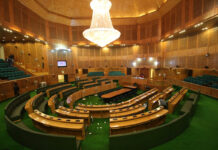
The Durbar Move, the biannual shifting of the Jammu and Kashmir secretariat and government offices between Srinagar and Jammu, dates back to 1872. Maharaja Ranbir Singh instituted the practice to escape the harsh winter of Kashmir and ensure year-round governance. Srinagar became the summer capital, Jammu the winter seat. What began as a logistical necessity under the Dogras evolved into a symbolic exercise of unity. For decades after 1947, the Move was seen as a bridge between the linguistic, cultural, and political diversity of the erstwhile state, an act that physically connected two regions often divided by geography, faith, culture and sentiment.

No Mere Ritual
The ritual was costly, yes, but it carried meaning. For the service class, it created a rhythm of life; for Jammu’s economy, it ensured a seasonal boom. Kashmiri families built homes, opened businesses, and became part of Jammu’s urban texture. Hotels thrived, traders flourished, and the real estate market found steady demand. The Durbar Move was not merely an administrative transfer; it was a migration of thousands, turning Jammu into a second home for generations of Kashmiris.
That world ended abruptly on June 30, 2021, when the government led by Lt Governor Manoj Sinha formally abolished the practice. The administration had completed its transition to e-office and declared that there was “no need to continue the biannual move.” All government departments were instructed to function simultaneously from both capitals, and employees were ordered to vacate their ‘Durbar Move’ accommodations. Sinha justified the decision by citing efficiency: digitisation had rendered the practice obsolete, and the savings, estimated at Rs 200 crore annually, could be redirected to welfare and cultural projects.
Many, particularly in Jammu, protested the decision. They argued that the economic ecosystem built around the Durbar Move, seasonal business, rentals, and hospitality, was being dismantled overnight. With the ambitious Rs 42000 crore Kashmir rail project operational, Jammu started getting bypassed by Kashmir travellers and Vaishno Devi shrine pilgrims. It started living the Pathankot days when the train moved to Jammu and the Punjab highway town felt abandoned after decades of prosperity.
Yet the administration stayed firm, presenting the move’s abolition as a symbol of modern governance, in keeping with the post-2019 idea of Jammu and Kashmir as a Union Territory managed by efficiency rather than tradition.
A Master Stroke
Omar Abdullah’s decision to bring the Move back in 2025, therefore, carries multiple layers of meaning. On the surface, it is a return to an old order, a symbolic revival of an institution that embodied balance between the two capitals. But beneath that, it is a calculated political act.
For one, it directly challenges the BJP, whose government had abolished the Move in 2021 and whose political base lies firmly in the Hindu-majority region of Jammu. By restoring the practice, Omar reclaims a lost emotional and administrative link with Jammu, signalling that his government represents both regions. It also allows him to frame the BJP’s 2021 decision as an act of regional neglect, an attempt to sever Kashmir’s ties with Jammu for ideological ends.
Politically, Omar’s revival of the Move could be seen as part of his broader attempt to reclaim ground lost since 2014. The National Conference has long been strongest in Kashmir, but its presence in Jammu has waned as the BJP consolidated its dominance there. In 2014, the BJP had turned Jammu into its political fortress, securing 25 assembly seats and altering the region’s electoral map. In 2024, the first post-2019 elections for the assembly, it got 28 seats. Omar’s gesture is therefore aimed at rebuilding trust with Jammu’s population, reasserting the National Conference as a state-wide force rather than a Valley-centric party.
Even before entering a formal alliance with the Congress, the JKNC had effectively ceded most of the Jammu region to it, yet Congress failed to contain the BJP’s steady rise. The party’s decline in Jammu has been gradual but unmistakable. In the 87-member Assembly of 1996, Congress won seven seats, four of them from Jammu. In 2002, it secured 15 of its 20 seats from the region, but by 2008 its tally dropped to 17, including 13 from Jammu. The 2014 Modi wave decimated its base; Congress managed to win only five seats from Jammu, even when it had 12 wins to its credit. In the first post-2019 polls for the 90-member Union Territory Assembly in 2024, the party barely managed six seats, with just one coming from Jammu, that too from a Muslim-majority belt. It failed to win a single Hindu seat as the BJP swept the Hindu vote.
A Pan JK Party
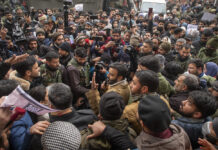
It is against this backdrop that the JKNC must now work earnestly to fill the vacuum left by the Congress in the region where it should have mattered most. The restoration of the Durbar Move gives Omar Abdullah a distinct advantage, as was evident on the day offices opened last week, from the excitement and the warm reception captured by television cameras on Wazarat Road and Raghunath Bazaar, the bustling business streets that had largely fallen silent during much of the 2019 period.
By contrast, the other regional players, Mehbooba Mufti’s PDP and Sajad Lone’s People’s Conference, have remained primarily Kashmir-focused, often adopting rhetoric that alienates Jammu’s electorate. Omar’s approach is to position himself above that divide, projecting the National Conference as a unifying force. His statement earlier this year, “We know our place; my only cry is that we have been shown our place”, reflects both defiance and self-awareness. It suggests that he is willing to turn symbolic politics into a tool for rebuilding relevance.
Restoring the Durbar Move also provides him a chance to critique the BJP’s governance style. While Sinha’s administration justified abolition on grounds of efficiency, the absence of physical movement between capitals had deepened the sense of alienation. For many in Jammu, it meant fewer visitors, less business, and a quieter winter. For Kashmir, it removed the visible sign of administrative balance that had for decades reassured people of parity with Jammu. By restoring it, Omar can now argue that digital governance and physical connection are not mutually exclusive, that tradition can coexist with technology. For many years to come, the governance in Jammu and Kashmir will have to remain phygital, party physical, party digital.
Questions Remain
Yet, the revival also raises deeper questions. Could the Move have been resumed without the cooperation of the Lt Governor and, by extension, the central government? The same Omar Abdullah who accused LG Manoj Sinha of obstructing his government’s functioning and paralysing governance now appears to have secured his consent for a decision that required administrative coordination at the highest level. The contradiction is striking.
This suggests backroom negotiations and pragmatic alignments. In the complex power structure of Jammu and Kashmir, where the elected government still shares space with an empowered Raj Bhawan, such coordination cannot happen without mutual accommodation. That it did, hints at either a quiet understanding or a larger political strategy at play, perhaps even Delhi’s willingness to let Omar test a symbolic reversal in exchange for political stability.
Still, the revival is not without cost or controversy. Critics, especially those hoping the curtain falls on the Move would eventually lead to the bifurcation of the erstwhile state, see it as regressive, a throwback to inefficient colonial-era practices. They question whether the government can justify the financial burden of transporting files, employees, and infrastructure twice a year in an era of e-governance. Proponents counter that the Move’s cost, roughly Rs 200 crore annually, is modest compared to what it symbolically achieves: reaffirming the political and emotional unity of a region still healing from years of disempowerment and bifurcation.
An Assertive Intervention
The return of the Durbar Move is less about administration and more about assertion. It signals Omar’s effort to rebuild the narrative of Jammu and Kashmir as a single political and cultural entity, an idea that had weakened after 2019. It also reveals his long-term strategy: to craft a leadership identity distinct from the Valley-centric politics of his rivals and the nationalist agenda of the BJP.
Whether the Move endures this time will depend on both its political sustainability and administrative feasibility. But symbolically, Omar has turned the wheel of history once again, reminding both regions that the rhythm of governance in Jammu and Kashmir has always been seasonal, shifting not just between capitals, but between eras of control and reclamation.