by Mir Rameez Raja
SRINAGAR: A teacher from Kashmir has been shortlisted among the world’s top 50 educators for the Global Teacher Prize 2026, one of the most prestigious international honours in the field of education, drawing global attention to grassroots teaching and peace-building work in a militancy-torn region.
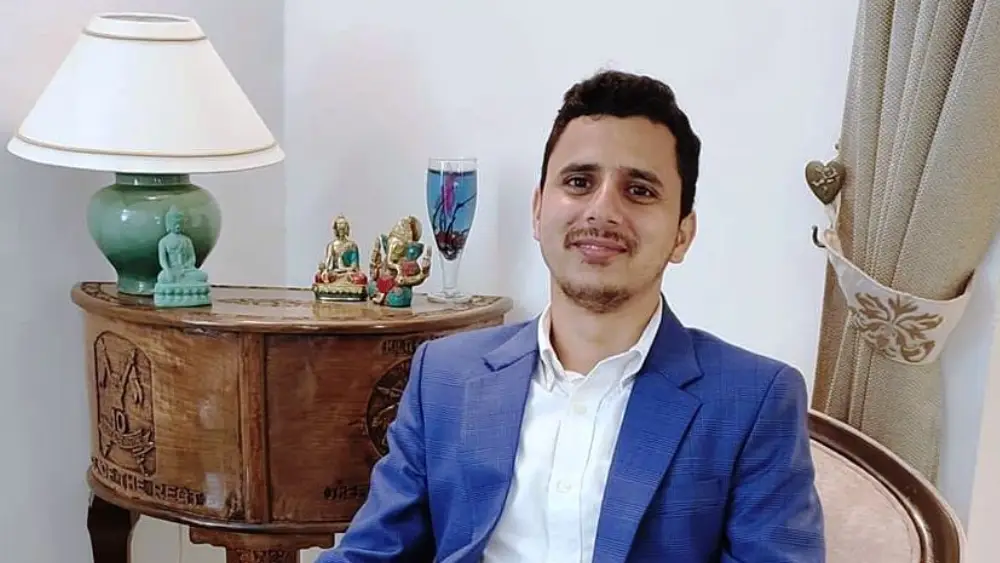
Mehraj Khourshid Malik, an educator from Jammu and Kashmir, has been named among the Top 50 shortlisted candidates for the Global Teacher Prize, an annual award instituted by the UK-based Varkey Foundation in collaboration with UNESCO. The prize carries a total award of US$1 million, equivalent to around Rs 8.3 crore, although only one teacher worldwide is ultimately selected as the winner each year.
According to the prize citation published on the Global Teacher Prize website, Malik’s journey into teaching is rooted deeply in Kashmir’s lived realities. Raised amid prolonged conflict, shutdowns and instability, he grew up studying under candlelight and witnessing hardship as part of everyday life. After building what many considered a dream career at Microsoft, Malik chose to leave the corporate world and return to Kashmir, driven by what he describes as a deeper question of purpose and responsibility.
His return, the citation notes, was not easy. In a region shaped by decades of fear, suspicion and trauma, Malik persisted with what the jury describes as patience and purpose. Over the last decade, he has taught not only in schools but also in spaces rarely associated with formal education — rehabilitation centres, madrassas, community halls, prisons and even under the shade of chinar trees. Many of his teaching sessions stretch for hours, based on his belief that changing mindsets shaped by conflict is never instantaneous.
Malik’s pedagogy blends emotional healing with ethics, psychology, debate, local storytelling and lived experience. One of his signature methods, described as the “Before and After” approach, asks students to rewrite their beliefs after structured reflection and dialogue, a process that the prize jury says has led to visible behavioural change, moving young people from resentment and isolation towards aspiration and social belonging.
The Global Teacher Prize profile highlights two intervention models developed by Malik that have been central to his work. The first, the Insaniyat Curriculum, is a school-based, year-long programme built around empathy, dignity and values-driven education. The second, Sahi Rasta, is a 23-day rehabilitation model designed for incarcerated and highly vulnerable youth. According to the citation, the programme has helped more than 500 young people step away from despair, militancy and self-destructive behaviour. Over 75 school dropouts have reportedly returned to education, while others have started small businesses or found employment in cities such as Bengaluru, Pune and Delhi.
Beyond classrooms, Malik has built and leads a network of more than 1,000 volunteers, including educators, imams, lawyers, doctors and social activists. Trained under his guidance, this network works across mosques, courts, media spaces and community institutions to promote peace, gender respect, civic responsibility and social dignity. His initiatives have included drug-awareness campaigns, interfaith dialogue programmes, women’s empowerment efforts and environmental campaigns such as Clean Jhelum and Clean Wullar, linking ecological responsibility with social healing.
The prize citation also notes that Malik integrates global citizenship into his teaching by exposing students to diverse faith spaces, historical sites of coexistence and mentors working in areas such as climate change, poverty alleviation and human rights. Climate education, in particular, is taught through ethical reasoning and lived metaphors rather than textbook instruction, encouraging students to see sustainability as a personal and collective responsibility.
Malik has also worked extensively on strengthening the teaching profession itself, training hundreds of educators, faith leaders and school principals in trauma-sensitive, values-driven pedagogy across Kashmir. The Global Teacher Prize website describes this as an effort to restore dignity to teaching in a region where educators often work under immense social and psychological pressure.
Three educators from India have been shortlisted among the Top 50 this year, out of more than 5,000 nominations received from 139 countries for the 10th edition of the prize. Teachers are assessed on classroom practice, innovation, demonstrable learning outcomes, community impact and their contribution to advancing the profession.
While the Top 50 shortlist does not carry any prize money, the recognition is considered significant globally. The shortlist will be narrowed to 10 finalists, with the eventual winner to be announced at the World Governments Summit in Dubai in February.
According to his profile, Malik has said that if awarded the Global Teacher Prize, he plans to expand his healing and rehabilitation initiatives and establish a Centre for Transformative Education and Counter-Radicalisation in Kashmir. He has described the recognition not as a personal achievement, but as belonging to young people in the Valley who, despite adversity, choose education, dialogue and hope over violence and despair.
For Kashmir, Malik’s inclusion among the world’s top educators marks a rare moment of international recognition for work emerging from the region, highlighting how teaching there has evolved into an act of resilience, social repair and quiet resistance against generational trauma.