by Maleeha Sofi
SRINAGAR: A new scientific study has raised serious concerns over the growing threat posed by glacial lakes in the Kashmir Himalaya, identifying five high-altitude lakes as extremely vulnerable to Glacial Lake Outburst Floods (GLOFs) that could trigger devastating downstream floods affecting thousands of people and critical infrastructure.

The study, Glacial lake outburst flood susceptibility and potential downstream implications across the Kashmir Himalaya, has been accepted for publication in the prestigious Journal of Glaciology, published by Cambridge University Press. The research has been carried out by a team of scientists from the University of Kashmir, led by Dr Irfan Rashid, with Syed Danish Rafiq Kashani as the lead author, and co-authored by Sheikh Aneaus, Dr Argha Banerjee, and Dr Ulfat Majeed.
Based on detailed satellite analysis and field-based assessments, the researchers have identified Bramsar, Chirsar, Nundkol, Gangabal and Bhagsar lakes as having “very high” susceptibility to sudden breaches. A GLOF event at any of these sites, the study warns, could release massive volumes of water and debris, causing flash floods far downstream.
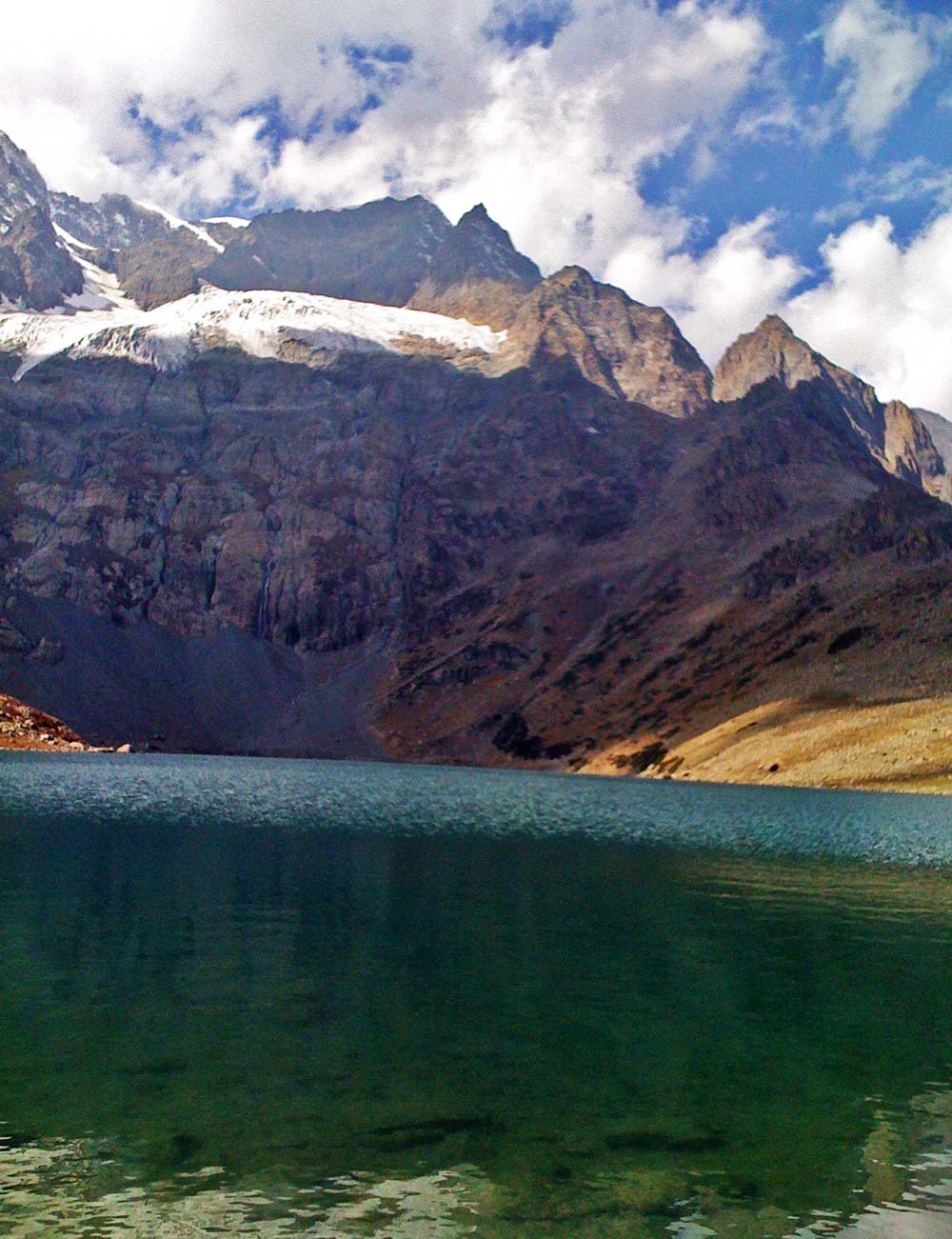
This is the first comprehensive and region-wide assessment of glacial lake hazards in the Kashmir Himalaya. Using multi-temporal Landsat satellite imagery from 1992 to 2024, the team manually mapped and analysed 155 glacial lakes located above 2,500 metres. Together, these lakes cover an area of nearly 1,690 hectares. While the overall growth in glacial lake area over the last three decades appears modest, the study highlights a worrying trend: lakes that remain in direct contact with glaciers have expanded rapidly, making them particularly unstable.
According to the researchers, ice-contact proglacial lakes such as Bramsar and Chirsar have grown by more than 25 per cent since the early 1990s. These lakes are considered especially dangerous because they are often dammed by loose, unconsolidated moraine material that can fail suddenly due to avalanches, landslides, earthquakes or intense rainfall.
To assess the likelihood of an outburst, the study employed an Analytical Hierarchy Process, a globally accepted scientific method that evaluates multiple physical and environmental factors simultaneously. These include lake expansion rates, dam characteristics, surrounding slope angles, upstream connectivity, permafrost conditions and regional seismicity. On this basis, the lakes were categorised into five susceptibility classes, with five lakes falling into the highest-risk category.
Beyond identifying the hazard itself, the study also examined what lies in the path of a potential flood. Using conservative flood modelling, the researchers found that an outburst from these lakes could threaten more than 3,000 buildings, several key bridges, long stretches of road infrastructure and at least one hydropower project. In the case of the Nundkol–Gangabal lake system in central Kashmir, a breach could have cascading impacts across Ganderbal district, affecting densely populated settlements and essential services.
A particularly troubling finding is the possibility of cascading GLOF events. Some lakes are hydrologically linked, meaning that the sudden failure of an upstream lake could trigger a chain reaction, amplifying the scale and speed of destruction downstream. Similar cascading events in other parts of the Himalaya, most recently in Sikkim in 2023, have resulted in widespread loss of life and infrastructure.
Although no GLOF has yet been recorded in the Kashmir Himalaya, the researchers caution against complacency. The region is experiencing accelerated glacier retreat and thinning, driven by rising temperatures and changing precipitation patterns. The study notes that glaciers in Kashmir are among the fastest-melting in the western Himalaya, increasing the likelihood of unstable lake formation in the coming decades.
The authors stress that their findings should serve as an early warning. They have called for continuous monitoring of the identified high-risk lakes, installation of early warning systems, and integration of glacial hazard assessments into regional disaster management and development planning.
The study, published as an open-access article in the Journal of Glaciology, is expected to provide a critical scientific foundation for policymakers and disaster management authorities at a time when climate-induced hazards in the Himalaya are becoming more frequent and severe.