Meer Shahzaib writes about the short and long-term impact of the new reservations system, which creates new inequalities while addressing the ‘historical injustices’ by preferring identity over merit and adding to the existing societal fault lines
Jammu and Kashmir, a land of timeless beauty and cultural richness, is now grappling with a transformative change that could redefine its future. The region’s reservation policy, designed to address ‘historical injustices’, has become the epicentre of political tension, public protests, and passionate debates. Is this the turning point the region needs, or will it deepen the divides already present?
A Step Backward?
For students striving to succeed through open merit, the recent overhaul of the reservation policy in Jammu and Kashmir feels like standing at a crossroads where dreams meet uncertainty. The policy, introduced by the Manoj Sinha-led administration, has undoubtedly sparked a heated debate—hailed by some as a leap toward inclusivity while others see it as a potential blow to fairness. By allocating 10 per cent reservations for the Pahari community and enhancing quotas for Scheduled Tribes (STs) and Other Backward Classes (OBCs), the government claims to be addressing systemic inequalities. But at what cost?
This policy feels like a storm cloud for merit-based students over years of hard work, perseverance, and ambition. The promise of fair competition, where excellence is rewarded without bias, now seems overshadowed by the weight of quotas. While equity is a noble goal, should it come at the expense of meritocracy? Many worry that this shift risks discouraging the brightest minds, those who rely solely on their capabilities to pave their way forward.
As classrooms transform into battlegrounds of opportunity and competition, one can’t help but ask: Is this policy building bridges for the marginalised, or is it burning pathways for merit? The spirit of fair competition, the essence of progress, seems at odds with a system prioritising identity over ability. For many students, the future feels uncertain, like chasing a finish line that keeps moving further away—not because of a lack of effort, but because the race rules have suddenly changed.
This moment is not just about reservations—it’s about preserving the sanctity of aspirations. If merit takes a backseat to political considerations, where will the next generation of innovators, leaders, and thinkers come from? The policy, while aiming for equity, must tread carefully to avoid replacing one form of exclusion with another. After all, progress is not just about opening doors for some—it’s about ensuring the pathway remains fair for all.
Echoes of Discontent
As a student, I feel deeply conflicted. The general category students, including myself, who have worked hard to earn our positions, now face an uncertain future where merit may no longer be the primary criterion for success. The reservation system, while well-intended to help the marginalised, seems to create new divisions, adding fuel to the fire of discontent. How is it fair to penalise those who have excelled based on merit, simply because they belong to a category deemed “privileged”?
Mehbooba Mufti’s words ring clear: “How can they ignore the very foundation of social justice?” In a society already divided by historical fault lines, the question arises—are these changes genuinely for the marginalised, or are they mere political calculations?
Equity or Equality?
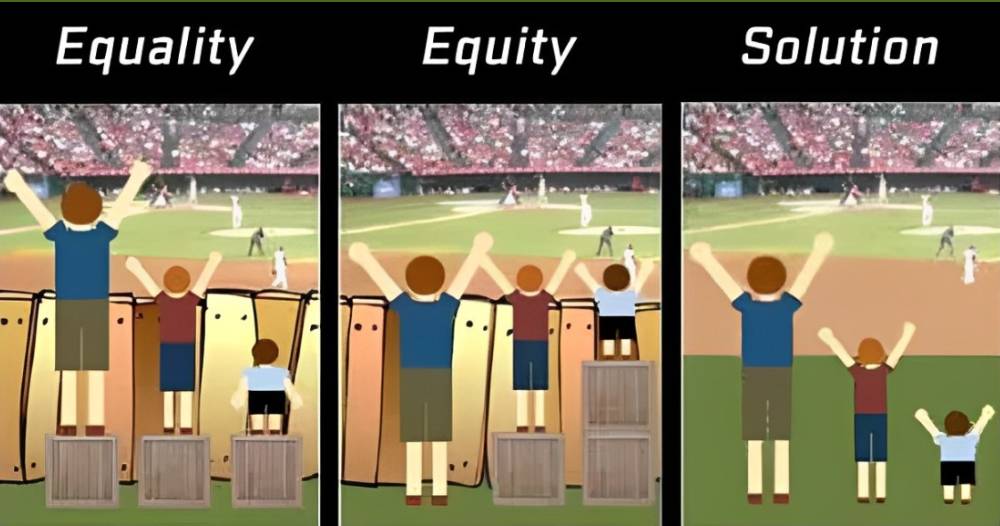
At the heart of the debate lies an age-old dilemma: should policies prioritise equity, addressing historical disadvantages, or equality, offering the same opportunities to all?
As a student, I find it increasingly difficult to reconcile these two principles. On one hand, equity demands that we acknowledge and address past wrongs. On the other hand, equality demands that every individual, regardless of background, be treated the same. The policy reforms lean heavily toward equity, but at what cost?
John Rawls famously said, “Justice is the first virtue of social institutions, as truth is of systems of thought.” But how can we call this just when those who have worked tirelessly to achieve excellence now face barriers that could stifle their ambitions? The current system undermines the meritocratic values that should be at the core of any fair society.
Political Storms
The policy’s implementation has intensified political tensions, revealing fractures within the region’s governance. The National Conference and other opposition parties have raised concerns about the lack of clarity in the decision-making process. Ruhulla Mehdi’s comments reflect the confusion and uncertainty at the heart of the issue, with some politicians blaming bureaucratic hurdles and others pointing to the political manoeuvring behind the changes.
While these political struggles continue to unfold, the true cost of the reservation reforms is borne by the people—the students, the communities, and the generations who will feel the impact of this policy for years to come.
A Personal Story
Consider Falak, an open-merit aspirant for the JKPSC 2024 prelims, who embodies resilience and hard work. For years, Falak has poured her heart and soul into preparing for the exam, driven by the dream of securing a position that would not only change her life but also contribute to her community. On exam day, Falak scored 259—a mark that reflects her unwavering dedication.
Yet, as the results are announced, Falak’s world comes crashing down. The expected cut-off for the general category stands at 260-280, and she misses the mark by just one point. Meanwhile, a peer from the SC/ST category, with a score of 215, comfortably qualifies, thanks to a reserved quota. The OBC cut-off is 240-260, and the EWS cut-off is 250-270, creating a stark reality where Falak’s hard-earned score falls short, not because of a lack of ability but because of the category she belongs to.
“How is it just,” Falak asks, “that my sleepless nights, relentless sacrifices, and near-perfect preparation lead to nothing, while others with significantly lower scores find a path forward?”
This disparity isn’t just a statistic; it’s a deeply emotional wound for students like Falak, who see their dreams and efforts overshadowed by a system that prioritises identity over capability. Falak’s story reflects the silent agony of countless open-merit students who feel sidelined in a race where the rules seem stacked against them.
While the reservation policy aims to address historical injustices, it leaves students like Falak grappling with despair and questioning the fairness of a system that values quotas over meritocracy. The heartbreak is not rooted in resentment towards their peers but in the realisation that their hard work seems less valuable in the eyes of the system.
As the JKPSC 2024 prelims illustrate, the gap in cut-offs for various categories highlights the challenge of balancing equity and merit. For the general category, the bar is set at 260-280—a range that demands near-perfection. For OBCs, it drops to 240-260, for EWS to 250-270, and for SC/ST, a significantly lower 210-230. These disparities create a perception of injustice among those striving to succeed purely on merit, leaving them to wonder if their efforts will ever be enough.
“Does justice mean lowering the bar for some while raising it impossibly high for others?” Falak ponders.
This is not just about numbers; it’s about the crushing weight of disappointment for students who fall just short of an ever-elusive target. It’s about the tears shed in solitude, the nights spent questioning one’s worth, and the unshakable fear of being left behind—not due to lack of effort, but because the system chooses identity over achievement.
As Jammu and Kashmir stands at the crossroads of change, it must grapple with a fundamental question: Can we uplift the marginalised without extinguishing the aspirations of the deserving? True progress doesn’t come from creating new inequities but from building a system where justice and merit coexist, allowing every individual to dream and achieve without barriers.
View this post on Instagram
A New Dawn or a Deepening Divide?
Despite the current turmoil, there remains hope. This moment of crisis could mark the beginning of a new era of inclusivity and unity for Jammu and Kashmir—if the right decisions are made. The question is not just about who benefits from reservations but how the government can create a system that integrates justice and merit, one that recognises the unique challenges faced by various communities without leaving anyone behind.
As a student, I believe the future lies in a different approach—one that doesn’t pit merit against social justice. A future where opportunities are provided to all, but not at the cost of one’s hard-earned merit. The challenge is to create a society where fairness is not defined by quotas, but by the quality of opportunities available to every individual, regardless of their background.
Is It Fair to Penalise Excellence?
From where I stand, this is not just a policy debate; it is a deeply philosophical issue that strikes at the heart of what we value as a society. Open merit—the idea that anyone, regardless of background, can rise based on ability and hard work—should be the foundation of any just system. Yet, in Jammu and Kashmir, merit is being clouded by policies designed to address historical injustices.
The shift to reduce the general category’s share in favour of increased reservations, while intended to correct past wrongs, inadvertently creates new injustices. Why should hard-working individuals from the general category be penalised simply for pursuing excellence? The policy, though rooted in the need for social justice, risks diluting meritocracy—the very principle that drives innovation and progress in society.
Instead of dismantling merit, we must work to build a more inclusive system—one that strengthens education, fosters equal opportunities, and provides skill development for all, regardless of their background. Only then can we create a society where merit thrives alongside fairness.
The fault is not with those benefiting from reservations but with a system that has failed to offer equal opportunities to everyone. Jammu and Kashmir’s future lies in creating a society where policies of merit and justice coexist, allowing every citizen to flourish, without exception.
A Crucial Moment for Future
Jammu and Kashmir stands at a defining moment in its history. The reservation policy must be carefully evaluated not just for its immediate effects but for its long-term impact on the region’s unity. This is more than just a matter of quotas; it is about how to rebuild a society that honours its history while moving towards a future of equality, opportunity, and peace.
As Aristotle once said, “The law is reason, free from passion.” For Jammu and Kashmir, the law must be grounded in reason—fair and compassionate, addressing the needs of all its citizens. Only then can this region, with all its diversity and complexity, truly find its way forward and emerge stronger than ever before.
(The author is a student of Amar Singh College Srinagar. Vierws are personal.)