India’s Foreign Secretary met Afghanistan’s acting Foreign Minister in Dubai, marking a strategic step amid rising Afghanistan-Pakistan tensions. India’s quiet diplomacy with the Taliban since 1996, coupled with humanitarian aid and trade initiatives like the Chabahar Port, underscores its pragmatic approach to counter Pakistan’s influence and safeguard security and economic interests, writes Asad Mirza
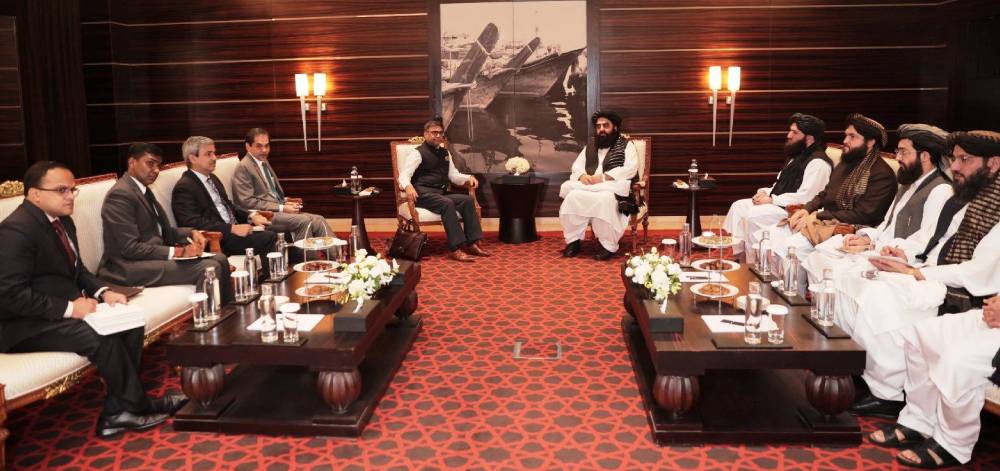
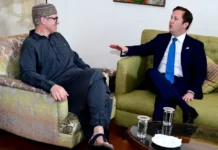
= Last week saw an unusual diplomatic development, when India’s Foreign Secretary Vikram Misri held a meeting with the acting Foreign Minister of Afghanistan, Maulawi Amir Khan Muttaqi, in Dubai on January 8, 2024.
The meeting comes in the background of increasing Afghanistan-Pakistan tensions and many see this as India’s move to edge out Pakistan from the Afghanistan equation. The fact, however, is that India has never given up on either Afghanistan or the Taliban. Though not at the diplomatic level yet unofficially Indian establishment has kept a line of communication open with the Taliban since their Kabul takeover in 1996 as Taliban 1.0.
Always On-Line
Pragmatically, India has not ignored the Taliban at all. At the Moscow Dialogue in 2017 and the Intra-Afghan Peace Talks in 2020 at Doha, Indian representatives were present. Later, India’s Ambassador to Qatar met Taliban representatives at their Doha office. In June 2022 Joint Secretary for Pakistan, Afghanistan, and Iran met key Taliban leaders paving the way for sending a technical team to the Indian embassy in Kabul. Subsequently, India allowed the Taliban to appoint a new Consul General in the Afghan Consulate in Mumbai.
The recent warming of ties between Kabul and Delhi is not a sudden development but a result of quiet diplomacy since the Taliban came to power in Afghanistan and India began informal talks with the government.
While there might not be a formal recognition of the Taliban government by Delhi, India has maintained a neutral and non-judgmental approach. Security sources say the Taliban government has appreciated this non-interference, creating an understanding of mutual acceptance.
Besides, the alignment of India’s security and strategic interests is equally important to counter Pakistan’s influence. Security officials also emphasise that India has learnt from past experiences, such as the hijacking of an Indian Airlines plane in 1999, and now understands the importance of maintaining relationships with neighbouring states unless there are clear and credible reasons not to do so. In this context, Delhi is focusing on securing its national security interests at a time when geopolitics in the region is in flux.
Humanitarian Help
Reportedly, Misri highlighted India’s long-standing friendship with the Afghan people and the deep cultural and social ties shared by the two nations, at the meeting. He assured Afghanistan of India’s commitment to addressing the immediate developmental needs of its people.
The discussions included a review of the ongoing Indian humanitarian assistance programmes in Afghanistan. The Afghan Minister expressed gratitude to India for its unwavering support and engagement with the Afghan people. Recognising the current developmental challenges, both sides agreed that India would explore additional development projects soon, complementing its ongoing humanitarian efforts.
India’s humanitarian assistance to Afghanistan has been extensive and diverse since 2021. Responding to a request from Afghanistan, India has committed to further material support, particularly in the health sector and for the rehabilitation of refugees. Both sides also discussed strengthening their collaboration in sports. Besides, they agreed on promoting the use of the Chabahar Port to enhance trade and provide humanitarian assistance to Afghanistan.
Trade
The Chabahar Port could prove to be a port for promoting multilateral friendship with both Iran and Afghanistan, in addition to many central Asian republics. The distance from Chabahar to Kabul via Zahedan is only 1196 km by road or rail. Thus, the port could serve as an important linkage with Afghanistan in the absence of Pakistan denying India the right of passage through its road or rail network repeatedly.
Chabahar Port provides a direct route to Afghanistan through Zahedan without involving Pakistan. Resultantly, this also reduces Afghanistan’s dependence on Pakistan for trade and helps build stronger economic ties with India, making trade smoother and more efficient.
Strategically, a growing relationship with the Taliban may also help India to counter the Chinese push in Afghanistan and other central Asian countries through its BRI project. Further, an increased mechanism of interaction may help India to influence the Taliban to check anti-India elements operating from Afghanistan such as Lashkar-e-Taiba (LeT), Jaish-e-Mohammed (JeM) and Islamic State Khorasan Province (ISKP).
In this regard, it would be judicious for India if it courts Talibani leaders like Sher Mohammad Abbas Stanekzai, who was trained at the Indian Military Academy, just like its old friend Hamid Karzai who also studied in India.
Another influence which India could leverage to its benefit to exert some sort of religious pressure on the Taliban leaders is the leading Indian seminary of Darul Uloom, Deoband. Many of the old-guard Taliban leaders have been tutored at Deobandi madrassas in Pakistan and the border area of Afghanistan-Pakistan, run by several Deobandi alumnus. In this regard, however, India should make sure that it asks the religious and not the political leaders of Darul Uloom to help in this regard, as such political leaders have no locus standi among the Taliban leaders.
A similar approach has been shown by Taliban leadership also, by appointing Ikramuddin Kamil as the acting consul at the Afghan Consulate in Mumbai, in November 2024, marking the first such appointment by the Taliban in India. Kamil like Karzai studied in India for seven years, completing his doctorate from South Asia University in New Delhi on a scholarship provided by the MEA.