India has rejected a fresh ruling by a Hague tribunal over the Indus Waters Treaty, while Pakistan claims victory. The legal and diplomatic rift now threatens the Treaty’s future, reports Masood Hussain
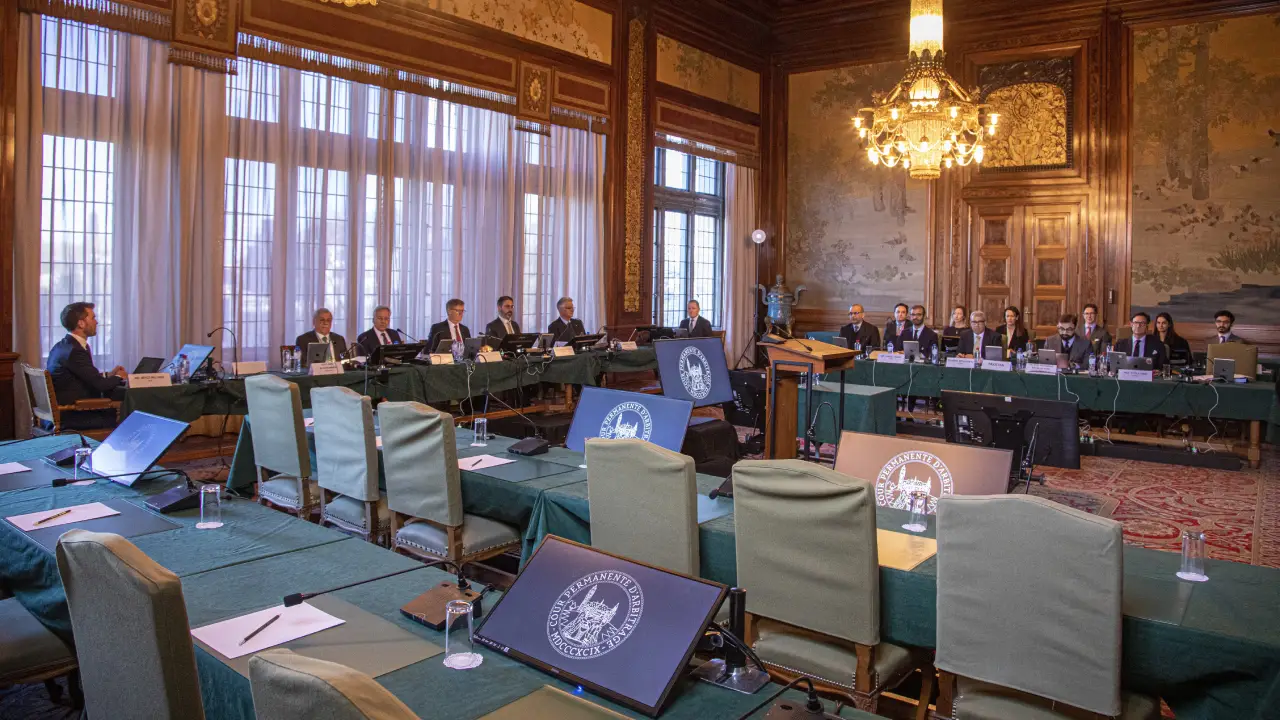
India and Pakistan have exhibited a serious division over a third-party ruling in a case involving the Indus Water Treaty. India has forcefully rejected the ruling by the Permanent Court of Arbitration in The Hague that reaffirmed its jurisdiction over a longstanding water dispute under the 1960 water sharing treaty, calling the tribunal “illegally constituted” and its latest decision “void and without legal standing”.
A Court of Arbitration under the Indus Water Treaty is in session. The CoA interpreted the legality of inter-tributary transfer in the treaty.
However, the decision, described by the Court as a Supplemental Award on Competence, was hailed by Pakistan as a significant legal victory in its efforts to hold India accountable over the Kishenganga and Ratle hydroelectric projects in Jammu and Kashmir.
The sharply divergent responses from both nuclear-armed neighbours have once again placed the future of the Indus Waters Treaty (IWT) in serious doubt, amid heightened diplomatic and military tensions following the Pahalgam massacre in April that killed 26 people.
On June 27, the five-member Court of Arbitration, chaired by American jurist Professor Sean D Murphy, issued a binding decision that reaffirmed its jurisdiction over a dispute initiated by Pakistan in August 2016. The Court was asked to adjudicate whether certain design features of India’s Kishenganga (330 MW) and Ratle (850 MW) run-of-river hydroelectric projects on the Western Rivers violated treaty terms that guarantee Pakistan’s downstream water rights.
This arbitration had been challenged by India on procedural grounds. India had simultaneously sought to refer the matter to a Neutral Expert, citing technical questions more appropriate for bilateral resolution. The World Bank, which administers certain treaty mechanisms, initially paused both tracks in 2016. After lifting the pause in 2022, it allowed both the arbitration and Neutral Expert paths to proceed in parallel.
The Award
In its Supplemental Award on the Competence of the Court, delivered unanimously and without the possibility of appeal, the PCA concluded that India’s April 2025 decision to unilaterally “hold the Treaty in abeyance” has no bearing on the Court’s established jurisdiction. The ruling builds upon an earlier decision of July 6, 2023, in which the Court had first determined its competence to proceed. This ruling reaffirms the legal continuity of the arbitration process initiated nearly a decade ago and signals the Court’s intent to continue hearing Pakistan’s claims.
The Court cited Paragraph 16 of Annexure G of the Treaty, which gives the Court the exclusive power to determine its own competence. It further noted that the Treaty contains no provisions allowing for unilateral suspension or abeyance. On the contrary, Article XII(4) stipulates that the Treaty remains in force until terminated by mutual agreement.
The Court also underscored a cardinal principle of customary international law: jurisdiction is determined at the moment a proceeding is initiated. Subsequent political or legal developments, including unilateral withdrawals, do not affect a tribunal’s authority. The PCA referenced decisions from the International Court of Justice, including India’s own 1972 case on the ICAO Council, to highlight the settled legal doctrine that jurisdiction, once validly triggered, is not lost by later acts of a party.
As such, the Court concluded that India cannot revoke or suspend the arbitration unilaterally, regardless of how it labels its actions, whether as suspension, abeyance, or otherwise.
While the PCA reiterated that it would not comment directly on the Neutral Expert’s competence, it clarified that any legitimate authority he may have is subject to the same legal framework. Thus, even if a State initiates a Neutral Expert process, it cannot later disable or derail that process by unilaterally declaring the Treaty inoperative.
Delhi Rejects Award
India maintained throughout that the formation of the Court of Arbitration violated the treaty’s dispute resolution hierarchy and was therefore “in breach” of the IWT itself. But in its Supplemental Award, the PCA unanimously concluded that India’s objections, including its April 2025 declaration that it had placed the treaty “in abeyance”, had no bearing on the Court’s jurisdiction, which had already been established.

The Court also reiterated that the Treaty could only be terminated or suspended by mutual consent, not by unilateral declaration. It found that India’s “abeyance” claim, issued after the Pahalgam attack, had no legal effect on the Court’s ability to proceed. The ruling stated that permitting one party to halt dispute resolution unilaterally would “undermine the value and efficacy of the Treaty’s compulsory third-party dispute settlement process.”
Within hours of the verdict, the Ministry of External Affairs (MEA) in Delhi issued a strongly worded five-point statement rejecting the Court, the ruling, and the very premise of the arbitration.
“The illegal Court of Arbitration, purportedly constituted under the Indus Waters Treaty 1960, albeit in brazen violation of it, has issued what it characterises as a ‘supplemental award’ on its competence concerning the Kishenganga and Ratle hydroelectric projects in the Indian Union Territory of Jammu and Kashmir,” the MEA said.
India asserted it “has never recognised the existence in law” of the tribunal and that the very act of initiating arbitration, instead of exhausting the Neutral Expert route first, was a “serious breach” of the treaty.
“The so-called Court of Arbitration has no existence in the eye of the law. Its rulings are illegal, void, and non-binding,” the MEA said, reiterating India’s long-held position that treaty obligations are suspended until Pakistan “credibly and irrevocably” ends its alleged support for cross-border terrorism.
India linked its decision to hold the IWT “in abeyance” directly to the April 22 Pahalgam massacre, calling it an act of national self-defence and sovereign right under international law. “Until such time that the Treaty is in abeyance, India is no longer bound to perform any of its obligations under the Treaty,” the MEA said.
India also accused Pakistan of abusing international forums: “This latest charade at Pakistan’s behest is yet another desperate attempt to escape accountability for its role as the global epicentre of terrorism,” it said, alleging that Pakistan has a “decades-long pattern of deception and manipulation” at global institutions.
Pakistan Hails Verdict
In stark contrast, Pakistan hailed the ruling as a “major legal win”. In a statement released in Islamabad on June 28, the Pakistani Foreign Ministry said the decision sent a “clear message” that India cannot unilaterally suspend or override treaty obligations.
“This high-priority ruling affirms Pakistan’s position and underscores the importance of reviving meaningful dialogue, including on the application of the Indus Waters Treaty,” the statement read.
Islamabad also reaffirmed its commitment to the Treaty and expressed readiness to engage diplomatically, even as it pursues the arbitration case further. It sees the ruling as a critical reinforcement of treaty integrity and binding dispute resolution.
Water, War, and Terror
The dispute has become emblematic of the deteriorating bilateral environment between India and Pakistan. The Treaty, signed in 1960 with World Bank mediation, had withstood multiple wars and skirmishes. It granted Pakistan exclusive rights over the Western Rivers (Indus, Jhelum, Chenab), while India retained rights over the Eastern Rivers (Ravi, Beas, Sutlej), with limited provisions for India to use Western Rivers for non-consumptive purposes.
The Kishenganga and Ratle projects have long been flashpoints. A prior Court of Arbitration had allowed India to proceed with Kishenganga but imposed restrictions to safeguard Pakistan’s Neelum-Jhelum plant downstream. Pakistan now argues that India’s newer designs on Ratle and modifications on Kishenganga breach those limits.
India, however, believes that Pakistan uses technical objections as a tactic to stall development and infringe upon India’s rightful use of its resources.
Following the Pahalgam massacre and India’s suspension of the Treaty, security has intensified across Jammu and Kashmir, especially ahead of the annual Amarnath Yatra. More than 180 paramilitary units have been deployed, and road-opening parties and CCTV surveillance have been installed across the highway route from Lakhanpur to Banihal.
The Origins of the Case
The current dispute began in August 2016, when Pakistan invoked Article IX and Annexure G of the Indus Waters Treaty to request arbitration over the design and operational features of India’s Kishenganga (KHEP) and Ratle (RHEP) run-of-river hydroelectric projects. Pakistan claimed these projects violated treaty provisions, particularly those related to drawdown flushing and pondage storage, potentially threatening Pakistan’s downstream water usage.
Soon after, in October 2016, India initiated a parallel proceeding under Annexure F by asking the World Bank to appoint a Neutral Expert, an engineer empowered to resolve technical questions. These dual requests triggered procedural uncertainty.
Faced with conflicting mandates and diplomatic tension, the World Bank paused both processes in December 2016. This freeze lasted until 2022, when appointments resumed. The PCA constituted the Court of Arbitration, while the World Bank named Michel Lino as Neutral Expert in October 2022.
As proceedings gained momentum, India formally challenged the Court of Arbitration’s jurisdiction. These objections were examined during the Court’s Preliminary Phase on Competence, culminating in a July 6, 2023, ruling. The PCA rejected India’s arguments, affirming that it was properly constituted and competent to hear the matter, even as the Neutral Expert proceeded on a parallel track.
The Court ruled that once arbitration was validly triggered by Pakistan’s 2016 request, the existence of a Neutral Expert proceeding did not negate the Court’s jurisdiction. It then issued Procedural Order No 6, charting a phased hearing process, including a First Phase on the Merits focusing on key provisions of the Treaty and legal effects of prior rulings under its dispute resolution mechanisms.
In April 2024, the Court visited the Neelum-Jhelum Hydro-Electric Plant (NJHEP) in the outskirts. Later, in July 2024, it convened oral hearings in The Hague to examine Pakistan’s case in detail.
The legal environment was upended on April 22, 2025, when a deadly attack in Pahalgam left 26 tourists. Citing the “cross-border linkages” of the attack, Prime Minister Narendra Modi-led Cabinet Committee on Security declared on April 23 that it would hold the Treaty “in abeyance with immediate effect”, pending Pakistan’s “credible and irrevocable” disavowal of terrorism.
On April 24, the Ministry of Jal Shakti formally communicated the decision to Pakistan, alleging that changes in demographics, clean energy needs, and Pakistani non-cooperation necessitated treaty reassessment.
In response, the PCA issued Procedural Order No 15 on May 16, 2025, inviting both countries to comment on whether India’s move affected the Court’s competence. Pakistan responded on June 11, strongly rejecting the legal basis for India’s actions. India filed no submissions.
The Court of Arbitration, it may be recalled here, is chaired by Professor Sean D Murphy of the United States, with members Professor Wouter Buytaert (Belgium), Professor Jeffrey P Minear (United States), Judge Awn Shawkat Al-Khasawneh (Jordan), and Dr Donald Blackmore (Australia).
What’s Next?
The PCA’s latest ruling does not address the design merits of the projects but clears the way for the Court to now hear those arguments. While Pakistan is expected to press ahead with claims of Indian non-compliance and “weaponisation” of water, it remains unclear if India will participate in the next phases or challenge the outcome diplomatically or through other legal channels.
For now, the decision has widened the rift in interpretations and postures around one of the world’s most prominent transboundary water treaties, casting a long shadow on regional diplomacy. Whether India will rejoin the process, challenge subsequent awards, or maintain its legal silence remains uncertain.