SRINAGAR: Kashmir has witnessed a decline in tourist footfall over the past month, with stakeholders attributing the dip to the ongoing Maha Kumbh festival and an unusual lack of snowfall this winter. Hoteliers estimate a fall of about 20 to 25 per cent, despite an otherwise strong tourist season.

A hotelier running a chain of establishments noted that the Maha Kumbh, which began on January 13 and will conclude on February 26, has drawn millions of devotees, leading many potential visitors to prioritise faith over leisure. “A lot of people prefer religious gatherings over vacations during this period,” he said.
Officials said that around 2.95 million (more than 29 lakh) tourists visited Kashmir in 2024, surpassing the 2.71 million in 2023 and 2.67 million in 2022. The 2025 begun with better arrivals as well.
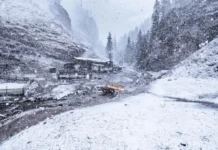
Another major factor affecting tourism has been the absence of significant snowfall, which traditionally serves as a major attraction for visitors during winter. “Snow has always been a huge draw, and I had guests who specifically travelled to Zoji La just to witness it,” another tourism stakeholder remarked. He expressed optimism that the upcoming railway connectivity to the valley could help boost numbers in the coming months.
The lack of snow has created records of its sorts. For the first time in years, the strategic Zoji La Pass, which connects Kashmir to Ladakh, has remained open throughout the winter. This has been attributed to an 87 per cent precipitation shortfall recorded in January 2025, following what was already the driest year in five decades in 2024.
Despite severe cold, relentless efforts by the Border Roads Organisation (BRO), local administration, and the Army have ensured the pass remains operational, marking a rare feat in regional connectivity. The pass is crucial for military logistics, trade, and civilian movement. While the under-construction Zoji La Tunnel is expected to provide year-round access in the future, the continuous operation of the pass this year highlights improvements in infrastructure and road management.
Further enhancing accessibility, the newly developed Z-Morh Tunnel has kept Sonamarg open during the winter months, contributing to better transportation links in the region. Officials noted that while Zoji La traditionally remained closed for months, improved infrastructure and dedicated snow-clearing efforts have changed the scenario this year.
However, the slight fall in arrivals in last three fortnights is linked to the Maha Kumbh in Prayagraj which continues to attract massive crowds. According to the Uttar Pradesh government, over 45 crore devotees have taken a dip at the Sangam since the festival commenced, with the number expected to reach 55 crore by its conclusion on February 26.
The three most significant Amrit Snans—on Makar Sankranti, Mauni Amavasya, and Basant Panchami—witnessed record participation. Mauni Amavasya saw the highest turnout, with 8 crore people taking the holy dip.
President Droupadi Murmu, Prime Minister Narendra Modi, Home Minister Amit Shah, and Defence Minister Rajnath Singh were among the prominent figures who participated in the rituals.
The Maha Kumbh, held once every 12 years, is considered one of the largest religious gatherings in the world. Rooted in Hindu mythology, it commemorates the Samudra Manthan, where drops of the nectar of immortality were believed to have fallen at Prayagraj, Haridwar, Ujjain, and Nashik. Pilgrims believe that taking a dip in the sacred rivers during the festival cleanses sins and paves the way for salvation.
With just 15 days left for the festival’s conclusion, authorities expect a continued surge in pilgrim numbers, sustaining its impact on travel trends across the country.