SRINAGAR: The Z-Morh Tunnel being formally inaugurated by Prime Minister Narendra Modi today is anticipated to change Sonamrag forever. Managing round-the-year connectivity will help Sonamarg become the new capital of adventure winter sports, especially heli-skiing, people aware of the destination’s potential assert.
“There are 10-15 spots ahead of the Morh where avalanches trigger and block the road and make the highway impassable,” one senior engineer working on the tunnel said. “Now all those spots will bypass and we can reach the other side of the hill in minutes.”
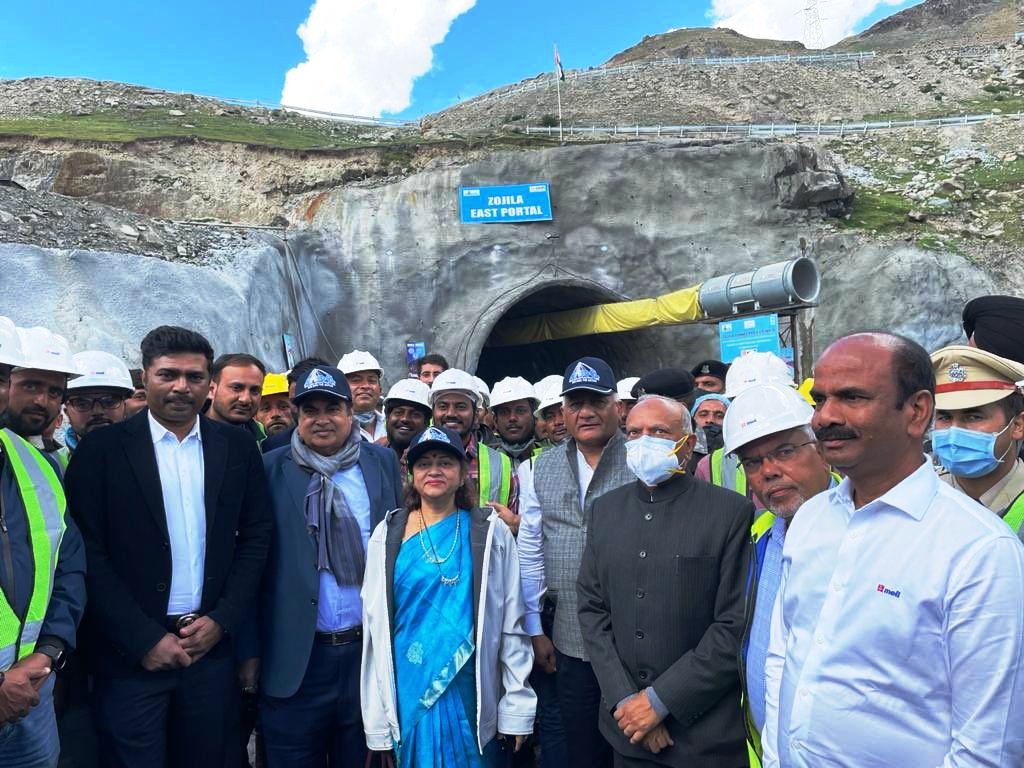
The tunnel is a pivotal infrastructure project located on the Srinagar-Leh Highway in Jammu and Kashmir, designed to significantly enhance connectivity between Kashmir and Ladakh, which has remained disrupted for nearly half of the year. The twin tunnels – the other is coming up to bypass the perilous Zoji La, are part of the strategic investment to improve access to the borders.
Spanning approximately 6.5 kilometres, the Z-Morh tunnel is strategically situated to provide all-weather access to the picturesque tourist destination of Sonamarg, which has historically faced accessibility challenges during the winter months due to heavy snowfall and avalanches. The inaccessibility during winters had prevented any investment in the winter sports infrastructure in Sonmarg, a limitation that will now be a thing of the past.
“It is not going to make any difference as far as the length of the road goes,” Bashir Mir, a politician from the area said. “It is making a difference by way of skipping the entire zig-zag of the avalanche belt. Of the 6.5 km, almost six km is seriously avalanche probe as the road passes through rocky cliffs which cannot retain the snow deposits. Passing this belt has always remained a risky business to date.”
Project Background
The Z-Morh Tunnel was conceptualised in 2012 when the Border Roads Organisation (BRO) recognised the need for improved connectivity in this remote region. Over the years, various challenges, including financial constraints and administrative hurdles, led to delays in its construction.
Initially awarded to Tunnelway Ltd., the project struggled to progress until August 2019, when it was taken over by the National Highways and Infrastructure Development Corporation Limited (NHIDCL). This marked a turning point as NHIDCL retendered the project, resulting in APCO Infratech winning the construction contract for Rs 2,680 crore.
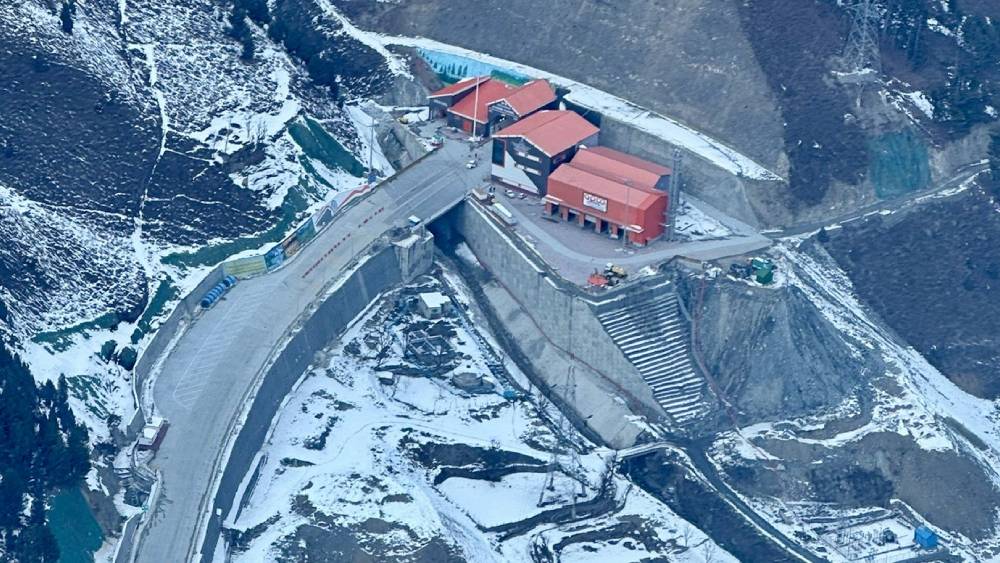
By June 2021, significant progress was made with the completion of mining and excavation work, culminating in connecting both ends of the tunnel. A partial opening for military and emergency services was announced in November 2021, although full operational capacity remained pending. The project faced further delays, with an original completion date set for August 2023. However, by February 2024, a soft opening of the tunnel was conducted, leading up to its official inauguration scheduled for January 13, 2025, today, by Prime Minister Narendra Modi.
Technical Specifications
The Z-Morh Tunnel is designed as a two-lane bi-directional road structure with a width of 10 meters. It is capable of accommodating up to 1,000 vehicles per hour at speeds of up to 80 km/h. Situated at an altitude of 2,637 meters (8,652 feet) above sea level, the tunnel employs the New Austrian Tunnelling Method (NATM) for its construction. Notably, safety features include a parallel escape tunnel for emergencies and an advanced ventilation system.
The total length of the Z-Morh Tunnel is approximately 6.5 kilometres, with additional structures including a parallel escape tunnel measuring 6.426 kilometres and approach roads totalling 5.568 kilometres. The excavation process for the tunnel primarily utilised the drill-and-blast method, which is particularly effective in hard rock formations typical of the Himalayan region. The blasting was conducted using industrial-grade explosives known as ANFO (Ammonium Nitrate Fuel Oil), which were detonated sequentially to ensure optimal fragmentation of the rock.
During construction, each blast was designed to achieve approximately 3 meters of excavation pull, indicating that significant volumes of material were removed in each operation. The total quantum of excavated material has been substantial, although specific figures for the total volume excavated have not been publicly disclosed.
The total investment for the Z-Morh Tunnel project amounts to approximately Rs 2,680 crore. This substantial financial commitment underscores the importance placed on improving infrastructure in a region that serves both civilian needs and military logistics.
Stakeholders Involved
Several key organisations have played vital roles in bringing this project to fruition. The Border Roads Organisation (BRO) was instrumental in its initial planning and conception. Following this, the National Highways and Infrastructure Development Corporation Limited (NHIDCL) assumed control in 2019 to streamline management and execution. The construction itself has been carried out by APCO Infratech under a special-purpose vehicle known as APCO-Shri Amarnathji Tunnel Private Limited.
Anticipated Impact
The Z-Morh Tunnel is poised to have far-reaching impacts on both local communities and broader strategic considerations. Primarily, it will enhance connectivity by ensuring year-round access to Sonamarg, thereby promoting tourism and stimulating local economic development. This is particularly significant given that Sonamarg has immense potential as a winter sports destination.
There were some efforts to introduce advanced skinning in the region. Silvan Sudan (dead 2024), the “skier of the impossible” made serious efforts in getting the high-cost heli-skiing to Sonmarg in 2006 and 2007. It was initiated but in 2007, he survived a chopper crash and the plans were abandoned.

Besides, from a strategic perspective, the tunnel will bolster military logistics and operational capabilities in Kashmir and Ladakh—regions that are sensitive from a national security standpoint. The borders in the arid desert are with Pakistan (Line of Control) and with China (Line of Actual Control). While the Kargil war was fought on the LoC not far away from the Z-Morh tunnel in the Drass-Batalik areas, the Sino-Indian tensions in the region are now stabilising after a few years. Improved access will facilitate quicker mobilisation of resources and personnel when necessary.
Use of Materials
In terms of materials, the construction of the Z-Morh Tunnel involved extensive use of steel and concrete. The primary support systems within the tunnel consist of layers of shotcrete, rock bolts, wire mesh, and umbrella pipe roofing. These materials were selected based on rock mass classifications to ensure structural integrity and safety throughout the tunnel’s lifespan.
The construction of the Z-Morh Tunnel has engaged a large workforce, estimated to be in the range of several hundred workers at various stages of construction. While exact numbers may vary over time due to shifts in project phases and labour requirements, it is common for such large-scale projects to employ around 300 to 500 workers at peak times. Insiders, however, said there were more than 1000 people, skilled and unskilled, working round the clock foremost of the time. This workforce includes skilled labourers, engineers, safety personnel, and support staff dedicated to ensuring that construction adheres to safety standards and quality control measures.