SRINAGAR: In the early 18th century, a significant yet little-known literary and religious compilation emerged in the Mughal-governed region of Kashmir. Commissioned in 1701 CE (1113 AH) by Nawab Ibrahim Khan, the then Mughal governor of Kashmir, Al-Biyaz Ibrahimi (or Panj Biyaz Ibrahimi) is a five-volume work that has intrigued historians and scholars alike for centuries. Today, only three known manuscripts of this monumental work are believed to survive—one each in Lucknow, Srinagar, and Iran, according to Kashmir’s architect and historian Hakim Samir Hamdani.
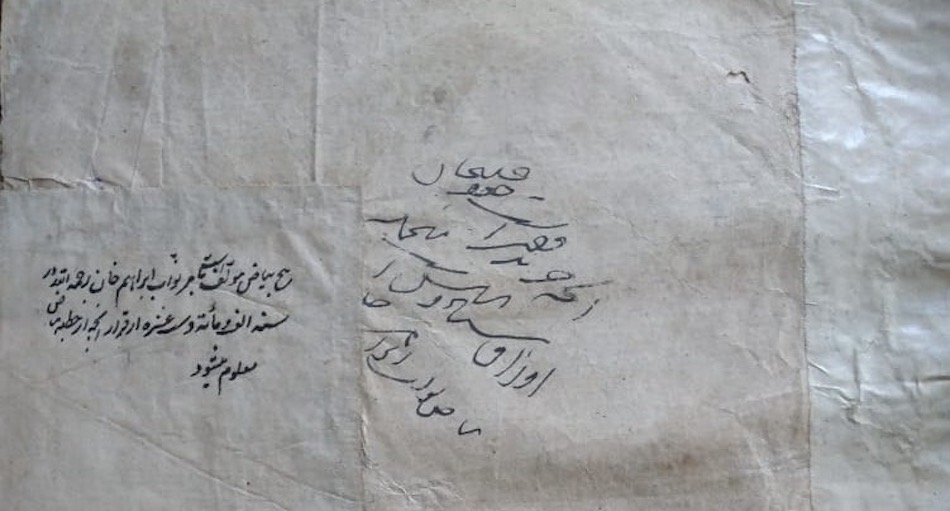
Ibrahim Khan, the son of the famous Mughal noble Ali Mardan Khan, served multiple terms as the subedar (governor) of Kashmir from 1662 to 1709. While Ali Mardan Khan emerges as a cosmopolitan figure with respect for different faith traditions, his son Ibrahim emerges as a man of deep religious convictions. Anecdotal accounts preserved by his great-grandson speak about how he had prepared his grave during his lifetime, and would often visit it and recite the Quran in the crypt.
During his final tenure in 1701, Khan commissioned the compilation of the Biyaz, a work overseen by a committee of Shia scholars. These scholars, whose identities have been lost to history, hailed from Iran, Iraq, and Kashmir. The project was completed in Srinagar, though the work’s nature and content raise puzzling questions about how it was compiled under the reign of Emperor Aurangzeb, a ruler often portrayed as staunchly anti-Shia.
The Al-Biyaz Ibrahimi stands out for its polemical tone. Using Sunni books as sources, the work is highly critical of Sunni interpretations of Islam, reflecting a distinctly Shia viewpoint. One of its most intriguing references is to the library of the Qazi of Kashmir, Mulla Abdul Karim, a prominent figure of his time. Despite its potentially controversial content, the work was completed and survived the scrutiny of a time when religious tensions were high, and public dissent against the ruling sect was risky.
The Biyaz was not simply a scholarly treatise but an intricate assembly of ideas, much like the blank books that bear the same name—”biyaz,” meaning the whiteness of the eyeball, and hence, white paper or blank book. In Kashmir, the tradition of the biyaz extended beyond formal literature. Families often passed these books down through generations, each member adding their own notes, thoughts, and poetry, turning a single volume into a tapestry of personal and collective histories.
What makes Al-Biyaz Ibrahimi especially perplexing is its existence under the reign of Aurangzeb, who is typically seen as a puritanical ruler who imposed strict Sunni orthodoxy throughout the empire. That a Shia polemic, overseen by a committee of Shia scholars, was compiled during his rule—however quietly—seems an anomaly. It is possible that the work was kept out of wide circulation to avoid the attention of the Mughal court, or perhaps its production was a carefully orchestrated act of resistance by Kashmir’s Shia elite.
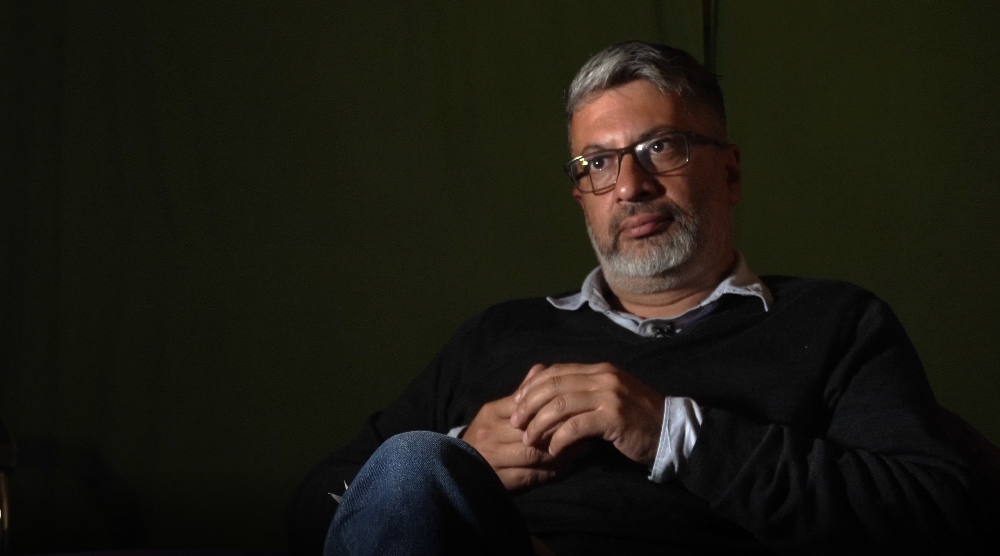
Despite these mysteries, the few surviving manuscripts offer a glimpse into a rich, diverse intellectual tradition that thrived in the region. Kashmir, historically known as a melting pot of cultures and religions, was home to a vibrant scholarly community that drew from both local and foreign sources, blending them into unique works like the Biyaz. While its polemical nature may not appeal to all, the Al-Biyaz Ibrahimi remains a testament to the region’s complex history and the resilience of its intellectual heritage.
The survival of this work also reflects the enduring tradition of biyaz in Kashmir, where blank books passed through generations became living records, accumulating annotations, poetry, and reflections over time. These books, like the Al-Biyaz Ibrahimi, encapsulate the intimate connection between the past and the present, as each new generation adds its own voice to an ongoing dialogue with history.
As historians and scholars continue to study these surviving manuscripts, many questions remain unanswered. How did the work evade the watchful eyes of Aurangzeb’s court? Who were the unnamed Shia scholars that contributed to its compilation? And what does the legacy of Al-Biyaz Ibrahimi reveal about Kashmir’s past? While the answers may remain elusive, the work’s continued existence ensures that its story is far from forgotten.