Kazinag National Park hosts 186 plant taxa across 55 families, with herbs comprising 79 per cent and perennials 88.2 per cent. Asteraceae is the most diverse family, with 24 species.
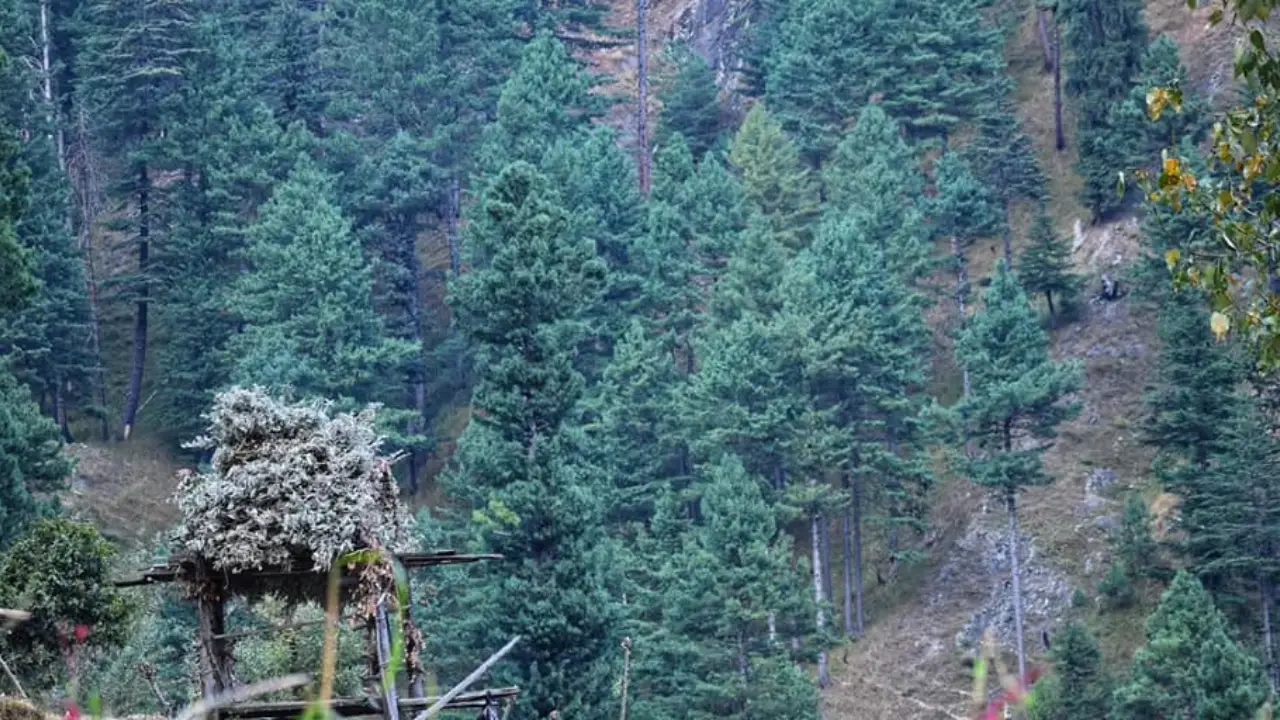
SRINAGAR: A first-of-its-kind floristic checklist of Kazinag National Park in north Kashmir has documented 186 plant taxa, including 182 species, two subspecies and two varieties, providing a scientific baseline for future biodiversity conservation and management of the protected area.
The study found that herbs account for 79 per cent of the recorded flora, while perennial plants make up 88.2 per cent. Asteraceae emerged as the most diverse plant family, with 24 species, followed by Ranunculaceae with 14 and Rosaceae with 13. The researchers say the checklist can help decision-makers develop conservation strategies, while identifying gaps that require further research.
The research was conducted by Riyaz Ahmad, Tajamul Islam, Anzar Ahmad Khuroo, Yash Veer Bhatnagar and Gopal S. Rawat. Riyaz is affiliated with the Nature Conservation Foundation, Mysore; Wildlife Trust of India, Noida; and National Centre for Wildlife, Riyadh, Saudi Arabia. Tajamul and Anzar are associated with the Centre for Biodiversity & Taxonomy, Department of Botany, University of Kashmir, Srinagar. Yash Veer Bhatnagar is affiliated with the Nature Conservation Foundation and the International Union for Conservation of Nature (IUCN), New Delhi, while Gopal S Rawat is associated with the Wildlife Institute of India, Dehradun.
The paper, A floristic checklist of Kazinag National Park, Kashmir Himalaya, was published on December 24, 2024.
Extensive Surveys
The researchers surveyed the national park across forest and alpine zones during the principal growing seasons of 2009 and 2010. They conducted walk-over surveys twice a month along different trails, collecting plant specimens and recording their life-history characteristics.
The specimens were processed and preserved in the Kashmir University Herbarium. Identification was based on morphological characteristics, taxonomic literature and online botanical databases. The researchers recorded scientific names, plant families, growth forms, lifespans and life forms for the identified taxa.
It covered approximately 157 square kilometres and comprises Lachipora Wildlife Sanctuary, Limber Wildlife Sanctuary and Naganari Conservation Reserve, which were merged and upgraded to national park status. Its elevation ranges from 1,800 to 4,700 metres above sea level, encompassing temperate coniferous forests, subalpine vegetation and alpine habitats.
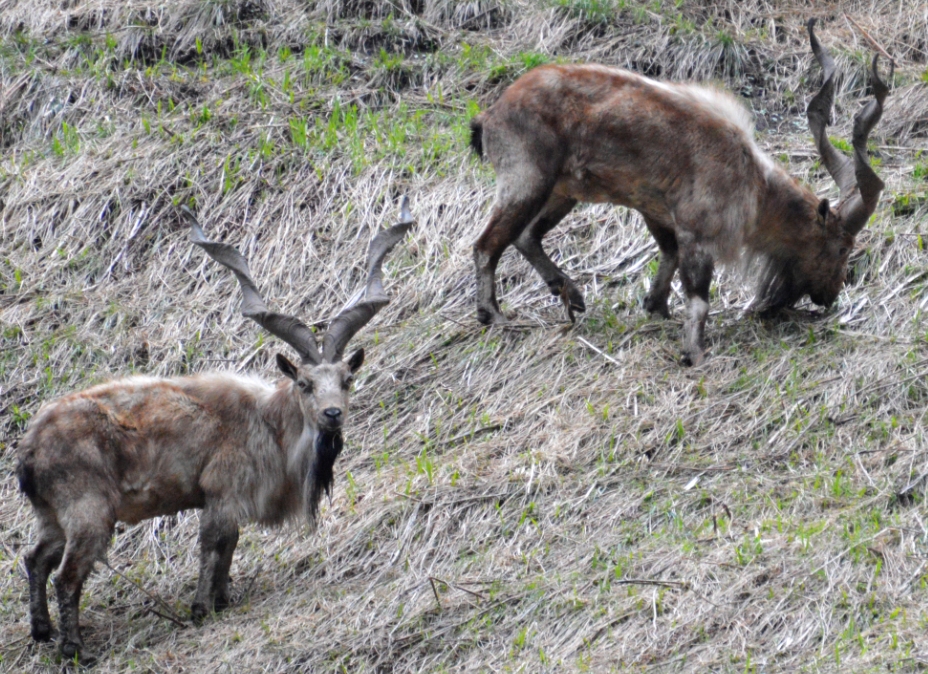
The park is also significant for wildlife conservation, particularly as a habitat for the Markhor, Himalayan goral and Kashmir musk deer. The authors note that communities in the lower valleys depend on the area for resources including food, fodder, fuelwood, pasture and medicinal plants.
Diverse flora
The checklist records 186 plant taxa belonging to 147 genera and 55 families. These comprise 182 species, two subspecies and two varieties.
Flowering plants, or angiosperms, account for 181 species, representing 97.3 per cent of the recorded flora. Gymnosperms account for the remaining five taxa, or 2.7 per cent.
The distribution of plants across families is uneven. Asteraceae emerged as the most species-rich family, with 24 species, followed by Ranunculaceae with 14 and Rosaceae with 13. Together, the ten leading families account for 105 species, or 56.4 per cent of the recorded total.
At the genus level, Astragalus, Erigeron and Impatiens were the most represented, with three species each.
The findings establish a baseline inventory for a protected Himalayan landscape whose plant diversity had not previously been documented through a comprehensive checklist of this kind. The authors argue that such inventories are important for understanding biodiversity and developing evidence-based conservation plans.
Herbs Dominate
Herbaceous plants constitute the largest component of the recorded flora, with 147 species, or 79 per cent of the total. Shrubs account for 19 species, representing 10.2 per cent, while trees account for 14 species, or 7.5 per cent. The inventory also includes five subshrubs and one climber.
The researchers attribute the predominance of herbs partly to the park’s extensive subalpine and alpine habitats, diverse understory vegetation and temperate Himalayan climate.
The findings also show that perennial plants dominate the park’s vegetation. The checklist records 164 perennial species, equivalent to 88.2 per cent of the total. Annuals account for 21 species, or 11.3 per cent, while one species is classified as biennial.
The authors suggest that the dominance of perennials may reflect their ability to withstand prolonged and harsh environmental conditions. They note that these plants can store carbon-rich resources in their underground parts and use vegetative propagation and clonal strategies to persist in difficult environments.
Ecological Adaptations
The researchers also classified plants according to Raunkiaer’s life-form system, which groups vegetation according to the position and protection of renewal buds during unfavourable seasons.
Hemicryptophytes were the dominant group, accounting for 110 taxa, or 59.1 per cent. These plants generally have renewal buds at or near the soil surface, an adaptation associated with environments exposed to seasonal cold and other climatic stresses.
Phanerophytes, which include many trees and shrubs with renewal buds above ground, accounted for 36 taxa, or 19.4 per cent. Therophytes, typically annual plants that survive unfavourable periods as seeds, represented 22 taxa, or 11.8 per cent. Cryptophytes accounted for 16 taxa, while chamaephytes were the least represented group, with two.
The authors link the prevalence of hemicryptophytes to the park’s high elevations and temperate climate. They also highlight the contribution of trees and shrubs to the structure of the forest canopy and the diversity of understory vegetation.
Conservation Concerns
The study places the findings against wider concerns about biodiversity loss and ecosystem degradation in the Himalaya. The authors identify habitat destruction, overexploitation, invasive alien species, climate change and unsustainable human activities as pressures threatening plant diversity.
Kazinag National Park’s ecological significance extends beyond its plant inventory. The park supports wildlife and provides resources to surrounding communities, making the conservation of its vegetation important for both biodiversity and local livelihoods.
The researchers argue that a reliable inventory is a prerequisite for informed management decisions. Without baseline information on the species present, conservation authorities face difficulties in monitoring ecological changes, assessing the status of plant populations and determining appropriate management interventions.
The checklist therefore provides an initial reference against which subsequent botanical surveys and conservation assessments can be compared.
Research Gaps
The authors caution that the inventory is preliminary and does not provide a complete assessment of the park’s botanical diversity or conservation requirements.
In particular, the study does not establish the conservation status or endemism of every recorded species. It also lacks detailed ecological measurements, including species frequency, abundance, density and other diversity indices.
These gaps mean the checklist should not be interpreted as a complete assessment of which plants are threatened, which are endemic to the region, or how individual populations are changing over time.
The researchers call for further ecological investigations to address these limitations and strengthen the scientific basis for conservation planning.
Management Priorities
The paper concludes that the checklist offers a foundation for future biodiversity research and management in Kazinag National Park and potentially other protected areas in the region.
Its principal contribution is to establish a documented record of plant taxa and their life-history characteristics in a protected area that had previously lacked such an inventory. The authors envisage this information helping decision-makers formulate conservation strategies, identify research priorities and improve the management of Himalayan biodiversity.