SRINAGAR: Two simmering controversies have emerged in the erstwhile state of Jammu and Kashmir, reflecting the region’s complex political, cultural, and historical landscape. One centers on the proposal to name a crucial infrastructure project in Kashmir after a former prime minister, while the other raises a debate over the commemoration of a 19th-century military figure in Ladakh.
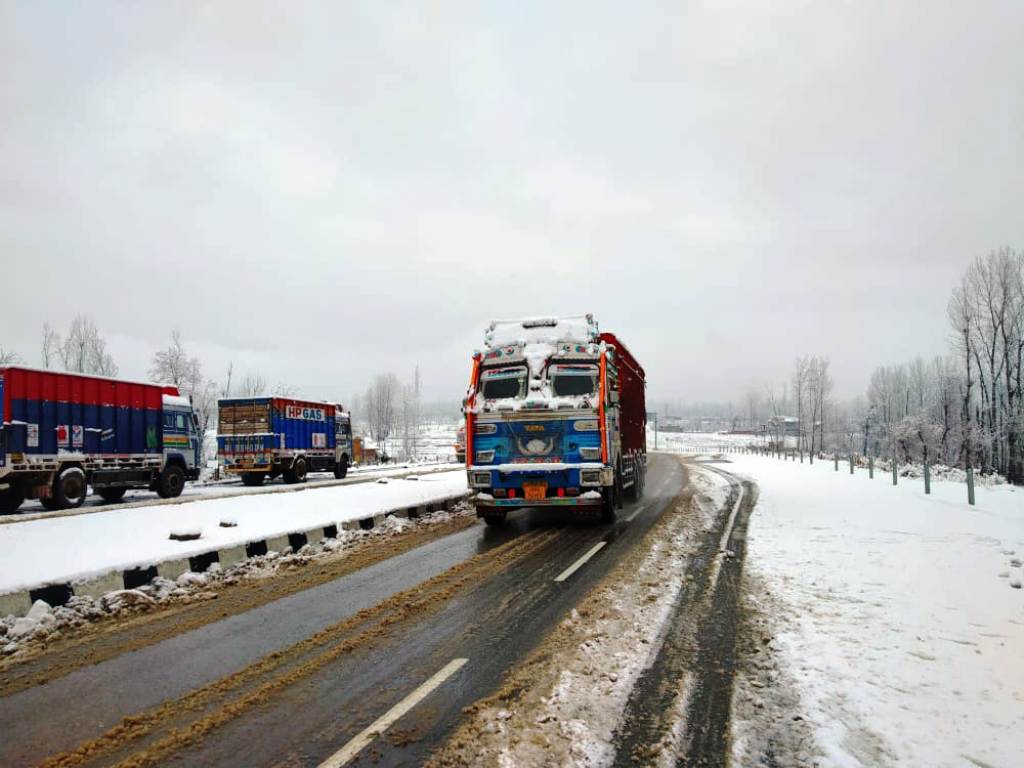
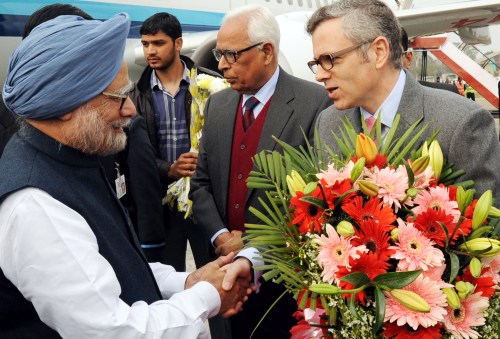
In Kashmir, Chief Minister Omar Abdullah has called for the Navyug Tunnel, which connects Qazigund with Banihal on the Srinagar-Jammu National Highway, to be named after the late Prime Minister Dr Manmohan Singh. One of the Prime Ministers whose interventions in Kashmir were too radical and pro-people, Dr Singh was cremated last week.
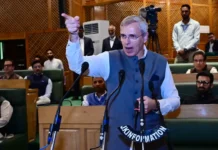
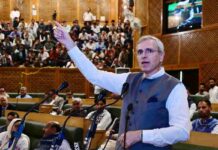
Speaking to the media on Sunday, Abdullah highlighted the significant contributions of Dr Singh to the region, particularly his role in the development of crucial infrastructure.
“It now takes people four to five hours to travel from Srinagar to Jammu via the highway during normal days. This is a gift from the late PM Dr Manmohan Singh,” Abdullah remarked, referring to the tunnel that has vastly improved connectivity in the region. He noted that it was during Dr Singh’s tenure that the four-laning of the Srinagar-Jammu National Highway was approved, a project that has had transformative effects on the region.
Omar Abdullah pointed to the precedent of naming infrastructure projects after prominent figures, citing the tunnel on the highway named after Shyama Prasad Mukherjee. “The new Navyug Tunnel should bear the name of Dr Manmohan Singh, as it reflects his vision and contribution to Jammu and Kashmir,” he said.
Abdullah also praised Dr Singh as a statesman whose initiatives, such as the PM Scholarship Scheme for Jammu Kashmir students and the launch of cross-LoC trade, have left a lasting impact. “Dr Singh’s legacy in Jammu and Kashmir will always be remembered,” Abdullah affirmed.
In Ladakh, the unveiling of a statue of Chhatrapati Shivaji on December 26 at Pangong Tso has sparked a fresh debate. While the statue has been widely welcomed as a tribute to the Maratha king’s historic contributions, it has also reignited calls for the recognition of General Zorawar Singh Kalhuria, a key figure in the region’s 19th-century history.
General Zorawar Singh played a pivotal role between 1834 and 1840 in integrating Ladakh into the Dogra kingdom. His military campaigns, one of the most ruthless in recent history, culminated in the conquest of Ladakh’s last ruler Tsepal Namgyal, were instrumental in the region’s eventual inclusion into Jammu and Kashmir following the Treaty of Amritsar in 1846.
Supporters – though not from Ladakh – of Zorawar Singh argue that his military legacy, which helped shape the modern boundaries of Ladakh, deserves greater recognition alongside figures like Shivaji.
“While Shivaji is undoubtedly a revered figure in Indian history, General Zorawar Singh’s role in shaping Ladakh’s strategic landscape is unparalleled,” said one advocate for his commemoration, as was reported by Chandigarh-based newspaper The Tribune.
The debate highlights the region’s complex historical and cultural identity, marked by its ties to both Jammu and Kashmir and its distinct Buddhist heritage. General Zorawar Singh’s campaigns, launched under the leadership of Maharaja Gulab Singh, laid the foundations for Ladakh’s integration into Jammu and Kashmir and eventually to India in 1947.
As these two controversies unfold, they underscore the ongoing efforts in Jammu, Kashmir, and Ladakh to reconcile historical legacies with modern political and cultural aspirations.