SRINAGAR: An exhibition tracing Kashmir’s centuries-old tradition of architectural epigraphy opened this week at the India International Centre (IIC), New Delhi, bringing to light inscriptions that once adorned the Valley’s mosques, shrines, bridges, temples and gardens between the 14th and 19th centuries.
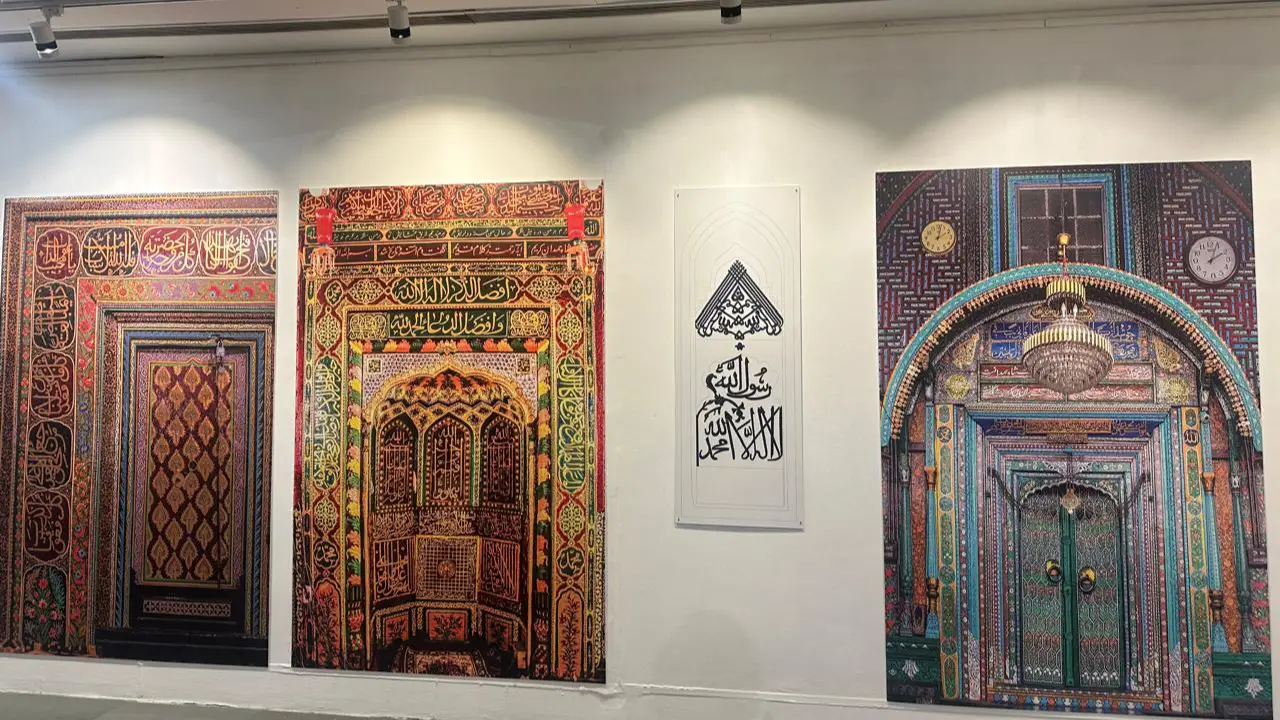
Titled Naqsh (The Imprint), the exhibition curated by conservationist and art historian Hakim Sameer Hamdani presents photographs, drawings and translations of epigraphs, many of which are fast disappearing due to fire, neglect, weathering and modern renovations. Supported by London’s Barakat Trust and based on a year-long survey of over 600 sites across Kashmir in 2023–24, the project documented 41 significant inscriptions.
The show opened on September 17 with a panel discussion featuring author-historian Rana Safvi, academic Anubhuti Maurya, and Hamdani, moderated by Jindal University scholar Sarovar Zaidi. It will remain on display until September 28 at the Kamla Devi Auditorium Art Gallery, Lodhi Estate.
Among the highlights is a 1621 CE inscription at Srinagar’s Jamia Masjid recording its reconstruction. Remarkably, the stone names both Mulla Murad Kashmiri, a calligrapher, and Hari Ram, a Hindu sculptor from Agra — a rare example of syncretism in Kashmir’s most prominent Muslim monument. “It seems like, back in those times, there was a lot more syncretism in practice than we really think of,” noted Umar Farooq, assistant professor at the Islamic University of Science and Technology.
Other exhibits include the 1597 CE Kathi Darwaza inscription recording payments to 200 masons brought from mainland India, the Naidyar Kadal bridge epigraph of 1676 CE naming a Kashmiri official during Aurangzeb’s reign, and a Pokhribal Devi Temple stone of 1820 CE that signals the revival of Hindu shrines under Sikh rule. A terracotta plaque from Masjid-i Aham Sharif (1872 CE), unique for being the only surviving example of its kind, is also displayed.
“Kashmir has long been a crossroads of civilisations, and these inscriptions reveal how Persianate, Arabic, Sanskrit and even Hindi traditions merged to create a distinctive cultural landscape,” Hamdani explained. “Epigraphy is basically text on buildings. Like today’s billboards, they were meant to be read, understood, and remembered — devotional, commemorative, and often communal in nature.”
The exhibition not only documents craftsmanship and calligraphy, Kufic, Thuluth, Nastaliq, Diwani and other scripts, but also reflects Kashmir’s syncretic cultural history. From Sufi shrines ornamented with Quranic verses and poetry, to Sikh-era temples inscribed in Persian, the texts map a region where artistic and spiritual traditions continually overlapped.
Hamdani emphasised that change has always been inherent in Kashmir’s architectural life. “Unlike the West, where heritage is frozen, here monuments live with communities. Ownership brings change — not always aesthetically favourable, but very real.”
For younger researchers like Mehran Qureshi, Taha Mughal, Zoya Khan and Tabish Haider Gazi, who contributed to the project, Naqsh is as much about preservation as about rediscovery. It reminds viewers that Kashmir’s epigraphs are not just fading texts on stone and timber but vital records of cultural memory, artistic exchange and community identity.
The exhibition will run daily from 11 am to 7 pm until September 28.