The law university dispute reflects how education in Jammu and Kashmir is repeatedly entangled in regional rivalry and mistrust.
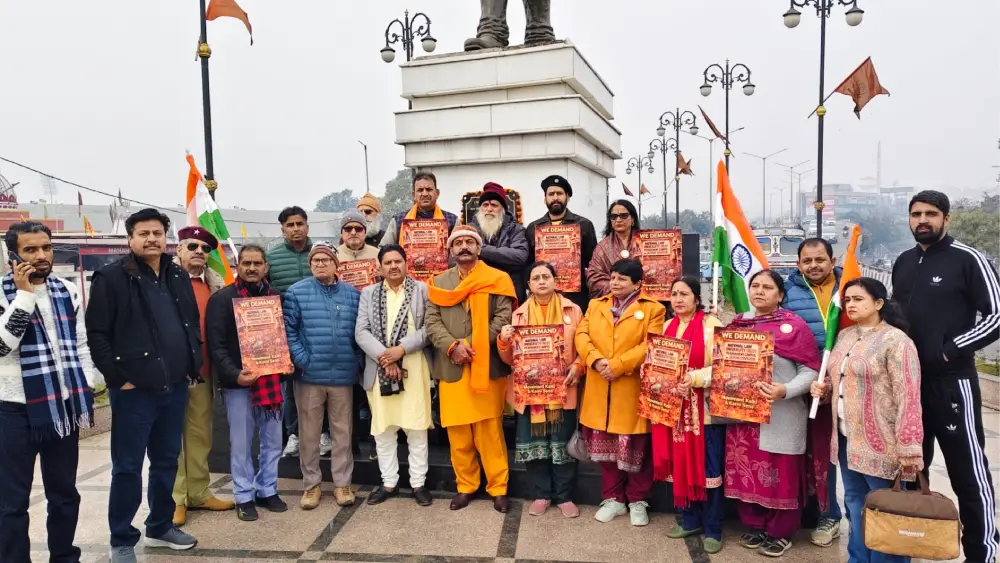
The controversy over the proposed National Law University (NLU) has once again exposed a familiar truth about Jammu and Kashmir: development debates here rarely remain about institutions alone. They almost inevitably slip into a contest of regional hurt, political mobilisation, and assumed historical grievances. The present uproar, over whether the NLU should come up in Budgam or Jammu, is less about legal education and more about the deepening mistrust between the two regions.
This is not new. During the peak of civil unrest in 2016, a Deputy Chief Minister’s sharp remark in the Assembly, that Jammu wanted “double of everything Kashmir gets” but not a share in the pellet injuries blinding Kashmiri youth, captured the bitterness of a relationship long framed as Jammu versus Kashmir. Educational institutions have repeatedly become proxies for that rivalry.
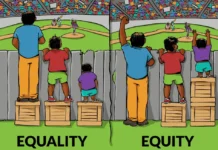
Jammu’s concerns cannot be dismissed outright. The region argues that it has historically mobilised to secure institutions through protest, that it offers better connectivity, and that parents from outside Jammu and Kashmir may hesitate to send students to the Valley due to lingering security perceptions. The demand voiced by sections of the legal fraternity, including the High Court Bar Association, for balanced regional development, and even multiple NLUs across Jammu, Kashmir, and Ladakh, reflects an anxiety about regional equity and access.
Yet, the counter-argument from Kashmir is equally grounded in fact. Jammu hosts an IIT, an IIM, and AIIMS, all established without serious protest from the Valley. Kashmir, by contrast, lacks comparable premier institutions, apart from specialised centres like the National Institute of Fashion Technology. Kashmir AIIMS is yet to be ready, and its Jammu counterpart has been operational for a year. When the Central University was split, it was precisely to address regional parity. From this perspective, locating the NLU in Kashmir is not preferential treatment but overdue correction.
What has aggravated the present dispute is the political climate following the cancellation of the Shri Mata Vaishno Devi medical college’s registration, widely perceived in Kashmir as communalised over the religious identity of selected students. As many as 42 students in a 50-seat classroom were Kashmiri Muslims, and the NMC derecognised the college almost three months after the admissions. Against that backdrop, demands to shift the NLU appear to many in the Valley as part of a broader pattern where merit, geography, and democratic resolutions are subordinated to identity politics.
The Assembly had, in fact, adopted a resolution favouring Kashmir, and the Chief Minister announced Budgam as the temporary location. Reopening the question now risks undermining institutional credibility and feeding narratives of bad faith on both sides. At the same time, absolutist rhetoric, including calls for “amicable divorce”, signals how dangerously frayed regional ties have become.
A fair path forward lies in depoliticising education. The immediate priority should be to operationalise the NLU without delay, honouring legislative intent, while simultaneously committing to a long-term roadmap for additional institutions in underserved sub-regions such as Chenab Valley and Ladakh. Development cannot be a zero-sum game.
If education continues to be weaponised, Jammu and Kashmir will keep revisiting the same arguments, with new campuses but old resentments. Institutions meant to teach constitutional values should not themselves become casualties of regional distrust.