by Umaima Reshi
By building a small superconducting circuit, the 2025 Nobel laureates showed that strange quantum effects like tunnelling and energy jumps can appear in something you can hold in your hand.
Quantum physics has long been associated with the world of the very small, the invisible realm of atoms, electrons, and photons. It describes how particles behave like waves, how they can exist in two states simultaneously, and how they can “tunnel” through barriers they should never be able to cross. But a long-standing mystery has puzzled scientists for decades: do these bizarre effects stop at some scale? Where does the quantum world end, and our familiar world begin?
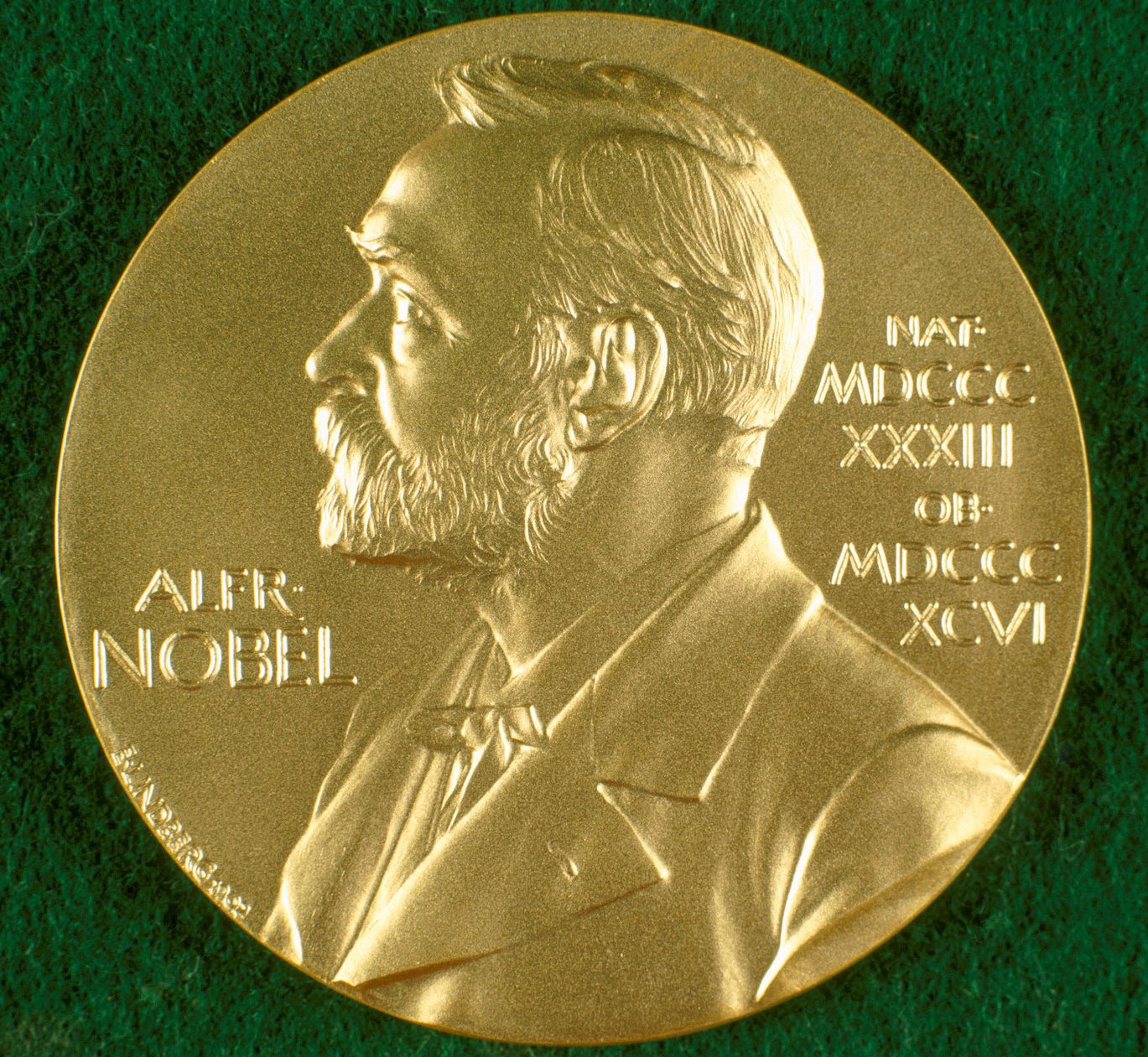
The 2025 Nobel Prize in Physics was awarded to John Clarke, Michel H Devoret, and John M. Martinis for showing that the answer might be, it doesn’t end quite yet. Their experiment brought the quantum world closer to human experience than ever before.
Working together in the mid-1980s, the three scientists built a tiny electric circuit on a chip, about the size of a fingertip. The circuit was not just an ordinary piece of electronics; it was made of special materials that conduct electricity with zero resistance, known as superconductors. Inside this circuit, they managed to observe two famous quantum behaviours, tunnelling and energy quantisation, happening not in an atom or an electron, but in something you could almost see with the naked eye.
It was a breakthrough that blurred the line between the microscopic and the macroscopic.
The Strange World of Superconductors
At the heart of their work lies a phenomenon discovered earlier in the 20th century: superconductivity. When certain materials are cooled to extremely low temperatures, close to absolute zero, their electrical resistance disappears. Current flows forever without losing energy.
In such materials, the electrons don’t move around individually as they do in normal wires. Instead, they pair up to form what are called Cooper pairs, which move in perfect coordination like dancers performing in sync. When these pairs move across a wire, no energy is wasted as heat.
Now, when two superconductors are separated by a thin layer of insulator, something remarkable happens. The Cooper pairs can still move across that barrier, as if they have passed straight through a wall. This is known as the Josephson effect, named after British physicist Brian Josephson, who predicted it in the 1960s.
Clarke, Devoret, and Martinis used this principle to create a Josephson junction, a tiny bridge between two superconductors. Their circuit included several such junctions, turning the entire chip into one coherent quantum system. What made this special was that it was not a single particle behaving quantum mechanically; it was a device made of billions of atoms acting together as one quantum object.
Watching Quantum Tunnelling Happen
To understand the experiment, imagine a marble sitting at the bottom of a small valley. Classically, it should stay there unless someone gives it enough energy to roll over the hill to the other side. In quantum mechanics, though, there is always a tiny chance that the marble might simply appear on the other side without ever climbing the hill; it tunnels through.
That’s what the Nobel-winning experiment showed, but with electric current instead of a marble. The circuit could exist in a “zero-voltage” state, meaning no electricity flowed. But sometimes, without any external push, it would suddenly switch to a state with voltage. That was the quantum tunnelling, the system escaping from one state to another, as if it had magically slipped through a barrier.
This was not just a theoretical claim. The scientists measured the switching precisely, over and over again, and the data matched the predictions of quantum theory exactly.
Quantum Energy in a Circuit
The team did not stop there. They then exposed the same circuit to microwaves, a type of electromagnetic radiation. What they saw next was even more extraordinary: the circuit absorbed and emitted energy not in a smooth flow, but in tiny, fixed amounts, or quanta.
This was direct proof of energy quantisation in a man-made device large enough to see. Until then, quantisation had only been confirmed in systems like atoms or photons. Clarke, Devoret, and Martinis had shown that even a circuit made in a laboratory, a solid, macroscopic object, could follow the same rules.
To make sure their results were genuine, they worked in conditions of extreme precision. The circuit was cooled to temperatures near absolute zero to keep it superconducting. It was isolated from all electrical and magnetic noise that could interfere with the delicate quantum effects. Every parameter, from the resistance and capacitance of the components to the exact temperature, was measured and verified independently. The results stood up to every test.
Their work became one of the clearest demonstrations that quantum mechanics can govern systems far larger than single atoms.
Why It Matters
For scientists, this experiment helped bridge one of the deepest divides in physics, the divide between the quantum world and the classical world. It showed that quantum behaviour does not simply vanish as objects get bigger; it only becomes harder to detect because interactions with the environment tend to destroy it. But under the right conditions, cold, clean, and quiet, even something as large as a circuit can behave quantum mechanically.
For technology, the implications were enormous. The same kinds of superconducting circuits that Clarke, Devoret, and Martinis built are now being used to create the basic units of quantum computers, called qubits. These qubits can exist in multiple states at once, allowing certain computations to be performed much faster than with traditional computers.
John Martinis later became one of the world’s leading researchers in this field, helping to design the superconducting qubits that power many of today’s experimental quantum processors.
Beyond computation, this work also supports the development of quantum sensors that can measure magnetic fields, gravity, or even time with astonishing accuracy.
The Men Behind the Discovery
John Clarke was born in Cambridge, UK, in 1942. After earning his PhD at Cambridge University in 1968, he moved to the University of California, Berkeley, where he spent his career exploring the physics of superconducting circuits.
Michel H Devoret, born in 1953 in Paris, completed his PhD at Paris-Sud University in 1982 and soon joined Clarke’s research group as a postdoctoral fellow. He later became a professor at Yale University and UC Santa Barbara, contributing significantly to quantum electronics and quantum information.
John M. Martinis, born in 1958, earned his PhD at Berkeley in 1987 and went on to become a professor at UC Santa Barbara. His later work built directly on this Nobel-winning experiment, pushing the frontiers of quantum computing.
Together, their collaboration in 1984 and 1985 produced the landmark results that the Nobel Committee honoured in 2025 — experiments that changed how we see the boundary between the quantum and classical worlds.
A Quantum Horizon Ahead
The Nobel Prize this year is not only about an experiment from the 1980s; it is also a recognition of the lasting legacy of that work. The laureates showed that the strange laws of quantum mechanics are not confined to the invisible world of atoms. With precision and creativity, humans can build devices that operate according to those same laws, in the palm of their hands.
It is a reminder that the mysteries of physics are not always hidden in distant galaxies or invisible particles. Sometimes, they are right here in front of us, shimmering in the silent, cold world of superconducting circuits, where quantum meets classical, and where the rules of nature reveal just how far the tiny world can go.