SRINAGAR: Security agencies on Wednesday released pencil sketches of three suspected terrorists believed to have carried out the devastating attack on tourists near Pahalgam, which left 26 civilians dead. As the Valley reels from what is being described as the deadliest assault on civilians in nearly two decades, the National Investigation Agency (NIA) has joined the probe and visited the attack site to assist the Jammu and Kashmir Police in their investigation.
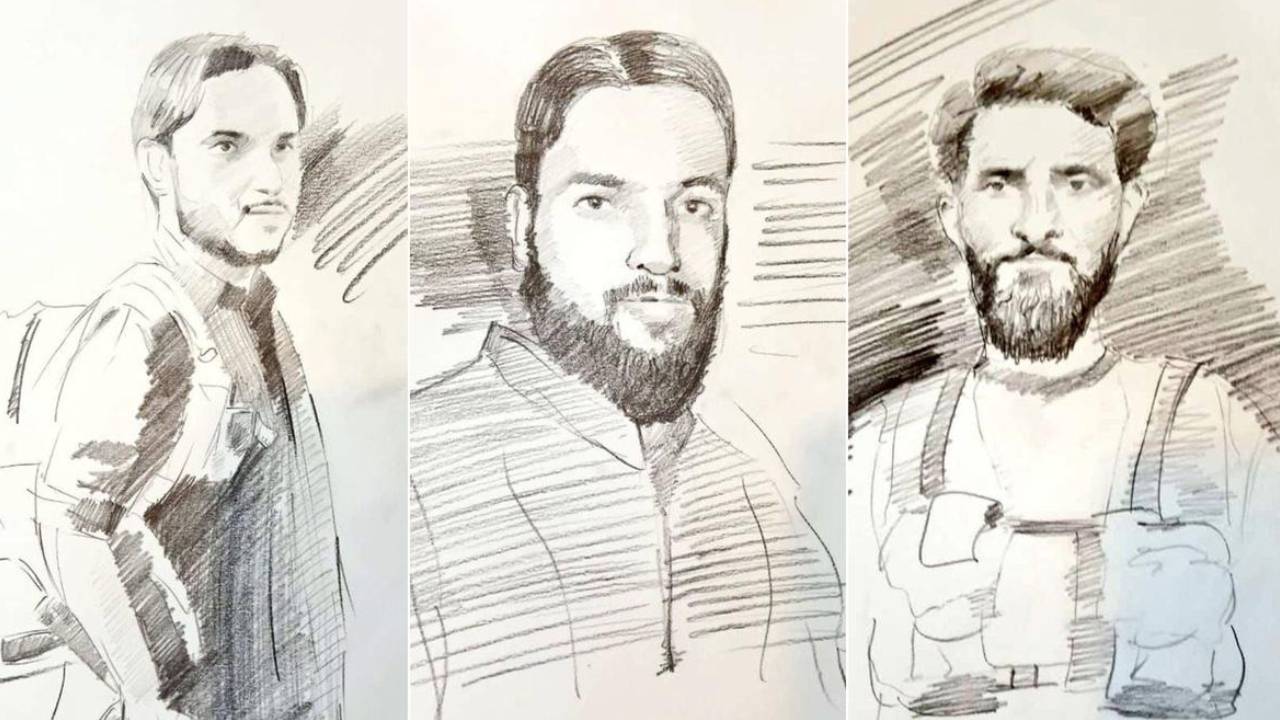
The black-and-white sketches, based on eyewitness accounts from survivors, depict three young, bearded men. Officials identified the suspects as Asif Fauji, Suleman Shah, and Abu Talha — operatives known to have been involved in earlier terror-related incidents in Poonch. Each operated under a code name — Moosa, Yunus, and Asif respectively.
According to security sources, the trio is believed to be part of the Resistance Front (TRF), a proxy of the banned Pakistan-based Lashkar-e-Taiba. The TRF has claimed responsibility for the massacre, which took place on Tuesday in the Baisaran meadow, a scenic upland area roughly five kilometres from Pahalgam town in south Kashmir’s Anantnag district, reports appearing in the media said.
Adding weight to the gravity of the incident, an NIA team led by a Deputy Inspector General-rank officer visited the site of the attack on Wednesday. The team conducted an initial assessment of the area, collected forensic evidence, and met with local investigators. Sources said that while the NIA is currently supporting the Jammu and Kashmir Police, the case may ultimately be handed over to the central anti-terror agency for a full-fledged investigation.
“The NIA team members will be assisting the Jammu and Kashmir Police in the investigation,” a senior official said. “They are expected to gather forensic inputs, examine ballistic material, work with survivor accounts, and help identify those behind the attack.”
Witnesses reported that the attackers initially appeared to be in battle fatigues. However, videos later recorded by tourists showed at least one of the suspects wearing a traditional Kashmiri khan dress, indicating that the assailants may have used local attire to blend in and deceive their targets.
In parallel with the investigation, security forces have launched a massive manhunt for the suspects. A joint search operation involving the Rashtriya Rifles, CRPF, and Jammu and Kashmir Police is underway in the forested terrain around Pahalgam. Authorities have deployed Foliage Penetrating Radar — a sophisticated technology capable of detecting movement under thick forest cover — to track down the fugitives who are believed to be hiding in the region’s rugged hills.
The attack has triggered widespread outrage and heightened security across Kashmir, particularly in areas frequented by tourists. Tuesday’s carnage has not only devastated visiting families but also dealt a serious blow to Kashmir’s fragile tourism recovery.
As the NIA deepens its role in the investigation and security forces close in on the attackers, officials reiterated their commitment to bringing the perpetrators to justice and dismantling the network behind one of the most chilling civilian attacks in recent memory.