SRINAGAR: A clarification by the Ministry of External Affairs (MEA) that an Indian passport is primarily a travel document and not conclusive proof of citizenship has triggered a political controversy, with opposition leaders questioning what documents ordinary citizens can rely upon to establish their nationality.
The debate erupted after senior MEA officials, speaking at the 14th Passport Seva Divas celebrations, stated that a passport should not be treated as definitive proof of citizenship and that citizenship is determined under separate legal provisions.
The clarification quickly drew criticism from opposition leaders, who argued that passports are issued only after extensive verification and have long been regarded by citizens as among the most authoritative government-issued documents.
Seeking to quell the controversy, government sources said the Centre’s position was neither new nor a departure from existing law. They maintained that under the Passports Act, 1967, a passport is essentially a travel document and that citizenship is governed by the Citizenship Act, 1955.
Government sources pointed to Section 20 of the Passports Act, which allows the Central Government, under exceptional circumstances and in public interest, to issue a passport or travel document to a person who is not an Indian citizen. They also cited judicial precedents, including a Bombay High Court ruling, to support the contention that possession of a passport alone does not conclusively establish citizenship.
The issue gained political overtones as opposition leaders linked the clarification to ongoing debates over citizenship verification and electoral roll revisions.
Rajya Sabha MP and senior advocate Kapil Sibal questioned what document would be accepted as proof of citizenship if passports were excluded. In a social media post, he expressed concern that electoral officials could potentially challenge an individual’s citizenship status during voter-list verification exercises.
AIMIM president and Hyderabad MP Asaduddin Owaisi mounted a sharp attack on the government, arguing that passports are issued only after rigorous police verification and scrutiny of an applicant’s credentials.
“A passport is only given to an Indian citizen,” Owaisi said, contending that the government’s position created uncertainty for millions of citizens who acquired citizenship by birth and do not possess formal citizenship certificates.
Owaisi further alleged that the government was attempting to retain discretionary powers to question the citizenship of individuals and sarcastically remarked that by 2030 only those possessing a BJP membership card might be treated as Indian citizens.
Trinamool Congress MP Mahua Moitra also criticised the Centre’s stand, while noted lyricist and screenwriter Javed Akhtar described the clarification as “absurd”, questioning how a passport could be issued unless authorities were fully satisfied about the holder’s citizenship status.
As the controversy intensified, officials sought to clarify that there is no single document universally held by all Indians that serves as definitive proof of citizenship.
According to the legal framework governing citizenship, Indian nationality can be acquired through birth, descent, registration, naturalisation or incorporation of territory. Citizens who acquire nationality through registration or naturalisation are issued citizenship certificates, which serve as direct proof of citizenship.
However, the vast majority of Indians are citizens by birth or descent and therefore do not possess citizenship certificates. In such cases, citizenship is generally established through a combination of documents relating to date and place of birth, parentage and nationality.
These may include birth certificates, records demonstrating the Indian citizenship of parents, parental passports and other supporting documents.
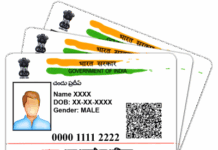
The controversy has also renewed attention on the legal status of commonly used identity documents. Experts note that Aadhaar cards, voter identity cards and driving licences are primarily documents of identity, residence or electoral registration and are not regarded under law as conclusive proof of citizenship.
The Supreme Court had earlier declined requests to direct the Election Commission to treat Aadhaar as a standalone proof of citizenship during electoral roll verification exercises, observing that the legal scope of Aadhaar could not be expanded beyond its statutory purpose.
The Centre has maintained that while an Indian passport is a strong indicator of nationality and is routinely accepted in various official processes, citizenship itself is determined under the Citizenship Act and not by the possession of any single identity document.
The controversy comes amid heightened political sensitivity around citizenship verification, electoral roll revisions and documentation requirements, turning what appeared to be a technical legal clarification into a wider national debate over identity, citizenship and constitutional rights.