SRINAGAR: Dr Manmohan Singh, one of India’s most respected statesmen, economists, and former Prime Ministers, was cremated today in a ceremony marked by national mourning and reverence. Leaders across Jammu and Kashmir paid rich tributes to the late leader, recalling his immense contributions to the efforts in addressing Kashmir.
Dr Singh’s tenure was marked by a nuanced and multi-dimensional approach to the challenges in Jammu and Kashmir. His policy combined political engagement, socio-economic development, and efforts to address historical injustices, reflecting a comprehensive vision for peace and stability in the region.
One of the cornerstones of his approach was engaging with diverse stakeholders. Singh’s government reached out to the All Parties Hurriyat Conference, an influential separatist group, to initiate a dialogue aimed at understanding and addressing their concerns. These meetings were unprecedented, signalling a willingness to explore paths beyond conventional diplomacy to bridge divides. The talks were viewed as a bold step towards finding a long-term resolution to the region’s issues, even though they were met with resistance from certain quarters.
Dr Singh also prioritised the rehabilitation and resettlement of Kashmiri Pandits, who were displaced from the Valley during the tumultuous period of the late 1980s and early 1990s. His government announced a comprehensive package that included financial assistance, housing, and job opportunities for displaced families, alongside the construction of secure housing colonies such as Jagati. This initiative was part of a broader effort to restore the Valley’s pluralistic ethos and cultural harmony.
In 2011, Dr Singh launched the Prime Minister’s Special Scholarship Scheme (PMSSS), a transformative initiative that provided 5,000 scholarships annually to students from Jammu and Kashmir and Ladakh. This scheme aimed to empower the youth of the region by facilitating access to higher education in premier institutions across the country, fostering integration and offering opportunities for upward mobility.
Economic development formed another pillar of his policy. His government focused on building infrastructure, creating jobs, and investing in the region’s development. Projects like the construction of the Mughal Road, linking Poonch and Rajouri with Shopian, were emblematic of his focus on connectivity. Additionally, Dr Singh emphasised strengthening local governance by providing funds and support for panchayati raj institutions to enhance grassroots democracy.
Dr Singh’s tenure also saw efforts to improve security through humane measures. He advocated for a reduction in the military footprint in civilian areas, stressing the importance of winning hearts and minds. This approach was complemented by his government’s efforts to reintegrate former militants through rehabilitation schemes, underscoring his focus on reconciliation and healing.
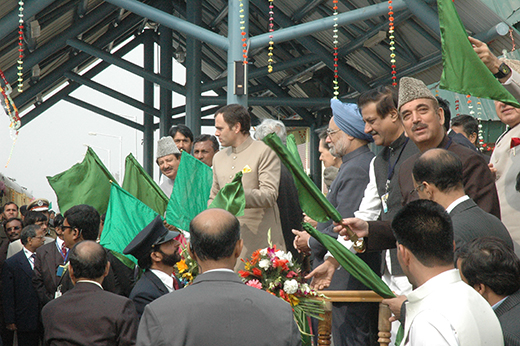
Besides, his era witnessed significant initiatives to enhance people-to-people connectivity and economic interaction across the Line of Control (LoC) in Jammu and Kashmir. Under his leadership, the Srinagar-Muzaffarabad bus service, launched in 2005, became a landmark achievement in fostering ties between divided families on either side of the LoC. The service was not just a means of transportation but a powerful symbol of reconciliation and goodwill, allowing families separated by decades of conflict to reunite.
Similarly, trade across the LoC was initiated during his tenure in 2008, providing a platform for economic engagement between the two sides. These confidence-building measures aimed to humanise the conflict, reduce mistrust, and create an environment conducive to dialogue, reflecting Dr Singh’s belief in addressing issues through diplomacy and mutual understanding.
His policies represented a careful balancing act between addressing security concerns, fostering socio-economic development, and engaging with political stakeholders. While challenges remained, Dr Singh’s efforts left a legacy of hope and a roadmap for the region’s future.
Though most of his initiatives were rolled back while he was alive, the political class in Jammu and Kashmir has not forgotten the series of interventions he made.
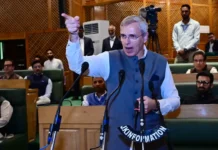
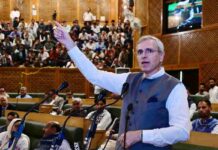
Jammu and Kashmir Chief Minister Omar Abdullah described Dr Manmohan Singh as an “intellectual giant” and a man of unparalleled humility. He noted Singh’s deep concern for the development of Jammu and Kashmir, particularly highlighting his role in extending rail connectivity to Kashmir, which opened new avenues for the region’s people. Interestingly the first test locomotive chugged into Kashmir from Jammu, the same day Dr Singh breathed his last.
Omar recalled Singh’s unwavering support for dialogue and reconciliation, saying, “India has lost a great son. He was an intellectual giant, an accomplished economist, but above all, a thorough gentleman—a giant among pygmies. Rest in peace, sir, and thank you for everything.”
Omar’s father and National Conference president Farooq Abdullah lauded Dr Singh for his efforts to rehabilitate Kashmiri Pandits, noting that under Singh’s leadership, over 3,000 Kashmiri Pandits returned to the Valley and were provided jobs. Abdullah also pointed to Singh’s role in establishing colonies like Jagati to house the displaced population. He described Singh as a leader who kept India united and spread love across the nation.
 “His biggest legacy is the economic growth we see today. He wanted friendly relations with our neighbours, and God willing, that time will come,” Abdullah said, adding that Singh’s leadership was rare and irreplaceable.
PDP chief Mehbooba Mufti praised Dr Singh’s humility and kindness, calling him one of the most humble and gentle souls she had encountered. She recalled his personal touch, noting how he returned calls during his tenure as Prime Minister. Mufti emphasised Singh’s role in advancing the peace process and initiating the Prime Minister’s Working Groups on Jammu and Kashmir.
“Despite the challenges he faced, Dr Singh worked tirelessly to bring peace and development to the region. His schemes, including the Prime Minister’s package for the return and rehabilitation of Kashmiri migrants, were a lifeline for many,” Mehbooba remarked.
Kashmir’s chief cleric Mirwaiz Umar Farooq paid tribute to Dr Singh, recalling his openness to dialogue and fostering people-to-people contact across borders. “During our meetings, Dr Singh’s sincerity toward resolving the Kashmir issue was evident,” Mirwaiz said. “He believed in open borders and lasting peace with neighbours, engaging with us in Hurriyat with an open mind. He was a statesman committed to harmony and resolution.”
Communist leader MY Tarigami highlighted Dr Singh’s understanding of the Kashmir issue, noting his initiatives to address the concerns of all stakeholders in the region. Tarigami recalled participating in cross-border discussions during Singh’s tenure and praised him for advocating cross-border trade and dialogue with Pakistan. “His efforts to promote peace and prosperity in Kashmir leave behind a legacy that must not be forgotten,” Tarigami said.
Peoples Conference leader Sajad Lone described Dr Singh as a “gentleman Prime Minister” whose legacy would endure due to his pioneering economic reforms and liberalisation policies. Lone remembered Singh as a great human being and a visionary leader who transformed India’s economic landscape while maintaining his characteristic grace and humility.
Altaf Bukhari highlighted Dr Singh’s visionary leadership in transforming India’s economy, particularly through the liberalisation reforms of 1991. He described Singh as a Prime Minister who dedicated his life to public service and remembered him for his work on reviving the economic and political stability of Jammu and Kashmir. Bukhari said, “His legacy as a statesman and economist will inspire generations to come. May his soul rest in peace.”
 Lt Governor Manoj Sinha expressed profound grief over Singh’s demise, recognising his bold steps in nation-building and his contributions to India’s growth. “As Prime Minister, Dr Singh took decisive actions that will be remembered for generations. His passing is a great loss for the nation,” Sinha remarked.
Dr Singh’s tenure saw the establishment of five working groups to address the region’s complex issues, including governance, human rights, Centre-State relations, and cross-border trade. These groups laid out recommendations that continue to be referenced for policy considerations in the region. His government also initiated significant welfare programmes, including packages for the rehabilitation of Kashmiri Pandits and cross-border trade initiatives.
The Jammu and Kashmir government announced seven days of State mourning, from December 26, 2024, to January 1, 2025, in honour of Dr Singh. The National Flag is being flown at half-mast across government buildings, and all official entertainment has been suspended during this period.