by Syed Majid Gilani
A marriage collapses as emotional neglect, misread freedom, and social media influence replace dialogue, leaving regret, isolation, and children as silent casualties.
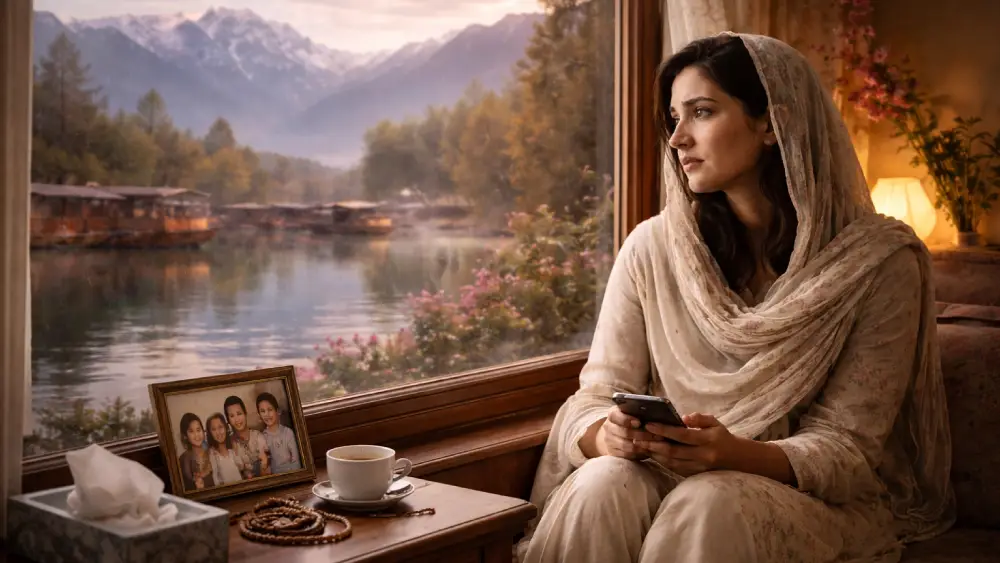
Mehr never imagined that silence could be so loud.
Once, her world was full of familiar sounds: the clink of morning cups, children racing through the house, shared meals, routine disagreements, laughter, and the quiet reassurance of a man returning home after a long day. Today, those sounds live only in memory. What remains is a quiet room, a glowing phone screen, and a heart weighed down by thoughts she once dismissed.
There is little more tragic than watching a family unravel—not because of poverty, fate, or unavoidable hardship, but because of neglect, misuse of freedom, betrayal, and an unwillingness to compromise. Many women, like Mehr, walk away from faithful and devoted husbands, recognising their worth only when it is too late.
Sarfaraz was not an ordinary man. A husband who provides, protects, remains loyal, and loves sincerely is a rare blessing. His love did not announce itself through slogans or spectacle; it revealed itself through responsibility, endurance, and quiet commitment. He provided without complaint, protected without boasting, and loved without conditions. He was not perfect, but he was sincere.
Mehr failed to see that.
When Sarfaraz worried, she felt watched. When he asked questions, she felt interrogated. Where he saw care, she saw control. Where he feared losing her, she heard suspicion. She did not understand that love often trembles—not because it doubts, but because it fears breaking.
Distance crept in silently.
Long phone calls and endless conversations followed, with parents, siblings, friends, everyone except the man beside her. Borrowed slogans entered her life, glittering on the surface but corrosive at the core. “My life, my rules,” she declared. She called it independence. She called it freedom. In truth, it marked the beginning of regret.
The phone itself was never the problem. Being online was not wrong. Communication was not the enemy. Neglect was.
What Mehr labelled as possessiveness was, in reality, Sarfaraz’s concern. When he advised her on what to wear or where to go, it was not control; it was care. He believed he was protecting his honour, his home, and the woman with whom he had entrusted his life. But in an age intoxicated with hollow noise, love is mocked as restriction and sincerity dismissed as suppression.
Mehr stopped listening.
Her family encouraged her defiance. Instead of helping mend the marriage, they hardened her heart, urging her to interpret affection as toxicity, concern as abuse, and resistance as empowerment. Gradually, she was persuaded to see herself as a victim and Sarfaraz as an obstacle to her freedom.
The truth was otherwise.
Sarfaraz sought unity between his wife, his parents, and his extended family. Mehr demanded exclusivity. She did not want a partner who led with responsibility; she wanted obedience. She wanted a husband whose world revolved solely around her and her parental home, not a life companion with roots, duties, and an identity of his own.
To achieve this, she applied pressure, subtle at first, then calculated, to cut him off from his parents, his values, and his lifelong relationships. Sarfaraz refused, as any principled man would. That refusal hardened her resolve. Manipulation followed. Emotional cruelty replaced conversation. Accusations wounded his dignity, and each confrontation drained the peace of their home. Dialogue died. Warmth vanished. Shared memories gave way to bitterness.
She tried to break him. She failed.
Those who applauded her rebellion vanished when loneliness arrived. Hashtags did not pay bills. Slogans did not provide food, clothing, or medicine. When reality struck, her supporters disappeared.
In the end, she found herself dependent on the very man she had pushed away, accepting his financial support for herself and their children, while the same voices that had encouraged her defiance offered not a single rupee of help. Money came, but at the cost of peace, dignity, and emotional ruin.
Mehr once took pride in Sarfaraz’s care and provision. That same care later became a silent reminder of what she had lost. Her gain was isolation.
She had fought relentlessly to keep Sarfaraz’s elderly parents at a distance, resenting their presence and demanding control over his parental home. He did not yield.
Today, Mehr and her children live as uneasy dependents in her own parental house. Her presence is tolerated, not welcomed. When her sisters arrive with their families, Mehr cooks, cleans, and serves, hiding her tears behind forced smiles.
Time spares no one.
Youth fades. Parents age and pass away. Siblings move on with their own lives. In the end, Mehr is left without protection or belonging, surviving on the steady flow of money sent by the man she once rejected.
The greatest victims are the children. A broken marriage robs them of stability and peace. No matter how hard she tries, Mehr cannot replace both parents. Sarfaraz, however, remains committed to his children, and one day his long struggle to reunite with them may yet bear fruit.
Mehr now seeks refuge in social media, Facebook, Instagram, YouTube, TikTok, WhatsApp, and Telegram. Likes and messages offer distraction, not companionship. They are not family. They do not wipe tears. They do not sit beside her at night.
More than a decade into their marriage, Sarfaraz uncovered the deepest hurt: Mehr had kept him blocked on all her social media while claiming disinterest. Strangers had access to her life; her husband did not.

Even during drives and outings meant for closeness, Mehr remained absorbed in her phone, connected to everyone except the man beside her. Sarfaraz waited for a connection that never came.
The man she lost was faithful. He worried for her health and guarded her dignity, not out of narrow-mindedness, but out of love.
As a woman, Mehr should have understood the importance of respecting marital boundaries, seeking her husband’s consent, and protecting her marriage. These were not restrictions; they were safeguards. She rejected them. She chose validation over loyalty, and hashtags over home.
Sarfaraz would have stood by her through everything, had she only stayed.
(The author is a government officer by profession and a storyteller by passion. Ideas are personal.)