SRINAGAR: A baby macaque whose poignant bond with a plush toy made him an internet phenomenon is now slowly finding his place among his own kind.
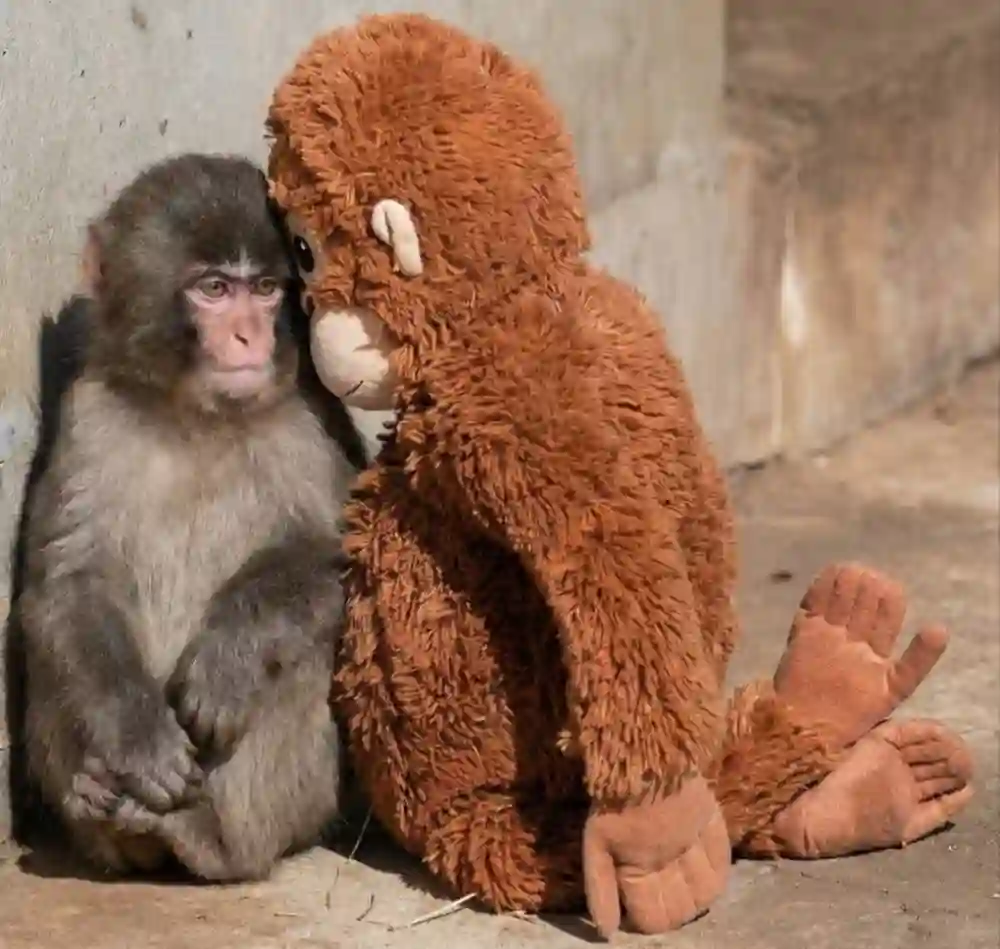
The macaque, known simply as Punch, captured worldwide attention after clips of him clutching a stuffed orangutan toy in his enclosure at the Ichikawa City Zoological and Botanical Gardens, Japan began circulating across social media platforms.
According to its online profile, Punch was born in July 2025 and abandoned by his mother shortly afterwards, a situation that left him without the physical contact and social cues typically provided by maternal care in macaque groups.
The Video That Went Global
A series of online videos showed Punch wandering his enclosure with the plush toy, often alone, as older macaques appeared to chase or bump him, other times bullying him. Viewers around the world responded with sympathy and concern, with many describing the images as both “heartbreaking” and “endearing”.
Punch was originally named as Panchi-kun
While initial social media responses interpreted the scenes as bullying, primatologists emphasise that such behaviour can be part of the natural social dynamics among Japanese macaques, a species known for strict hierarchical structures.
As the Conversation explains, young primates learn social codes through repeated interactions. In Punch’s case, his lack of a mother figure may have delayed his understanding of these codes, leading to increased scolding from older group members.
A Toy Becomes a Comfort Object
The toy that became synonymous with Punch’s story was given to him by zookeepers after his abandonment. Staff told reporters that macaque infants instinctively cling to their mother’s body immediately after birth, and the plush figure was intended to provide a substitute grip, something crucial for muscle development and emotional security. The Guardian recounts that, following trials with rolled towels, the orangutan toy proved most effective in comforting the young macaque.
This attachment seemed to resonate with global audiences, turning Punch into a symbol of comfort and vulnerability.
Public Reaction and Unlikely Offers
As Punch’s popularity surged online, the narrative around his situation expanded beyond animal welfare. According to India Today, British-American influencers Tristan and Andrew Tate offered to pay USD 250,000 (around Rs 2 crore) to buy Punch from the zoo, a proposal that stirred debate among animal rights advocates and zoo professionals alike.
Zoo officials have not indicated any intention to transfer ownership, underscoring that Punch’s wellbeing and social development are their primary concerns.
A Slow Shift in Social Integration
Recent developments suggest that Punch’s situation is improving. Updates shared by visitors, including video footage posted on social channels, show Punch being groomed by other macaques, a key indicator of social acceptance within the troop.
Grooming among macaques is widely recognised as a fundamental social behaviour. Experts quoted in Hindustan Times reported that observers saw Punch engaging with peers without immediately running back to his plush toy, a sign that he may be building confidence and connection.
The zoo itself confirmed via social media that Punch had begun receiving grooming from other members of the group, suggesting a positive shift in his integration.
Beyond the Viral Moment
While Punch’s global fame began with a simple image of him holding a toy, specialists emphasise that his long-term wellbeing will depend on his ability to form authentic macaque social bonds. As behavioural scientists cited in Euronews note, grooming and reciprocal play are more significant for primate development than solitary comfort behaviours, even those that captivate millions online.
Punch’s story has opened up wider discussions about animal welfare in captive settings, the influence of social media on public perceptions of wildlife, and the complex emotional lives of primates.
For now, Punch continues to be an object of global interest, not merely because of a viral video, but because his journey reflects the challenges and resilience of young animals learning to navigate the world.