The Comprehensive Skill Plan for Jammu and Kashmir is ambitious and progressive, but hampered by vague industry participation, uncertain employment linkages, equity gaps, and lack of timelines, risking aspirations without grounded implementation, reports Masood Hussain

On July 16 and 17, 2025, as policymakers, industry leaders, and academic experts gathered in Srinagar for a high-level conference, the conversation was not just about jobs. It was about rewriting the very grammar of employability in Jammu and Kashmir. The result is now publicly available: a comprehensive roadmap, titled Skilling: Future Ready Workforce.
The plan marks a significant departure from the past, officials claim. For years, the skilling ecosystem in Jammu and Kashmir has been measured in certificates distributed and training batches completed. Yet, unemployment remained stubbornly high, and industries continued to report mismatches between skills on offer and jobs in demand. The new roadmap is an attempt to correct that imbalance by shifting the focus from certification to competency, and from quantity to quality.
According to the Department of Skill Development, the roadmap is built on four interconnected tracks: school-level foundational skills, a college-to-career launch pad, industry-ready technical skilling, and lifelong upskilling for workers and entrepreneurs. Alongside a digital monitoring and evaluation mechanism, the Kaushal Samiksha Kendra (KSK) will serve as the nerve centre of the system, ensuring accountability and evidence-driven governance.
The Conference
The July conference on Transforming Skilling Ecosystem in Jammu and Kashmir involved over 100 delegates from seven government departments, six industry partners, and four academic institutions. The deliberations produced three critical insights that shaped the roadmap.
First, employability must move beyond certification. Skilled youth, whether formally educated or not, should be able to demonstrate competencies that translate into meaningful jobs. Second, industry engagement must be embedded within training institutions, with dedicated officials ensuring that apprenticeships and on-the-job training are provided. Third, governance needs restructuring to eliminate fragmentation. Psychometric assessments at the entry point of training programmes, consistent industry participation in curriculum design and evaluation, and stronger regional linkages were recommended as core reforms
The roadmap unveiled now is essentially the crystallisation of these insights into a structured policy framework.
Starting With School
The first track of the plan recognises a simple but long-neglected truth: employability cannot be built overnight. It requires early exposure, habit formation, and an environment that values problem-solving as much as academic grades.
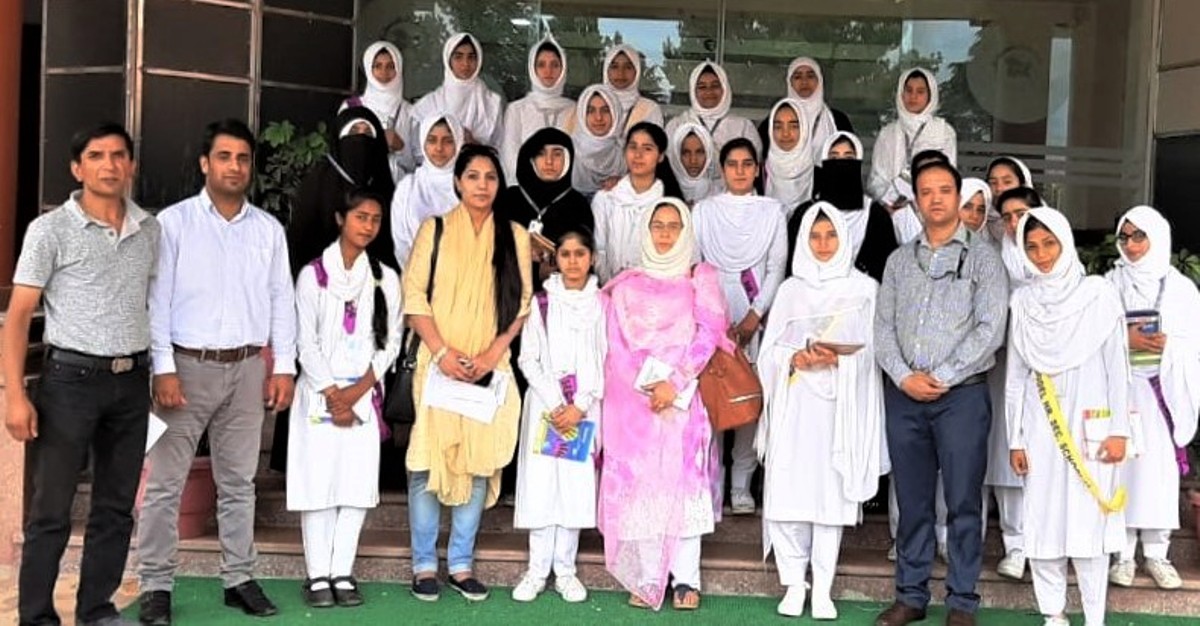
To this end, five school-level initiatives have been announced. A Coding for All scheme will train district-level master trainers who will impart coding skills to students in batches, covering two schools each. A Communication and Life Skills Module will strengthen soft skills, with trainers rotating across six schools. A Problem-Solving and Innovation Module will be integrated into core subjects like mathematics, science, and social studies, and delivered through newly established School Skill and Innovation Clubs.
Besides, career pathways will be introduced through counselling and alumni mentorship programmes, while IIT Jammu will partner with schools to organise Techniche and Technothlon events to foster scientific innovation. Collectively, these measures aim to inculcate coding, creativity, communication, and problem-solving, the four foundational 21st-century skills, right from school years
Bridging the Divide
The second track of the roadmap addresses perhaps the most pressing challenge: the gap between college education and industry requirements.
Here, the government proposes a mandatory integration of minor skill courses into undergraduate and postgraduate curricula. These courses, ranging from digital marketing and graphic design to entrepreneurship and green technologies, will be delivered through a mix of online platforms like Coursera and LinkedIn Learning, and accredited offline providers. Each course will carry credits, with students required to complete at least one per semester.
Equally significant is the Finishing College Module. Delivered by HR experts and trained faculty members, this module will cover resume-building, interview skills, teamwork, time management, and mock interviews. Each college will designate a faculty member as a skill coordinator to anchor these initiatives, monitor participation, and engage alumni mentors to strengthen placement opportunities.
The plan also expands the scope of the UDAAN Scholarship Scheme, providing coaching for competitive examinations, including JEE, NEET, UPSC, and JKAS. Apprenticeships and internships will be strengthened by aligning local initiatives with national schemes such as PM NAPS and PM Internship. And, for the first time, international placement will be institutionalised through the creation of an NSDC International cell within Jammu and Kashmir
Reinventing Technical Training
Technical skilling forms the third pillar of the roadmap. Industrial Training Institutes (ITIs) and polytechnics have long been the backbone of vocational education, but their relevance has been eroded by outdated curricula, obsolete equipment, and weak industry connections.

The new plan seeks to reverse this. Curricula will be aligned with the National Skills Qualification Framework (NSQF) and updated to reflect emerging sectors such as e-mobility, drone technology, green jobs, and cybersecurity. Tools and equipment will be upgraded to the standards of IITs and NITs, ensuring that trainees acquire hands-on experience comparable to national benchmarks.
A dual training model, with 50 per cent classroom instruction and 50 per cent on-the-job exposure, will be piloted in partnership with industries. Regional excellence clusters will be created, with ITI Jammu and ITI Srinagar designated as hubs in a hub-and-spoke model that supports smaller training centres across districts. Polytechnics will also be upgraded into skills universities, expanding their mandate beyond diploma courses to cutting-edge vocational education
Lifelong Skilling
The fourth track addresses a broader constituency: school leavers, informal workers, and entrepreneurs. The underlying idea is that skilling must not be seen as a one-time activity tied to youth, but as a continuous process across a working life.
Short-term courses under PMKVY 4.0 will target high-demand sectors such as electrical work, tailoring, beauty and wellness, and two-wheeler repair. Informally skilled workers will be brought into the formal economy through Recognition of Prior Learning (RPL), ensuring their competencies are certified and portable.
For entrepreneurs, the government has introduced the idea of Second Chance Skilling, retraining opportunities for those whose ventures have failed, combined with access to easy skill loans. Mission YUVA will act as the umbrella initiative to build an ecosystem for entrepreneurship, with training in digital and financial literacy and self-employment readiness.
Together, these initiatives aim to empower not just fresh graduates, but the existing workforce and entrepreneurial class, ensuring their adaptability in an economy undergoing rapid technological shifts
The Digital Backbone
Perhaps the most distinctive feature of the roadmap is the proposed Kaushal Samiksha Kendra (KSK). Inspired by Gujarat’s Vidya Samiksha Kendra, which won national recognition for transforming education monitoring, the KSK will serve as a centralised, AI-powered data hub for skilling in Jammu and Kashmir.
Its operations will be guided by a 6A framework:
Attendance: Using geo-tagging and facial recognition to monitor student and trainer presence.
Assessment: IoT and AI-driven systems to evaluate skill proficiency.
Administration: Predictive maintenance of infrastructure and budget optimisation.
Accreditation: Faceless, unbiased certification of ITIs and training providers.
Advancement: AI-powered career counselling and salary projection tools.
Adaptive Learning: Real-time personalised learning pathways based on continuous assessment.
The KSK will create a Skills Fingerprint for every individual, a lifelong, digital record of competencies linked to Aadhaar and stored in DigiLocker. This fingerprint will evolve with each course completed, job taken, or entrepreneurial venture launched, offering unprecedented traceability of skilling outcomes
The Follow-Up
The Department of Skill Development has already launched an online survey to gather feedback from students, educational institutions, and industries. The survey covers everything from curriculum relevance and infrastructure to career aspirations and barriers to vocational education.
Its findings will inform the creation of a Detailed Project Report (DPR), which will finalise the roadmap’s implementation schedule and financial allocations. Importantly, district-level skill committees will be tasked with preparing “skill plans” aligned with local economic demand, ensuring that the roadmap is not a one-size-fits-all document but responsive to regional contexts.
The Flip Side
The Plan is undoubtedly a well-intentioned and progressive vision. However, certain shortcomings could affect its effectiveness if not addressed with clarity and precision.
One concern is its heavy reliance on technology-driven systems like the Kaushal Samiksha Kendra. While AI-enabled monitoring and evaluation sound promising, such a model presumes robust digital infrastructure across the region. In many parts of Jammu and Kashmir, connectivity remains uneven, creating a real risk of excluding students from remote or under-connected areas unless digital equity is made a central pillar of the strategy.
The plan has not offered any assessment of similar initiatives in the past, which were carried out within and outside the JKEDI and polytechnic chains. Studying them could have offered some newer issues to tackle in the new initiative.
The industry collaboration has always been talked about, but the plan lacked the idea of the extent, scale, and incentives for private players. Incidentally, the manufacturing sector in Jammu and Kashmir is stagnant, if not a fallen structure.
Monitoring and accountability are also presented in narrow terms. Although the Kaushal Samiksha Kendra is designed to track attendance and outcomes, there is little mention of grievance redressal mechanisms, quality assurance for trainers, or checks against inflated performance reporting. Employment linkages, too, appear uncertain.
Equity is another area not tackled by the plan. There is no detail on how women, differently-abled individuals, or marginalised communities will be integrated into the skill development framework, an omission that could undermine inclusivity in a region already marked by uneven access to education and jobs. Besides, the idea completely ignores the local raw material and the craft basket that has remained the main bread and butter for centuries. It even lacks identifying the deficits within the manufacturing field, both the organised and the cottage sector.

A Skilled Economy
However, the Future Ready Workforce roadmap represents more than a policy announcement. It is recognition that in a region marked by unemployment, underemployment, conflict and migration, skilling can be the foundation of economic transformation. By embedding industry in training governance, modernising technical institutions, and leveraging digital tools for accountability, the government of Jammu and Kashmir is positioning skilling not as a welfare measure but as an economic strategy.
If executed with fidelity, the plan could redefine how Jammu and Kashmir’s human capital is viewed, not just within India but in global labour markets. The stakes are high: success could make Jammu and Kashmir a hub of skilled youth ready for emerging industries. Failure would mean yet another round of well-intentioned but ineffective interventions.
For now, the blueprint is in place, the commitments have been made, and the machinery has begun to move. The coming months, as the DPR is finalised and the KSK takes shape, will determine whether this ambitious vision can deliver on its promise of transforming skilling from a certificate to a career, and from a policy slogan to a lived reality for the youth of Jammu and Kashmir.