As Jammu and Kashmir grapples with mounting plastic and solid waste, efforts to recycle and manage refuse are taking shape across its urban landscapes, revealing both progress and persistent gaps in infrastructure and enforcement, Umaima Reshi reports
For nearly a decade, a young girl has called Saeedabad Colony, Achan, her home. But rather than cherished memories, what remains etched in her mind is the stench of sewage and waste that permeates the area.
“The sewage and the dump smell unbearable. We endure it almost daily, but during rainfall or under the intense summer sun, the odour becomes even more overpowering,” she said. “The stink intensifies to the point that we are forced to shut all the windows. It gets unbearably hot inside, yet we have no choice but to close everything just to keep out the nauseating air.”
She explains how the air quality affects not only their comfort but also their social interactions. “We barely spend time outdoors anymore. It is just not possible. Hosting guests is often a challenge. Sometimes, we are too embarrassed to even invite them in.”
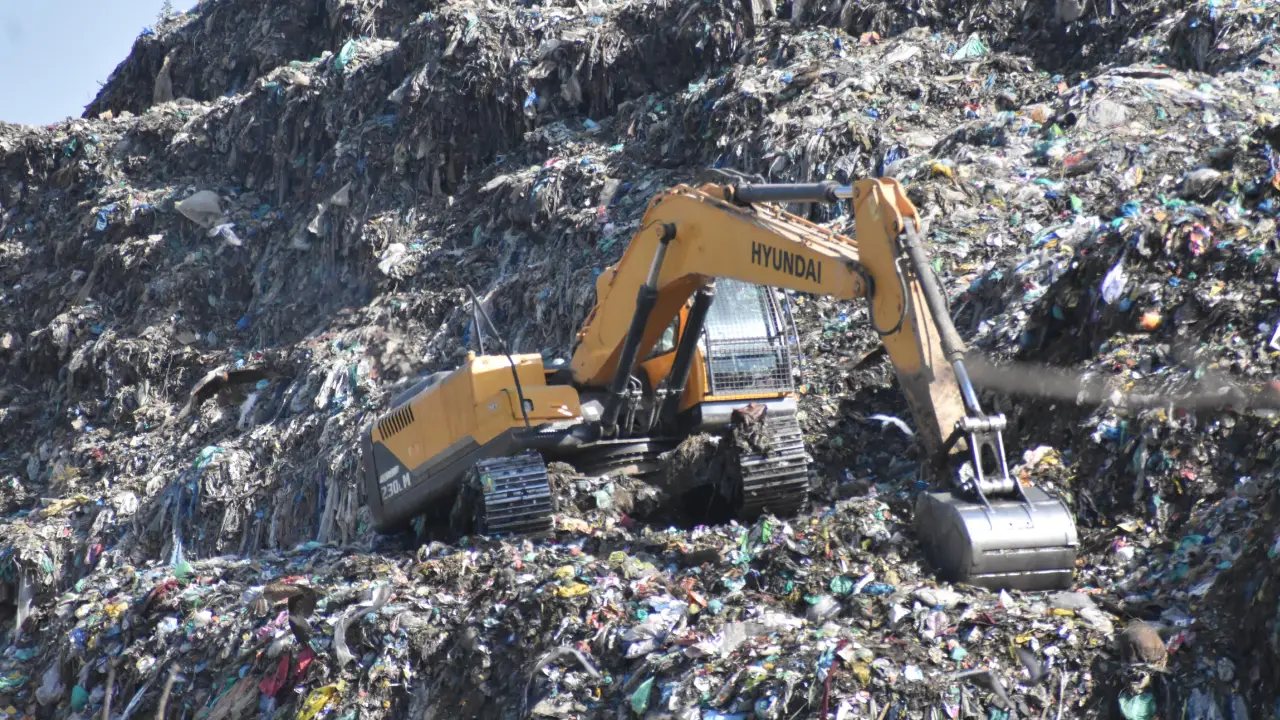
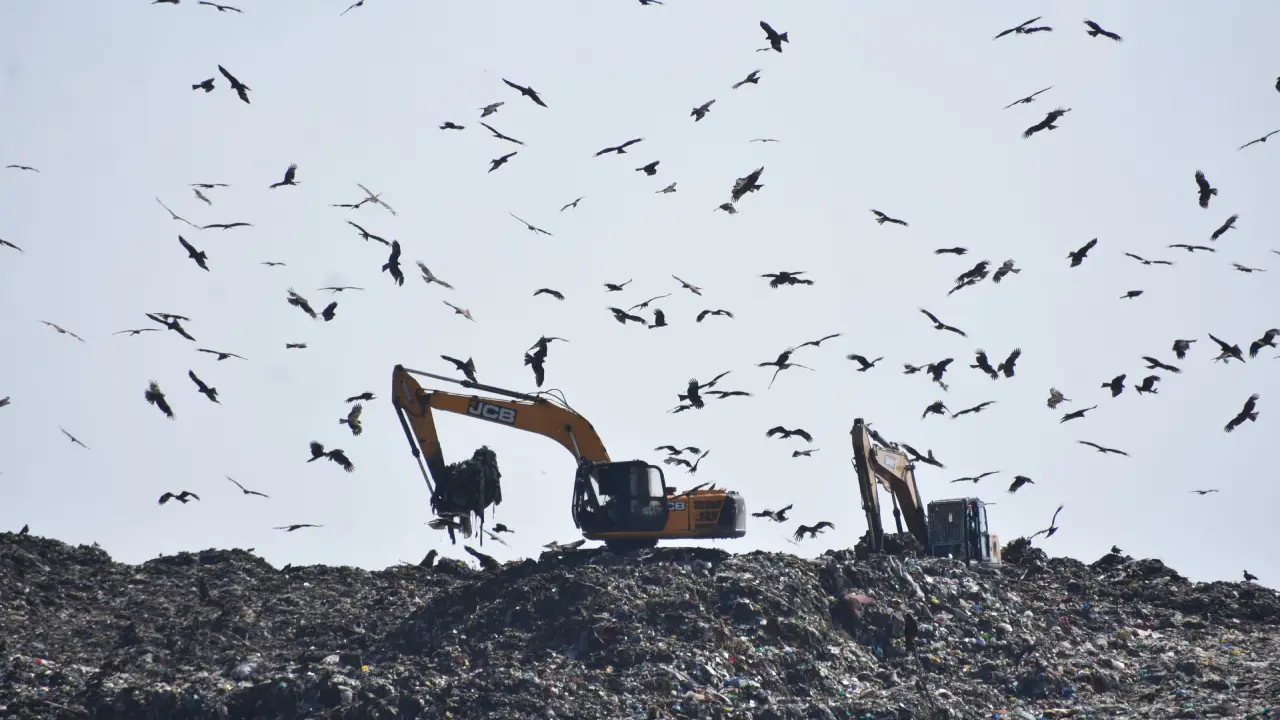
This is the story of Achen, where small mountain ranges of municipal waste have formed. Up until 1985, the volume of waste generated in Srinagar remained relatively low, with minimal plastic materials. The limited waste produced during that period was managed by the Srinagar Municipal Corporation (SMC), which disposed of it openly, either at the Noorbagh Ground or along the banks of the Jhelum River.
However, in 1986, the Government of Jammu and Kashmir, acting on the recommendations of the Cabinet, designated the Achan area as a landfill site. Since then, the SMC began the practice of open dumping of municipal solid waste at the site. The untreated waste at the Achan landfill has since led to severe public health concerns, particularly for the immediate neighbourhood.
Social Obstacles
The problem extends beyond everyday discomfort. Marriage prospects, especially for boys in the colony, are often hindered by the stench and the stigma associated with the area.
“Families hesitate to consider proposals from here. Even if everything else aligns, the environment becomes the deciding factor,” the girl said, asserting every single word. “Some long-time residents, aware of this difficulty, chose to marry outside, perhaps because people outside the station were unaware of it. Those who cannot marry within the area often choose marriage halls nearby.”
A fellow resident echoes these sentiments, not only highlighting the odour but also the health consequences of living so close to the dump site.
“It is suffocating,” he regretted. “Many suffer from recurring stomach and chest infections. Nearly every household has someone affected. We have pleaded with the authorities time and again, but the site has now grown into a mountain of filth. They spray chemicals daily, but it barely masks the stink.”
He recalls a time when the area was unrecognisable from what it is now. “The view of Anchar Lake used to be breathtaking. We could fish, and drink the water, and tourists would come to admire it. That is all gone now. The stench is so strong that it travels to Dargah and Nigeen, depending on the wind speed and direction.”

A Community in Stench
A wedding at a club near Achan last year became an unforgettable experience for all the wrong reasons. A 50-year-old resident recalled how the joyous atmosphere turned sour when a nauseating stench invaded the venue.
“The setting was beautiful, and the Wazwan was prepared with great care,” he said. “But suddenly, a foul smell swept through the air. It was so overpowering that many guests lost their appetite. Some even left their plates untouched. The hosts were visibly embarrassed, apologising repeatedly, though it was not their fault.”
The source of the odour was traced to Achan, where the landfill’s stench had intensified due to damp weather. The rain had exacerbated the situation, spreading the reek far beyond the dump site.
Utter Neglect
Despite persistent complaints, the community feels abandoned. A 60-year-old resident, who has lived in Achan for two decades, described how lifestyle changes have compounded the waste crisis.
“People consume everything in plastic now, junk food, readymade meals, everything. It is a different way of living, but it has made the waste problem worse,” he said. “Some families moved here because the land was affordable, even if it meant enduring the stench.”
An official from the relevant department acknowledged the scale of the crisis, citing ongoing efforts under the Swachh Bharat Mission 2.0, but residents remain sceptical.
A Petition for Justice
“What is happening at Achan is not waste treatment, it is open dumping,” said Shafqat Nazir, an advocate. “Funds have been allocated by the Government of India, but the court is now seeking accountability regarding their use. The case is still pending.”
A petition was filed a decade ago concerning Achan’s landfill site. In 2018, another petition was submitted, urging the proper implementation of solid waste management protocols. The Environmental Policy Group (EPG), a registered trust, has called for scientific waste disposal to replace indiscriminate dumping.
In its plea, the EPG argued that the state’s negligence has endangered public health and the environment. The group seeks judicial intervention to enforce compliance with national waste management regulations and hold the state accountable for dereliction of duty.
Dire Realities
The petition claims that the state has failed to implement the Solid Waste Management Rules, 2016, and the Swachh Bharat Mission (Urban and Grameen), despite the Union Government’s offer of full funding.
Instead of scientific waste processing, the petition states, unsupervised dumping continues unchecked in water bodies, forests, and roadsides across Srinagar, Jammu, and tourist areas like Gulmarg, Sonmarg, and Pahalgam. In rural areas, the situation is worse due to a complete lack of infrastructure and awareness. Waste is rarely segregated or treated, and landfill sites remain the only destination for refuse.
Health Crisis
Another grave concern highlighted in the petition is the mismanagement of biomedical waste, especially in government hospitals. SMHS Hospital in Srinagar, for instance, is cited as a facility where biomedical waste is routinely mixed with general solid waste due to malfunctioning incinerators and poor regulatory oversight.
The Srinagar Municipal Corporation (SMC) lacks the authority to enforce biomedical waste management within hospitals, while the State Pollution Control Board, despite its mandate, is accused of inaction. The result, residents say, is a toxic environment that continues to endanger lives, one unchecked landfill at a time.
Progress and Gaps
Over the past five years, Jammu and Kashmir have witnessed fluctuations in waste generation, collection, and treatment. In 2021-22, the region produced 1,550 tonnes of waste per day (TPD), collecting 1,540 TPD and processing 606 TPD. In the previous year 2020-21, 1,463.23 TPD was generated, with 1,437.28 TPD collected and 547.5 TPD treated. In 2019–20, waste generation stood at 1,518.91 TPD, with 1,464.65 TPD collected and 540.19 TPD processed.
In 2018–19, the data was recorded separately for Jammu and Kashmir divisions. Jammu generated 702.2 TPD, collecting 648.4 TPD, while Kashmir produced 828.33 TPD and collected 804.46 TPD. The combined generation was 1,530.53 TPD, with 1,452.86 TPD collected, though treatment data was not specified. In 2017–18, Jammu generated 666.68 TPD, collecting 617.83 TPD, while Kashmir produced 930.6 TPD, collecting 833.3 TPD.
Despite marginal improvements in collection and treatment over the years, processing rates remain inadequate, exposing gaps in decentralised waste management infrastructure across the Union Territory.
New Facilities
Under the Swachh Bharat Mission (Urban), Jammu and Kashmir has approved 78 Solid Waste Management Centres (WMCs), Material Recovery Facilities (MRFs), and compost pits. Construction has started at 52 sites. Thus far, 33 WMCs/MRFs and 30 compost pits have been completed, while work continues at 19 WMCs/MRFs and 22 compost pits.
Bioremediation has commenced at various dumpsites, including Bhagwati Nagar, Kathua, Samba, Sonamarg, Pulwama, Awantipora, Pahalgam, Anantnag, and Tangmarg. At Kot Bhalwal, the Jammu Municipal Corporation (JMC) managed 6.16 lakh metric tonnes of legacy waste. The Department of Urban Local Bodies, Kashmir (DULBK), has issued contracts to treat 2.98 lakh metric tonnes, and the Department of Urban Local Bodies, Jammu (DULBJ), has allocated 1.60 lakh metric tonnes at seven towns.
In Srinagar, tenders have been approved for the treatment of 11 lakh metric tonnes of old waste at the Achan landfill site.
Ongoing Projects
Two Construction and Demolition (C&D) waste processing plants have been approved with a combined capacity of 190 TPD. A 65 TPD plant is underway for JMC, while the 125 TPDplant for SMC is in the tendering phase.
Besides, two Compressed Bio-Gas (CBG) plants, with a combined capacity of 450 TPD, are being developed in Jammu. The 350 TPD plant is 45 per cent complete and scheduled for completion by May 2025. Composting activities have commenced, with CBG production set to begin next year.
As part of the Integrated Waste Management initiative, construction of 375 aspirational toilet seats is underway, with tenders approved for more community and public toilets
Srinagar has been selected for the CITIIS 2.0 programme under which a detailed Action Plan valued at 67.24 crore has been prepared. The project includes a 700TPD pre-processing unit, a 150 KLD leachate treatment plant, and a 100 TPD briquetting plant. Additionally, an RFID-based tagging system will cover 2.4 lakh households and 80,000 commercial establishments across the city.
A Tale of Two Cities
Srinagar, generating 525 tonnes of waste per day (TPD), leads Jammu and Kashmir in solid waste production and operates a functional Material Recovery Facility (MRF). Jammu follows closely with 374 TPD and a working MRF. Anantnag ranks third with 66.18 TPD but lacks an MRF, while the Lake Conservation and Management Authority (LCMA) in Srinagar produces 55 TPD, also without an MRF.
Udhampur, generating 50.81 TPD, has a functional MRF, as does Hiranagar, which produces 38.14 TPD. Shopian (24.63 TPD) and Baramulla (23.41 TPD) operate without MRFs, whereas Arnia (24.14 TPD) and Batote (16.89 TPD) have operational facilities. Bandipora (14.95 TPD) and Poonch (10.83 TPD) remain without MRFs, while Ganderbal (11.38 TPD) and Seer-Hamdan (6.60 TPD) manage with their facilities in place.
Smaller towns like Vijaypur (6.23 TPD), Ghoumanhasan (6.13 TPD), Kishtwar (5.99 TPD), and Samba (5.12 TPD) maintain MRFs, contrasting with Chenani, Handwara, Hajin, Awantipora, and R.S. Pura, which lack such infrastructure.
Among lesser waste generators, Doda (4.47 TPD), Sunderbani (4.20 TPD), Qazigund (3.98 TPD), Beerwah (3.30 TPD), Achabal (2.56 TPD), and Ramnagar (2.53 TPD) operate MRFs. Meanwhile, Langate, Ashmugam, Devsar, and Magam remain without them.
At the lowest end of the waste spectrum, Kunzer and Tangmarg generate 1.55 TPD each, Banihal produces 1.74 TPD, and Akhnoor generates 1.59 TPD, all with operational MRFs. Kalakote, Thannamandi (0.95 TPD each), and Bhaderwah (0.60 TPD) generate the least waste, with Thannamandi being the only one equipped with an MRF.
The data indicates not only the disparities in waste generation but also the uneven distribution of waste management facilities, highlighting the urgent need for strategic investment in sustainable waste processing across Jammu and Kashmir.
A Persistent Threat
The 78 Urban Local Bodies (ULBs) in Jammu and Kashmir collectively generate 1,502.14 TPD of solid waste, posing a significant challenge for sustainable management. Despite some advancements in operationalising MRFs, many towns remain without basic processing units.
In the last five years, Jammu and Kashmir have produced over 2.25 lakh tonnes of plastic waste, intensifying environmental concerns. Official records show plastic waste generation peaking at 74,826.33 tonnes in 2019–20 before declining to 51,710.6 tonnes in 2020–21, 34,384 tonnes in 2021–22, and 30,342 tonnes in 2022–23. In 2018–19, plastic waste stood at 34,367.37 tonnes.
Since its reorganisation in 2019, Ladakh has also reported plastic waste production, with 1,915.05 tonnes in 2021–22 and 860.5 tonnes in 2022–23.The data was presented by the Ministry of Environment, Forest and Climate Change in response to an unstarred question in the Rajya Sabha on March 27, 2025.
The Push for Plastic
Despite existing regulations, plastic waste management in Jammu and Kashmir faces persistent challenges. While recent data indicates a decline in plastic waste generation, environmental experts stress the importance of sustained recycling efforts and systematic waste management.
In 2022, Jammu and Kashmir adopted the Extended Producer Responsibility (EPR) framework, mandating producers and brand owners to collect and process plastic packaging waste.The central government has urged local authorities to rigorously enforce plastic waste management rules and amplify public awareness campaigns on the environmental impact of plastic pollution.
In a separate statement, the government announced the establishment of plastic waste management units in 51 blocks across Jammu and Kashmir, marking a step forward. However, experts insist that consistent monitoring, community engagement, and strict adherence to environmental guidelines are essential to achieving substantial and lasting progress.
Recycling Push
Jammu and Kashmir has intensified its fight against plastic pollution, bolstered by the operation of 32 Material Recovery Facilities (MRFs) that have become central to recycling efforts. In the 2023-24 financial year, the region recycled 52.82 per cent of its 146.14 metric tonnes (MT) of plastic waste, a rise from the 49.95 per cent of 124.48 MT recycled in the previous year. Despite an increase in total plastic waste, the higher recycling rate underscores ongoing efforts to expand waste management infrastructure.
A report submitted to the National Green Tribunal (NGT) by the Jammu and Kashmir Pollution Control Committee (JKPCC) detailed these gains. According to the report, 77.2 MT of plastic waste was recycled in 2023–24, up from 61.94 MT in 2022-23. MRFs have played a key role, in facilitating the collection, sorting, and processing of plastic waste for recycling.
Authorities have also implemented preventive measures to bolster recycling efforts. Plastic waste pickers have been registered to increase collection rates, and enforcement against single-use plastics (SUPs), particularly plastic bags under 120 microns, has intensified. Awareness campaigns promoting reusable alternatives have included the distribution of 10,000 cloth bags across districts, funded through Corporate Social Responsibility (CSR) initiatives.
Enforcement has seen mixed results. Fines totalling Rs 28.81 lakh were imposed in 2023-24 for SUP violations, down from Rs 42.40 lakh the previous year. Seizures of SUPs have also decreased, with 19.33 MT confiscated in 2023–24 compared to 40.67 MT in 2022–23.
Jammu and Kashmir have also banned disposable plastic water bottles and halted the production and sale of plastic items below 120 microns. The region currently has no operating single-use plastic manufacturing units, limiting the circulation of non-recyclable plastics.
These measures indicate a determined, structured approach to waste management, with MRFs forming the cornerstone of ongoing recycling efforts.
The Saeedabad Story
At the designated landfill in Saeedabad, spanning 914 kanals of land, only 20 to 25 kanals are currently being used for waste dumping. An official from the Srinagar Municipal Corporation (SMC) outlined ongoing initiatives, focusing on eradicating legacy waste.
“We are working on an approved action plan aimed at clearing the backlog of waste,” said the official. “By 2027, we expect to see a significant change.”
The official explained that the landfill receives various types of waste, including wet, dry, sanitary, and domestic waste. Composting and segregation efforts are already underway, aided by MRFs.
However, managing the site remains a challenge. “We receive a large number of complaints, and we are doing our utmost to improve the situation,” the official said. “Field inspections are conducted regularly, and anti-odour herbal sprays are applied at least six times daily to reduce the stench.”
Yet, unregulated habitation near the landfill complicates the situation. “People raise concerns, but we also ask: if the area is so unlivable, why is illegal habitation taking place? Residential zones are supposed to be at least 500 metres away. People cannot just expect from us; they should also see to it,” the official stated.
Looking ahead, the SMC has ambitious plans. “With our biomining initiative, we aim to eliminate approximately 11 lakh metric tonnes of legacy waste,” the official said. “We also plan to introduce a Bio-CBG plant, bio-fencing, an insulation plant, a refuse-derived fuel (RDF) facility, and a sanitary landfill system (SLF), among other technological interventions.”
Despite these promises, residents of Saeedabad continue to wait, holding on to the hope that one day, the air will be free of odours, the stigma of the landfill will dissipate, and they will be able to open their windows to a cleaner, healthier environment.