TULMULLA (Ganderbal): For many devotees, the pilgrimage was more than a religious visit. It was an emotional return to their roots. At the Mata Kheer Bhawani shrine in Tulmulla, the annual mela became more than a religious gathering for thousands of Kashmiri Pandits on Monday. It became a deeply emotional reckoning with memory, loss and the hope of coming back home for good.
The most moving scenes unfolded quietly, away from speeches and cameras. Two sisters, one settled in the United States and the other in Mumbai, broke down after entering the shrine complex, overwhelmed by the memories their mother had carried from Kashmir all her life. Standing beside the spring, they spoke of the stories they had grown up hearing; of summers in the Valley, family gatherings, and a mother’s longing for the place she never stopped calling home. Their children, seeing Kashmir for the first time through their parents’ memories, watched in silence as the past seemed to return in flesh and stone.
For the sisters, the visit was not just a pilgrimage. It was an inheritance finally made visible. “This is the place our mother would always talk about,” one of them said, struggling to steady her voice. “She would tell us stories about coming here, about the festival and about Kashmir. Today, it feels like we are walking through her memories.”
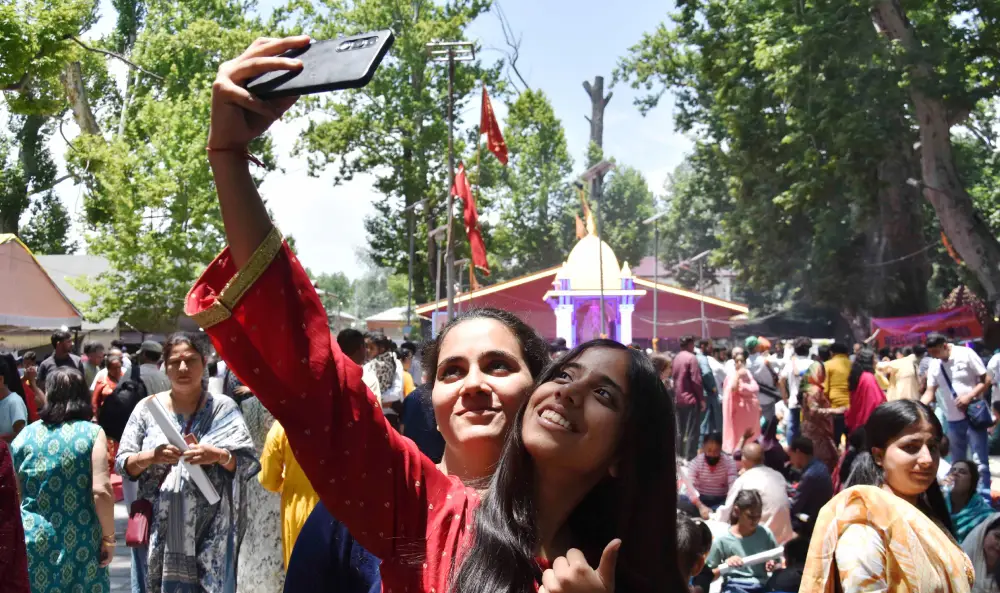
That feeling echoed across the shrine grounds, where families from Jammu, Delhi, Mumbai, Pune, Bengaluru and even abroad gathered under the chinar trees, many after decades away from the Valley. Some came as children of displacement, others as grandchildren determined to understand where their families came from. For many, the sight of Kheer Bhawani was less a return to a temple than a return to a part of themselves that had survived in stories, photographs and prayers.
Avtar Kishan, a Kashmiri Pandit devotee, said the visit felt like coming home.
Renu Devi from Jammu described the shrine as a place where the fragrance of the soil, the chinars and the blessings of the Goddess made her feel she had never truly left.
Shobha Kaul, speaking through tears, said the pilgrimage was an emotional return to childhood, to a home, and to neighbours and days she still remembered clearly. Others said they had brought their children so the younger generation could see the land of their ancestors and understand the roots that shaped their identity.
That longing for return was woven through almost every conversation at the mela. Many devotees spoke not only of faith, but of permanence, of wanting to come back with dignity, security and respect.
Asha Sazawal, who travelled from Greater Noida, said Kashmiri Pandits should be brought back in a dignified manner, with assurances of safety and livelihood.
Sarla Raina, now in Jammu, said the community wanted to return not as occasional visitors, but as rightful residents of their motherland.
Ravi Koul, a displaced Pandit from Jammu, said every prayer at Mata Kheer Bhawani carried a hope for a secure and permanent return.
The festival also carried a quieter, but equally powerful, message of reconciliation. Local Muslims from Tulmulla and nearby areas were seen assisting elderly devotees, offering drinking water, guiding families and helping with movement around the shrine. For many pilgrims, those gestures mattered deeply. They spoke of them as proof that old bonds of coexistence still exist in Kashmir, despite decades of separation and pain. Resident Manzoor Ahmad Wani said the mela was not only a religious occasion, but a reminder of mutual respect and the spirit of Kashmiriyat.
There were also the unmistakable signs of a community trying to heal itself in public. A young woman from Delhi, visiting Kashmir for the first time at 17, said she finally met relatives she had never known and felt an instant connection to the Valley.
In another moving moment, an elderly woman from Kulgam, who had returned to visit her abandoned home after 36 years, was seen touching the trees she once played under. “Do you still remember me?” she asked, a question that seemed to carry the grief of an entire generation.
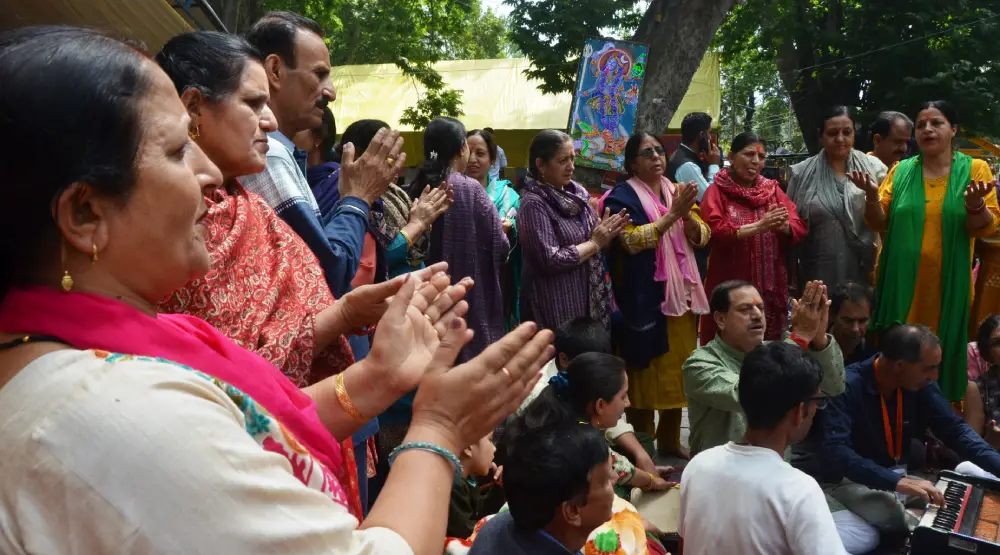
The atmosphere at the shrine remained festive, but never shallow. Hymns, conch shells, offerings of milk and kheer, and long queues near the spring gave the mela its devotional character. Yet underneath that devotion was a harder truth: the annual gathering remains one of the few times migrant Kashmiri Pandits can physically reconnect with the place their families once called home. For many, the few days at Tulmulla are not enough, but they are essential, a bridge between displacement and belonging.
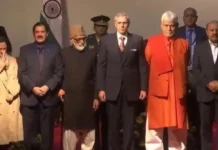
Political leaders who visited the shrine added to the symbolism of the day. Jammu and Kashmir Lieutenant Governor Manoj Sinha offered prayers and said the administration had made arrangements to ensure a smooth pilgrimage. Chief Minister Omar Abdullah greeted the devotees and said the festival should strengthen brotherhood and the composite culture of the region. Farooq Abdullah said the people of the Valley want Kashmiri Pandits to return, while Mehbooba Mufti urged the community to look to the future and not remain prisoners of the past.
Still, beyond the public statements and the security cordons, the most enduring image was of ordinary families standing together at the shrine, trying to reclaim a place in the world that situation had pushed away from them. The children listened carefully as elders spoke of homes they had never seen. Mothers wiped tears from their faces. Fathers stood quietly, looking at the spring as if trying to read an answer in its water.
At Kheer Bhawani, the annual mela became a living portrait of memory and yearning, of a community that has not stopped waiting for the day pilgrimage will no longer mean departure, but return.
(with inputs from various news gathering agencies)