SRINAGAR: Bangladesh is at a historic turning point, as the country finds itself free from the decades-long dominance of its two most iconic political figures, Khaleda Zia and Sheikh Hasina. The departure of Zia for medical treatment in London and Hasina’s exile in India marks the end of an era defined by the rivalry of these two leaders, often referred to as the “Begums” of Bangladeshi politics.
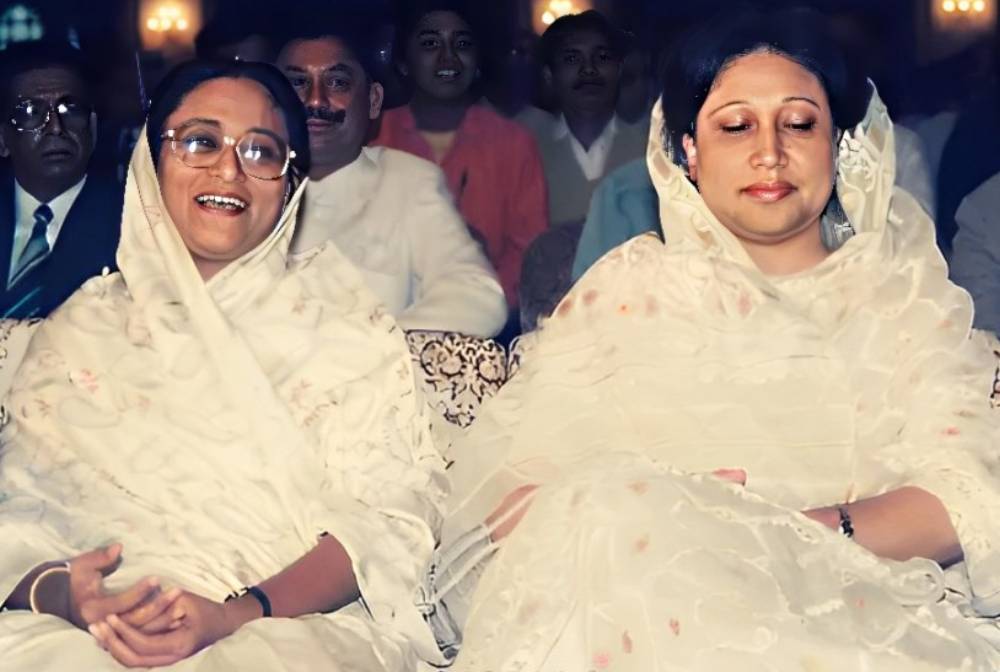
On Tuesday night, Khaleda Zia, the 79-year-old former prime minister and leader of the Bangladesh Nationalist Party (BNP), left Dhaka aboard a special air ambulance arranged by Qatar’s Emir, Sheikh Tamim bin Hamad Al Thani. Zia, who has been suffering from multiple health issues, including liver cirrhosis, cardiac disease, and kidney problems, will join her son and political heir, Tarique Rahman, in London. Rahman has been in exile since 2007 and is expected to lead the BNP into the next elections.
Hundreds of supporters gathered outside Zia’s residence in Dhaka’s Gulshan area to bid her farewell, marking the end of an era. Her departure follows significant political changes in Bangladesh, including the fall of Sheikh Hasina’s government in August 2024 after weeks of mass protests led by students.
Khaleda Zia, who served as Bangladesh’s prime minister for two terms (1991–1996 and 2001–2006), has been a central figure in the country’s political landscape. Her tenure was marked by economic reforms but also allegations of corruption and political violence.
Under Hasina’s rule, Zia was sentenced to 17 years in prison in two corruption cases linked to her tenure. Her supporters alleged the charges were politically motivated, a claim Hasina’s administration denied. In November 2024, under the interim government led by Nobel laureate Muhammad Yunus, Zia was acquitted in one of the cases. An appeal in the second case is ongoing.
Sheikh Hasina, Zia’s arch-rival and leader of the Awami League, held power for an unprecedented 15 years (2009–2024) before her government was toppled in a student-led uprising. Hasina fled to India amid allegations of human rights abuses, including the deaths of hundreds of protesters during anti-government demonstrations.
Now 77, Hasina resides in India on an extended visa, as Bangladesh’s interim government seeks her extradition to face charges of crimes against humanity and corruption. However, India has taken a cautious stance, citing procedural gaps in Dhaka’s requests and concerns over its sovereignty.
Hasina’s tenure was marked by economic growth and development but was heavily criticised for authoritarianism, electoral fraud, and human rights violations. Her departure from Bangladesh, coupled with the loss of political immunity, has left her future uncertain.
With both women out of power, Bangladesh is currently governed by an interim administration led by Muhammad Yunus, a Nobel Peace Prize laureate and microfinance pioneer. Yunus has promised sweeping reforms and plans to hold elections by December 2025 or early 2026. However, the BNP has been pushing for elections to be held this year, seeking a quicker resolution to the political vacuum.
Yunus, in turn, has expressed a desire to implement substantial changes before the elections, including reforming electoral laws and strengthening governance structures.
The simultaneous absence of Sheikh Hasina and Khaleda Zia marks the end of a political era defined by their rivalry. Since the early 1990s, the two leaders alternated in power, shaping Bangladesh’s political narrative and fostering a culture of dynastic politics. Their families, policies, and parties have dominated the nation’s political discourse for over three decades.
With Zia in London and Hasina in India, the door is now open for a new generation of leaders to emerge. Tarique Rahman is expected to play a key role in the BNP’s future, while the Awami League faces the challenge of rebuilding without Hasina at the helm.
The road ahead for Bangladesh remains uncertain. The interim government must navigate a deeply polarised political environment, address allegations of corruption and human rights abuses, and manage the transition to a new leadership structure.
For ordinary citizens, the hope is that this moment signals a break from the past and the beginning of a more inclusive and accountable political system. Whether Bangladesh can rise to this challenge remains to be seen, but for now, the nation finds itself at a crossroads, free from the shadow of its two most iconic leaders.